
Table of Contents
As an Amazon Associate, we earn from qualifying purchases. This means we may receive a small commission at no extra cost to you when you buy through links on this page.
Introduction: The Rise of Robot Mops in the UK
The demand for convenient home cleaning solutions is surging in the UK, and robot mops are leading the charge. No longer a futuristic novelty, these automated cleaning assistants are becoming a common sight in households across the country. Driven by busy lifestyles and a desire for sparkling clean floors with minimal effort, the robot mop market has seen significant growth. By 2026, advancements in AI and sensor technology mean robot mops are more intelligent, efficient, and user-friendly than ever before. Features like advanced obstacle avoidance, precise water dispensing and automatic mop pad cleaning are becoming standard, offering a truly hands-off cleaning experience.
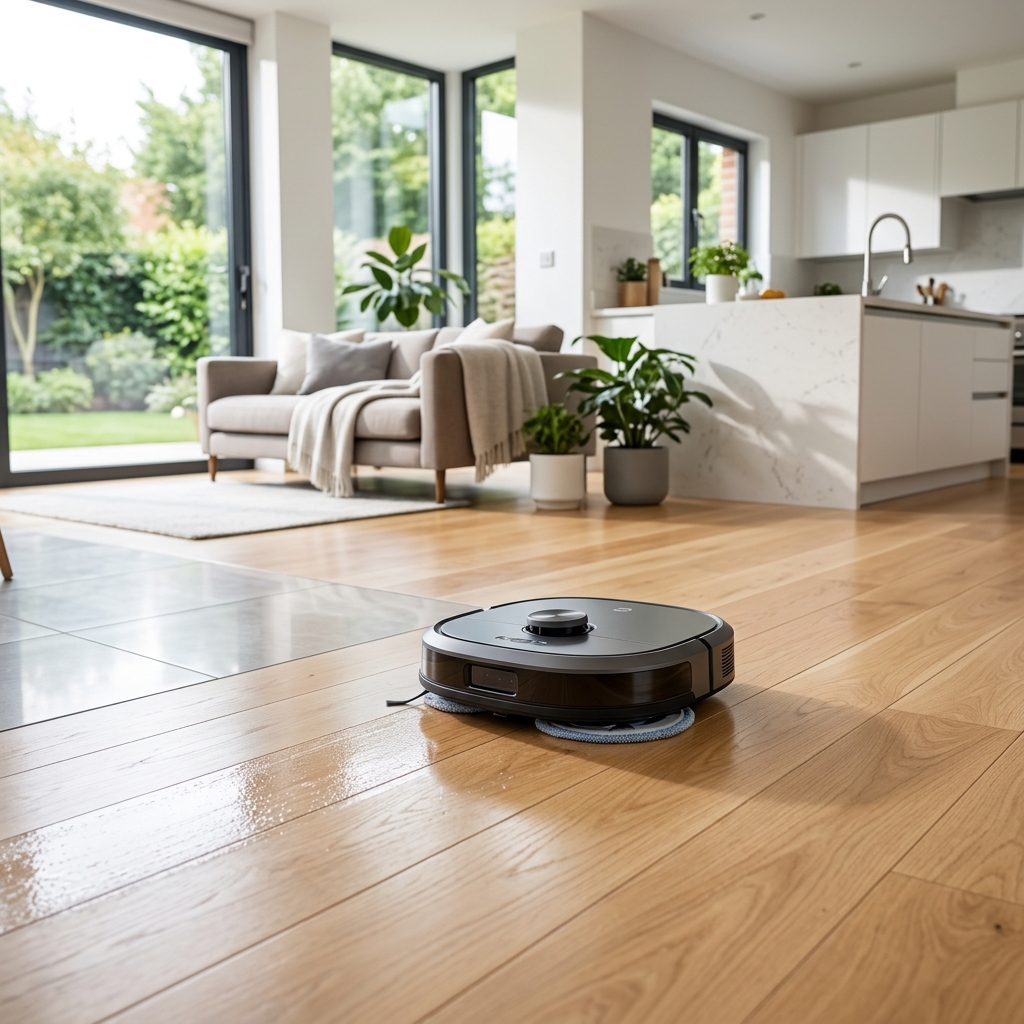
What to Consider When Buying a Robot Mop in 2026
Choosing the right robot mop requires careful consideration. Here’s a breakdown of key features to look for:
Mopping Modes
Most robot mops offer a range of mopping modes. Wet mopping is the standard, dispensing water and cleaning solution to tackle everyday spills and dirt. Dry mopping uses a microfiber pad to pick up loose dust and debris. Vibration mopping, increasingly common in 2026 models, provides a deeper clean by vibrating the mop head. Look for models that allow you to customise the water flow and mopping intensity.
Tank Capacity
A larger tank capacity means less frequent refills, ideal for larger homes. Expect 2026 models to boast tank capacities exceeding 400ml for clean water and 300ml for dirty water, with automatic refilling options becoming increasingly prevalent.
Battery Life
Battery life is crucial, especially for larger homes. Aim for a robot mop with at least 90 minutes of runtime. Many models now feature automatic recharging and resume cleaning where they left off.
Navigation Technology
LiDAR (Light Detection and Ranging) is the gold standard for navigation, creating accurate maps of your home. vSLAM (Visual Simultaneous Localization and Mapping) uses cameras for navigation, generally offering good performance at a lower price point. By 2026, LiDAR is becoming more affordable and integrated into more models.
App Control
App control allows you to schedule cleaning sessions, monitor progress, adjust settings, and define no-go zones. Look for apps that are intuitive and feature-rich.
Floor Type Compatibility
Ensure the robot mop is suitable for your floor types – hardwood, tile, laminate, or a combination. Some models offer automatic floor type detection and adjust the cleaning settings accordingly.
Self-Cleaning Features
Self-cleaning stations are a game-changer. These stations automatically wash and dry the mop pads, reducing maintenance and improving hygiene. Expect a wider range of models with this feature in 2026.
Obstacle Avoidance
Advanced obstacle avoidance is essential to prevent the robot mop from getting stuck or damaging furniture. Look for models with 3D obstacle detection and the ability to identify and avoid shoes, cables and pet waste.
Smart Home Integration
Compatibility with Alexa and Google Assistant allows for voice control and integration with your existing smart home ecosystem.
Top 5 Robot Mops Reviewed (2026)
1. iRobot Roomba Combo j9+ (approx. £1299)
The Roomba Combo j9+ is a powerhouse, combining powerful vacuuming and intelligent mopping. Its advanced obstacle avoidance and excellent app control make it a top contender. The self-emptying base and automatic mop pad cleaning are incredibly convenient. Performs exceptionally well on both hard floors and low-pile carpets. However, its high price point may be a barrier for some.
2. Roborock S8 Pro Ultra (approx. £1499)
The Roborock S8 Pro Ultra boasts exceptional mopping performance with its VibraRise 2.0 mopping system and automatic mop pad lifting. It offers a comprehensive cleaning solution with a self-emptying, self-washing, and self-drying dock. The LiDAR navigation is precise, and the app is very user-friendly. Again, a premium price point.
3. Ecovacs Deebot X2 Omni (approx. £1199)
The Deebot X2 Omni is a strong all-rounder, offering excellent cleaning performance and a host of smart features. It includes a fully automated Omni Station that empties the dustbin, washes the mop pads, and refills the water tank. Its square design allows it to clean closer to edges and corners. The app provides detailed cleaning reports.
4. Narwal Freo (approx. £999)
The Narwal Freo stands out with its unique dirt detection technology, which automatically increases cleaning intensity when it encounters particularly dirty areas. Its self-cleaning base ensures hygienic mop pads. It’s a more affordable option compared to the premium models, while still offering impressive performance.
5. Samsung Jet Bot AI+ (approx. £1349)
The Samsung Jet Bot AI+ features advanced AI-powered object recognition and avoidance. It can identify and avoid over 20 different objects. Its powerful suction and effective mopping capabilities make it a worthy contender. Offers seamless integration with the Samsung SmartThings ecosystem.
Comparison Table: Robot Mops Head-to-Head
| Model | Price (approx.) | Mopping Modes | Tank Capacity (Clean/Dirty ml) | Battery Life (mins) | Navigation | Self-Cleaning Station | Smart Home Integration |
|---|---|---|---|---|---|---|---|
| iRobot Roomba Combo j9+ | £1299 | Wet, Dry, Vibration | 400/350 | 120 | LiDAR | Yes | Alexa, Google Assistant |
| Roborock S8 Pro Ultra | £1499 | Wet, Dry, Sonic | 350/300 | 180 | LiDAR | Yes | Alexa, Google Assistant |
| Ecovacs Deebot X2 Omni | £1199 | Wet, Dry | 400/350 | 150 | LiDAR | Yes | Alexa, Google Assistant |
| Narwal Freo | £999 | Wet, Dry | 300/250 | 120 | LiDAR | Yes | Alexa, Google Assistant |
| Samsung Jet Bot AI+ | £1349 | Wet, Dry | 400/300 | 100 | LiDAR | No | Samsung SmartThings, Alexa, Google Assistant |
Robot Mop vs. Robot Vacuum: Which Do You Need?
Robot vacuums focus on picking up dry debris like dust, dirt, and pet hair. Robot mops, on the other hand, are designed for wet cleaning – tackling spills, stains, and sticky messes. Many 2-in-1 models combine both functionalities, offering a convenient all-in-one solution. By 2026, these combination robots are becoming increasingly sophisticated, with the ability to automatically switch between vacuuming and mopping, and even avoid mopping carpets.
If you primarily need to deal with dry debris, a robot vacuum is sufficient. If you have hard floors and frequently encounter spills, a robot mop is essential. For a comprehensive cleaning solution, a 2-in-1 robot is often the best choice, particularly the higher-end models with advanced features.
Maintaining Your Robot Mop for Optimal Performance
Proper maintenance is key to extending the lifespan of your robot mop. Regularly clean the mop pads after each use, or utilise the self-cleaning function if your model has one. Empty the dirty water tank after each cleaning cycle. Replace filters every 2-3 months. Check the brushes and rollers for debris and remove any obstructions. In 2026, expect more models to provide automated maintenance reminders via the app.
Future Trends in Robot Mop Technology (2026 and Beyond)
The robot mop market is constantly evolving. We’re seeing the emergence of AI-powered cleaning, allowing the mop to learn your home’s layout and cleaning preferences. Advanced obstacle avoidance is becoming more sophisticated, enabling the mop to navigate complex environments with ease. Self-emptying and self-cleaning stations are becoming more common, and we can expect further advancements in these areas, such as automatic detergent dispensing. The integration of UV sterilization technology to further sanitise floors is also a possibility.
Conclusion: Finding the Best Robot Mop for Your Home
Choosing the best robot mop depends on your individual needs and budget. For a premium, feature-rich experience, the Roborock S8 Pro Ultra and iRobot Roomba Combo j9+ are excellent choices. The Ecovacs Deebot X2 Omni offers a great balance of performance and features at a slightly lower price point. If you’re looking for an affordable yet effective option, the Narwal Freo is a strong contender. And for those deeply embedded in the Samsung ecosystem, the Samsung Jet Bot AI+ provides seamless integration and intelligent cleaning. Ultimately, investing in a robot mop is an investment in your time and convenience, allowing you to enjoy a cleaner home with minimal effort.
FAQ
Q: How often should I clean the mop pads?
Ideally, you should clean the mop pads after every use to prevent the spread of dirt and bacteria. If your model has a self-cleaning function, use it regularly. Otherwise, hand wash or machine wash the mop pads according to the manufacturer’s instructions.
Q: Can robot mops be used on all floor types?
Not all robot mops are suitable for all floor types. Check the manufacturer’s specifications to ensure compatibility with your flooring. Some models have adjustable water flow settings to accommodate different floor types.
Q: How long do robot mop batteries last?
Battery life varies depending on the model and cleaning mode. Most robot mops offer between 90 and 180 minutes of runtime. Many models automatically return to their charging base when the battery is low.
Q: What is LiDAR and why is it important?
LiDAR (Light Detection and Ranging) is a navigation technology that uses lasers to create a precise map of your home. This allows the robot mop to move efficiently, avoid obstacles, and clean systematically. It’s generally considered superior to camera-based navigation (vSLAM).
Q: Are robot mops worth the investment?
For many, absolutely. They offer significant time savings and convenience, especially for those with busy lifestyles or larger homes. The price point has also come down in recent years, making them more accessible.