
Affiliate disclosure: this article contains paid links. As an Amazon Associate I earn from qualifying purchases.
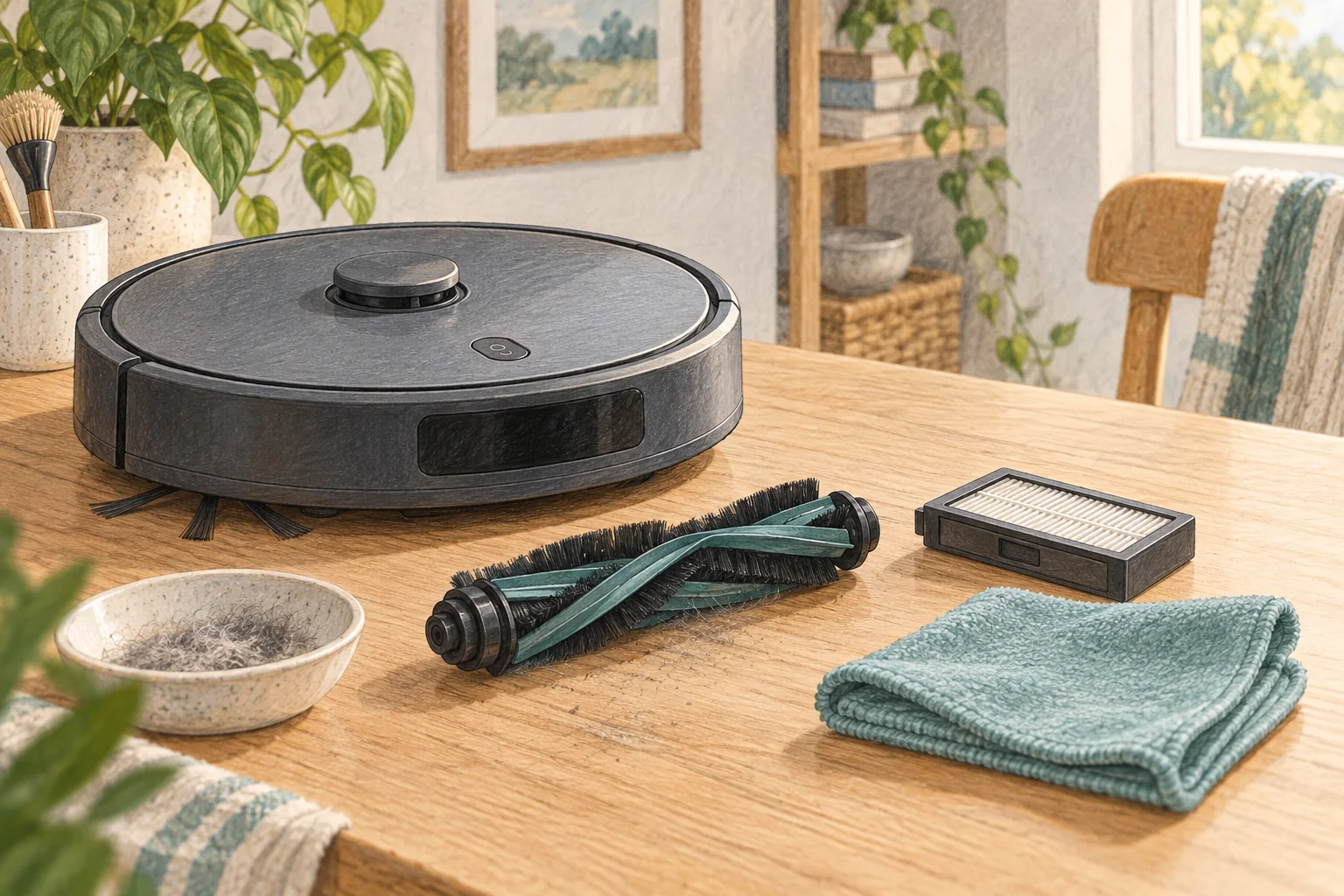
A neat trail behind the robot often points to debris escaping or a brush that is not seated correctly. First identify whether the line follows the main roller or an outer edge.
Table of Contents
Start with these checks
- Empty the bin and check its flap, seal and filter seating.
- Inspect the brush cover for an unlatched side or trapped material.
- Run one pass across visible dry crumbs and watch where the debris emerges.
What this looks like at home
A trail appearing after bin emptying may simply mean the bin door did not close fully.
Follow the debris path
| Check | What matters |
|---|---|
| Floor opening | Look for lodged debris or a displaced brush cover. |
| Bin and seals | Check closure and seating after emptying. |
| Filter | Follow its own cleaning and drying instructions. |
A mistake to avoid
More suction will not fix an open bin flap or a missing seal.
Buy a part only after identifying the cause
Check the exact model and part reference before buying. If cleaning resolves the problem, a replacement may be unnecessary.
Browse Amazon UK results for robot vacuum dustbin replacement. These are search results, not a verified recommendation for your particular machine.
What the result tells you
Inspect the position of the remaining line relative to the robot's width. Dust escaping from the centre, debris flicked at one side and an uncleaned strip beside a wall are three different observations.
Related guidance
- How to Clean a Robot Vacuum Brushroll: A 2026 Guide for UK Homes
- Robot Vacuum Maintenance Tips UK: Keep Your Cleaner Running Smoothly
Sources and scope
Checked on 9 September 2026. Manufacturer instructions apply to the models they name; use your own exact manual for button sequences, removable parts and cleaning permissions. Product specifications are advertised claims. Examples illustrate decisions and are not hands-on test results.