
Affiliate disclosure: this article contains paid links. As an Amazon Associate I earn from qualifying purchases.
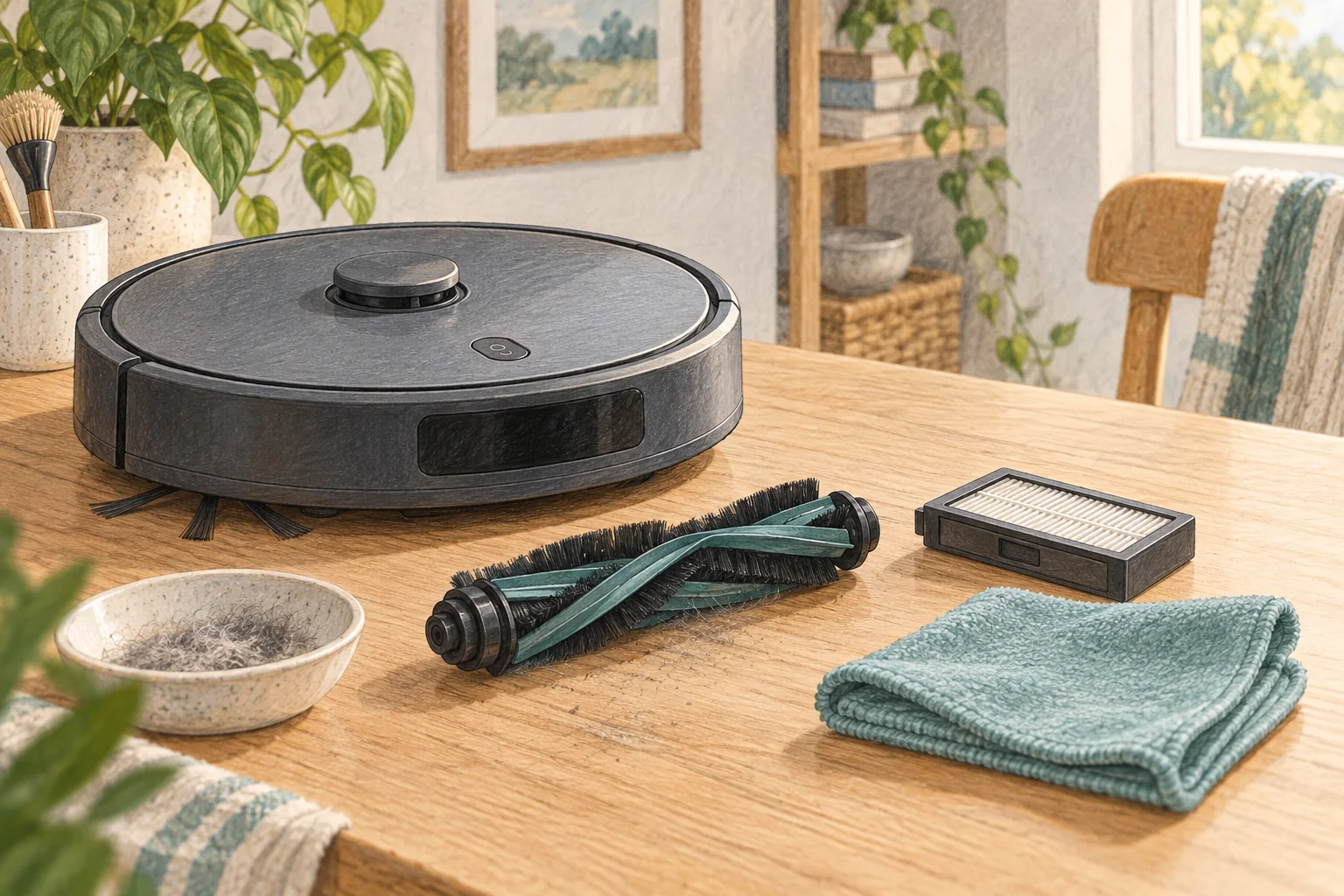
Large dry pieces can exceed the intake clearance or get scattered by a fast side brush. This is a debris-size problem before it is a suction specification problem.
Table of Contents
Start with these checks
- Pick up oversized pieces and remove anything sticky or wet.
- Check that the intake is clear and the brush cover is correctly fitted.
- Try a targeted second pass on the remaining dry crumbs and observe the path.
What this looks like at home
A few large cornflakes under a chair may need manual pickup even when the robot handles the surrounding fine crumbs well.
Follow the debris path
| Check | What matters |
|---|---|
| Floor opening | Look for lodged debris or a displaced brush cover. |
| Bin and seals | Check closure and seating after emptying. |
| Filter | Follow its own cleaning and drying instructions. |
A mistake to avoid
Do not use liquid spills as a test of a dry vacuum's pickup.
Buy a part only after identifying the cause
Check the exact model and part reference before buying. If cleaning resolves the problem, a replacement may be unnecessary.
Browse Amazon UK results for handheld dustpan and brush. These are search results, not a verified recommendation for your particular machine.
What the result tells you
A robot that collects fine crumbs but repeatedly shunts a few large pieces may be reaching a physical intake limit. Keep large-piece pickup manual and judge normal performance using debris appropriate for the machine.
Related guidance
- How to Clean a Robot Vacuum Brushroll: A 2026 Guide for UK Homes
- Robot Vacuum Maintenance Tips UK: Keep Your Cleaner Running Smoothly
Sources and scope
Checked on 9 September 2026. Manufacturer instructions apply to the models they name; use your own exact manual for button sequences, removable parts and cleaning permissions. Product specifications are advertised claims. Examples illustrate decisions and are not hands-on test results.