
Affiliate disclosure: this article contains paid links. As an Amazon Associate I earn from qualifying purchases.
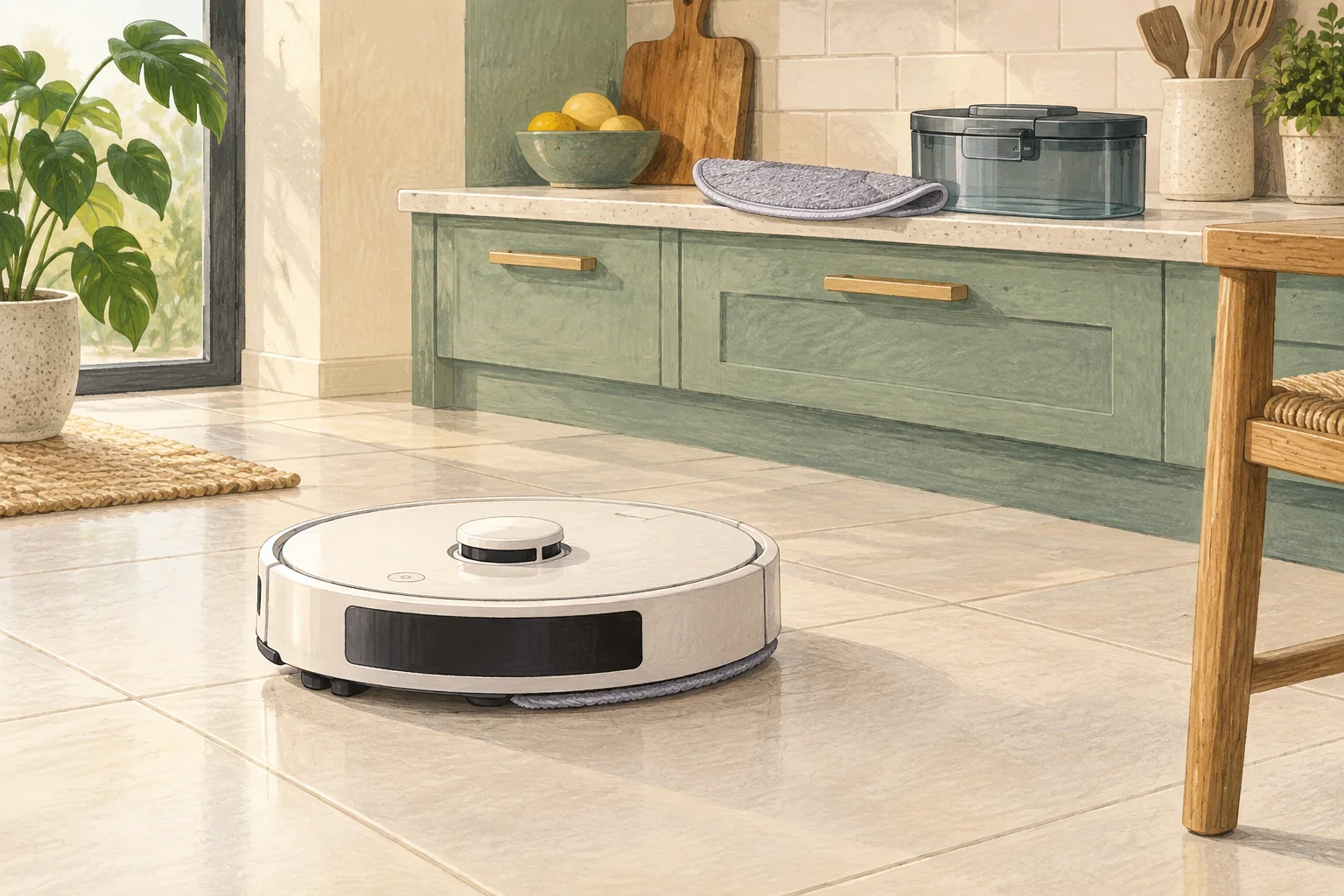
Raised mops can still touch tall fibres or a curled rug edge. Stop the wet run and establish whether the model needs a no-mop zone or physical mop removal.
Table of Contents
Start with these checks
- Pause cleaning and dry the affected carpet promptly using its care guidance.
- Check mop-lift settings, carpet detection and the actual rug pile.
- Use a vacuum-only routine or remove mops if the manual supports it.
What this looks like at home
A stated lift height describes the mechanism, not guaranteed clearance over every rug in your home.
Judge the whole wet-cleaning routine
| Check | What matters |
|---|---|
| Floor suitability | Follow the flooring maker’s moisture and chemical guidance. |
| Rug route | Verify lift, removal or exclusion behaviour. |
| After the run | Plan pad or roller care and wastewater handling. |
A mistake to avoid
Do not repeatedly test wet mopping over a valuable rug to find its limit.
Buy a part only after identifying the cause
Check the exact model and part reference before buying. If cleaning resolves the problem, a replacement may be unnecessary.
Browse Amazon UK results for absorbent microfibre cloth. These are search results, not a verified recommendation for your particular machine.
What the result tells you
Trace the wet marks through the complete route, including returns to the dock. The robot may protect the rug during one cleaning mode but encounter it differently after its mops have been washed.
Related guidance
- Best Robot Vacuum & Mop Combos UK
- Robot Vacuum Maintenance Tips UK: Keep Your Cleaner Running Smoothly
Sources and scope
Checked on 9 September 2026. Manufacturer instructions apply to the models they name; use your own exact manual for button sequences, removable parts and cleaning permissions. Product specifications are advertised claims. Examples illustrate decisions and are not hands-on test results.