
Affiliate disclosure: this article contains paid links. As an Amazon Associate I earn from qualifying purchases.
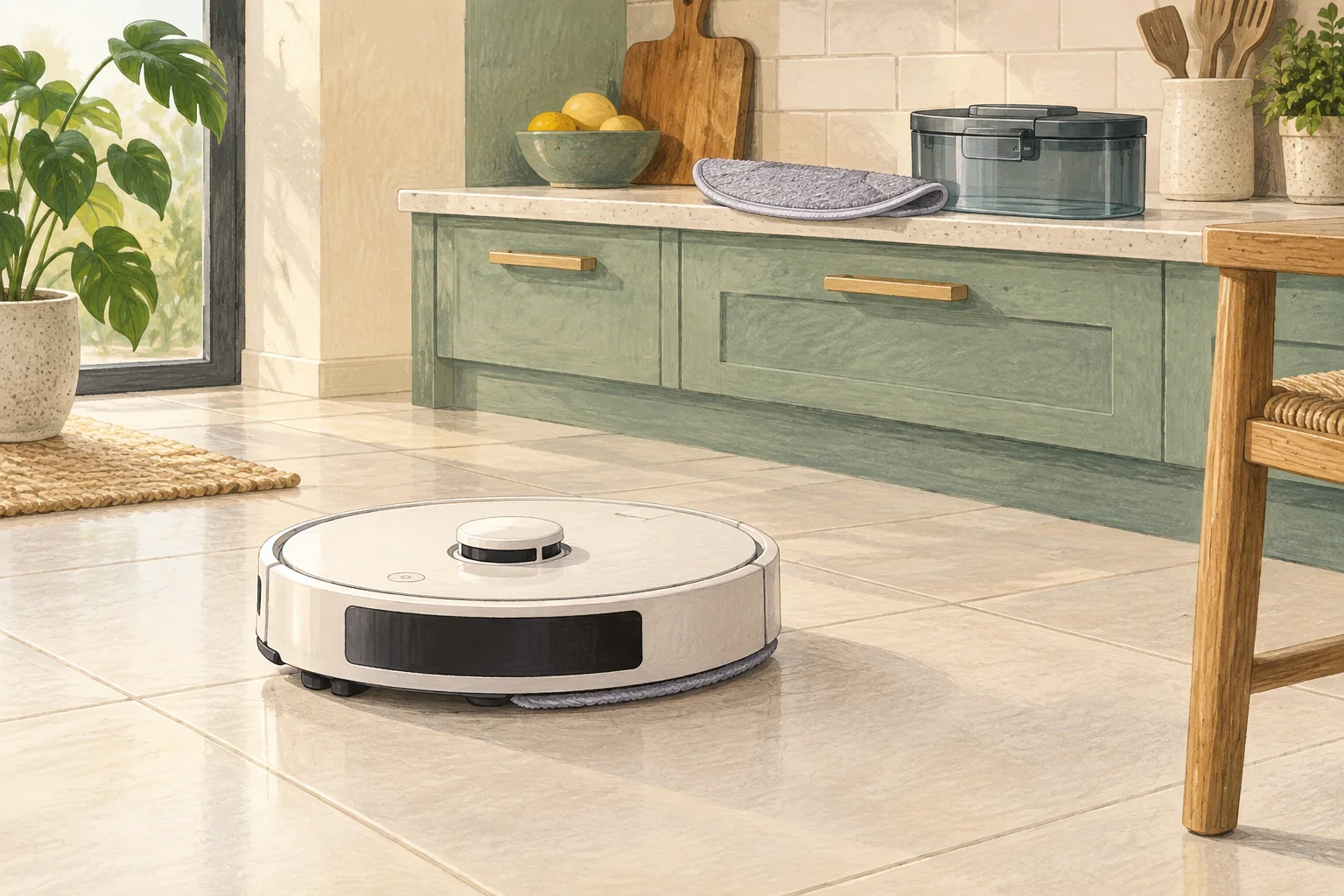
Dry mops can reflect an empty tank, incorrect cleaning mode or a poorly seated water module. Confirm the water path before assuming a failed pump.
Table of Contents
Start with these checks
- Check the selected job actually includes mopping and a permitted water setting.
- Fill and seat the relevant clean-water tank according to the manual.
- Inspect user-accessible outlets or modules without poking into the pump.
What this looks like at home
A vacuum-only room routine can leave mops dry even when the station tank is full.
Keep clean water, dirty water and dry dust separate
| Check | What matters |
|---|---|
| Clean-water side | Use the permitted water and solution method. |
| Dirty-water side | Empty and clean the removable tank as directed. |
| Pads, roller and tray | Inspect, clean and dry only as the manual allows. |
A mistake to avoid
Do not use a pin or chemical descaler in an outlet unless the manufacturer prescribes it.
Buy a part only after identifying the cause
Check the exact model and part reference before buying. If cleaning resolves the problem, a replacement may be unnecessary.
Browse Amazon UK results for robot vacuum compatible mop pads. These are search results, not a verified recommendation for your particular machine.
What the result tells you
Note whether the pad stays completely dry or becomes damp unevenly. Also record whether the robot is taking water from its own tank or relying on a station procedure in that particular model.
Related guidance
- Robot Vacuum Maintenance Tips UK: Keep Your Cleaner Running Smoothly
- How to Choose a Robot Vacuum: Complete Buyer's Guide
Sources and scope
Checked on 9 September 2026. Manufacturer instructions apply to the models they name; use your own exact manual for button sequences, removable parts and cleaning permissions. Product specifications are advertised claims. Examples illustrate decisions and are not hands-on test results.