
Affiliate disclosure: this article contains paid links. As an Amazon Associate I earn from qualifying purchases.
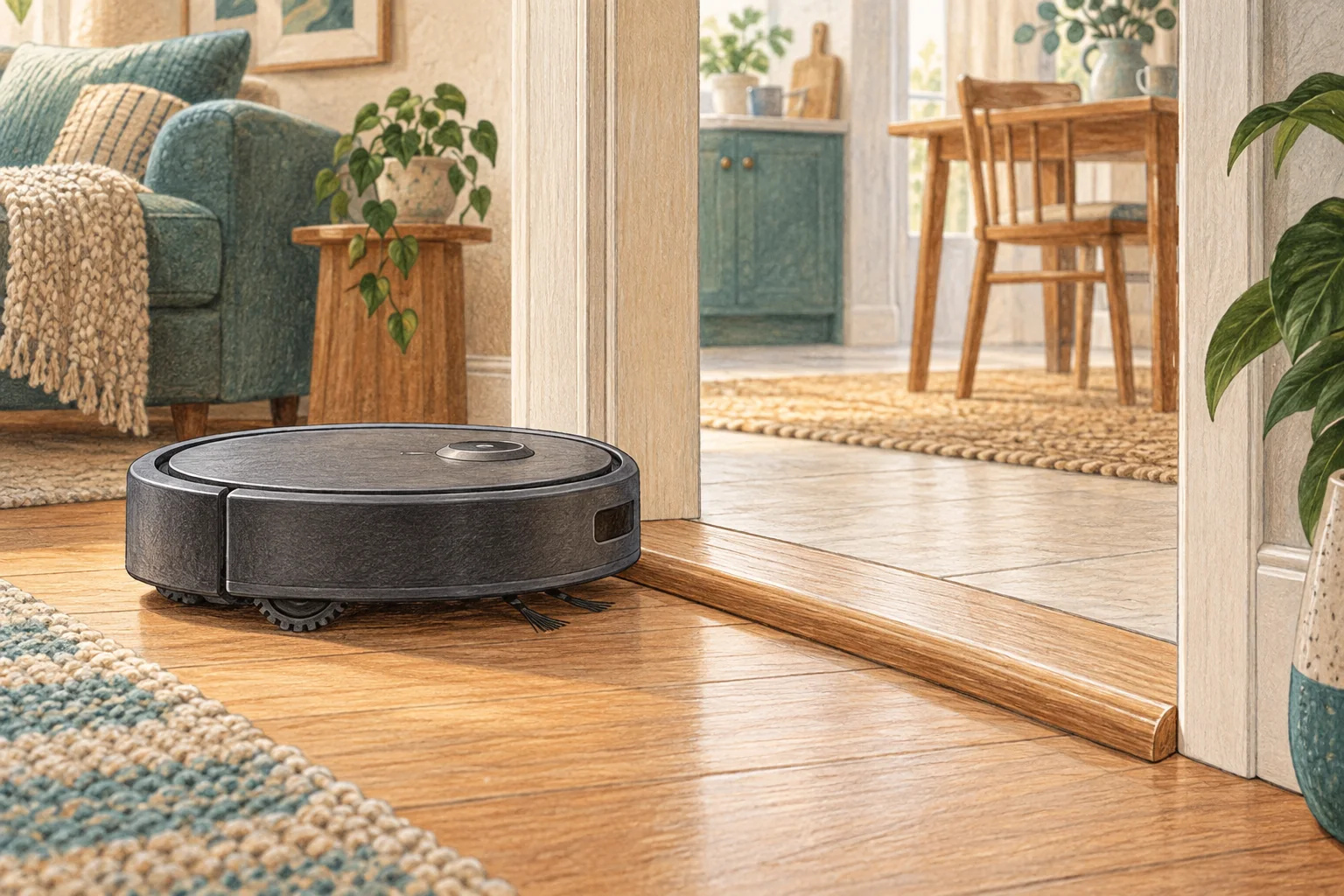
Height alone does not describe a threshold. A sharp lip, narrow crest or change of approach angle can defeat a robot that crosses a gentler obstacle of similar height.
Table of Contents
Start with these checks
- Measure both the vertical rise and the profile of the door bar.
- Watch one supervised approach with the floor dry and cables removed.
- Use a suitable secured transition ramp or exclude the room if the model cannot cross reliably.
What this looks like at home
A rounded 15 mm strip can behave differently from a square-edged 15 mm step.
Measure the profile in both directions
| Check | What matters |
|---|---|
| Rise | Measure from each side of the doorway. |
| Shape | Note sharp edges, slopes and narrow crests. |
| Return | Confirm the robot can get back to its charger. |
A mistake to avoid
A threshold ramp must not create a trip hazard or defeat stair protection.
Buy a part only after identifying the cause
Check the exact model and part reference before buying. If cleaning resolves the problem, a replacement may be unnecessary.
Browse Amazon UK results for low profile threshold ramp. These are search results, not a verified recommendation for your particular machine.
What the result tells you
Record the threshold profile and both crossing directions. If a suitable transition still fails repeatedly, use separate room routines rather than allowing an unattended job to strand the robot away from charging.
Related guidance
- Robot Vacuum Stuck? A Comprehensive Troubleshooting Guide
- Robot Vacuum Maintenance Tips UK: Keep Your Cleaner Running Smoothly
Sources and scope
Checked on 9 September 2026. Manufacturer instructions apply to the models they name; use your own exact manual for button sequences, removable parts and cleaning permissions. Product specifications are advertised claims. Examples illustrate decisions and are not hands-on test results.