
Affiliate disclosure: this article contains paid links. As an Amazon Associate I earn from qualifying purchases.
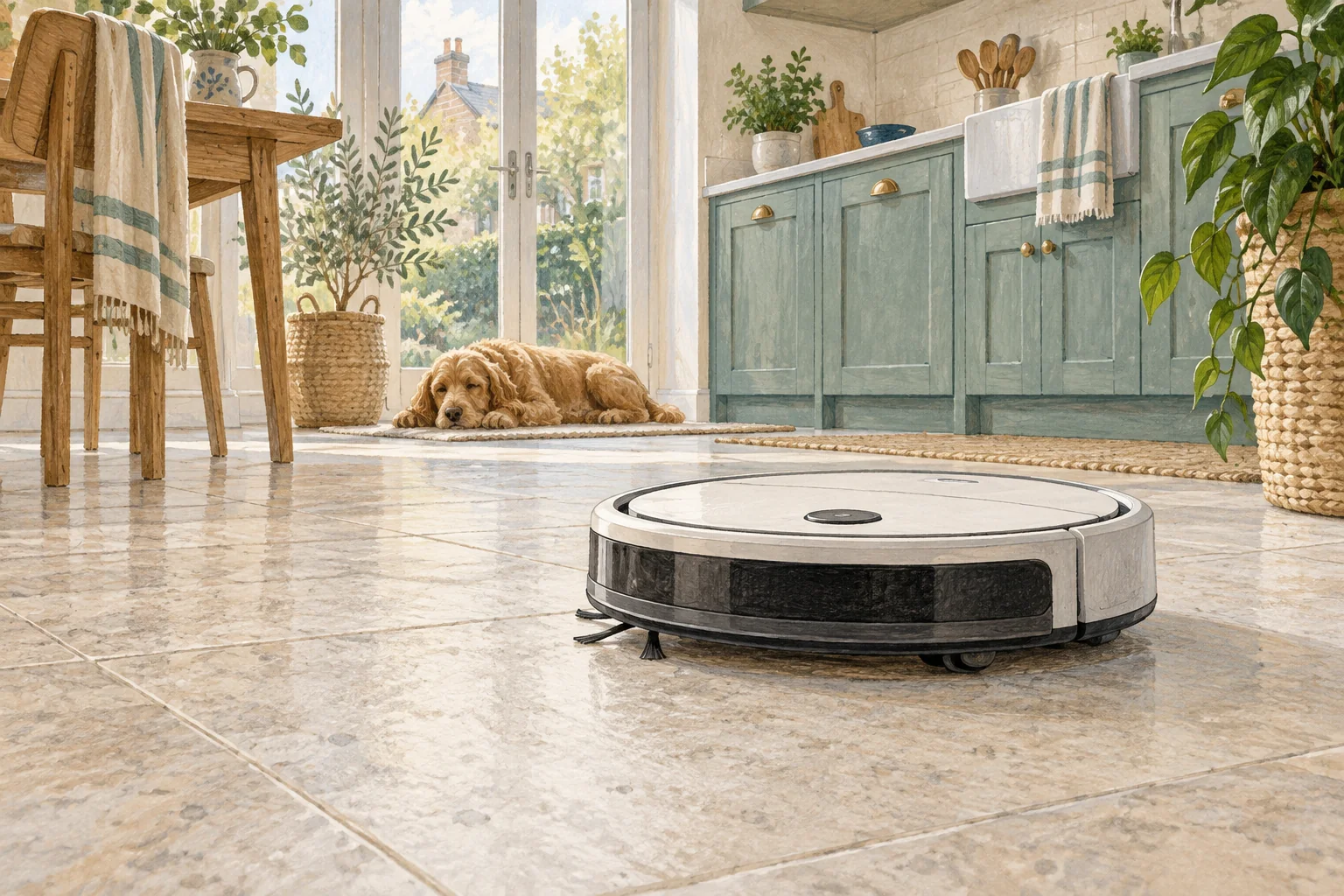
Natural stone can need specific chemical and moisture care. Match the robot's consumables to the stone maker's guidance before treating automatic detergent dispensing as a benefit.
Table of Contents
A practical checklist
- Identify the stone and its sealer, including restrictions on acidic products.
- Choose vacuum-only cleaning if you cannot verify a compatible robot solution.
- Check water control, mop cleanliness and access around uneven grout lines.
What this looks like at home
A limestone entrance hall may need a more cautious detergent choice than a neighbouring ceramic-tile kitchen.
Start with the floor-care instructions
| Check | What matters |
|---|---|
| Surface | Identify the finish and permitted cleaning method. |
| Dry preparation | Remove grit, sharp fragments and unsuitable debris. |
| Damp pass | Use only permitted water and solution settings. |
A mistake to avoid
Never assume vinegar is a suitable robot-tank cleaner or a safe stone-floor product.
Relevant models to compare
Eufy L60
A simple mapped vacuum for households that already mop by hand.
Check Eufy L60 on Amazon UK. Confirm the selected UK variant, seller, contents and current price.
Eufy E25 Omni
A roller-mop alternative for people prioritising regular hard-floor washing.
Check Eufy E25 Omni on Amazon UK. Confirm the selected UK variant, seller, contents and current price.
Related guidance
- How to Choose a Robot Vacuum: Complete Buyer's Guide
- Robot Vacuum Maintenance Tips UK: Keep Your Cleaner Running Smoothly
Sources and scope
Checked on 9 September 2026. Manufacturer instructions apply to the models they name; use your own exact manual for button sequences, removable parts and cleaning permissions. Product specifications are advertised claims. Examples illustrate decisions and are not hands-on test results.