
Table of Contents
Introduction: The Vacuum Landscape in 2026
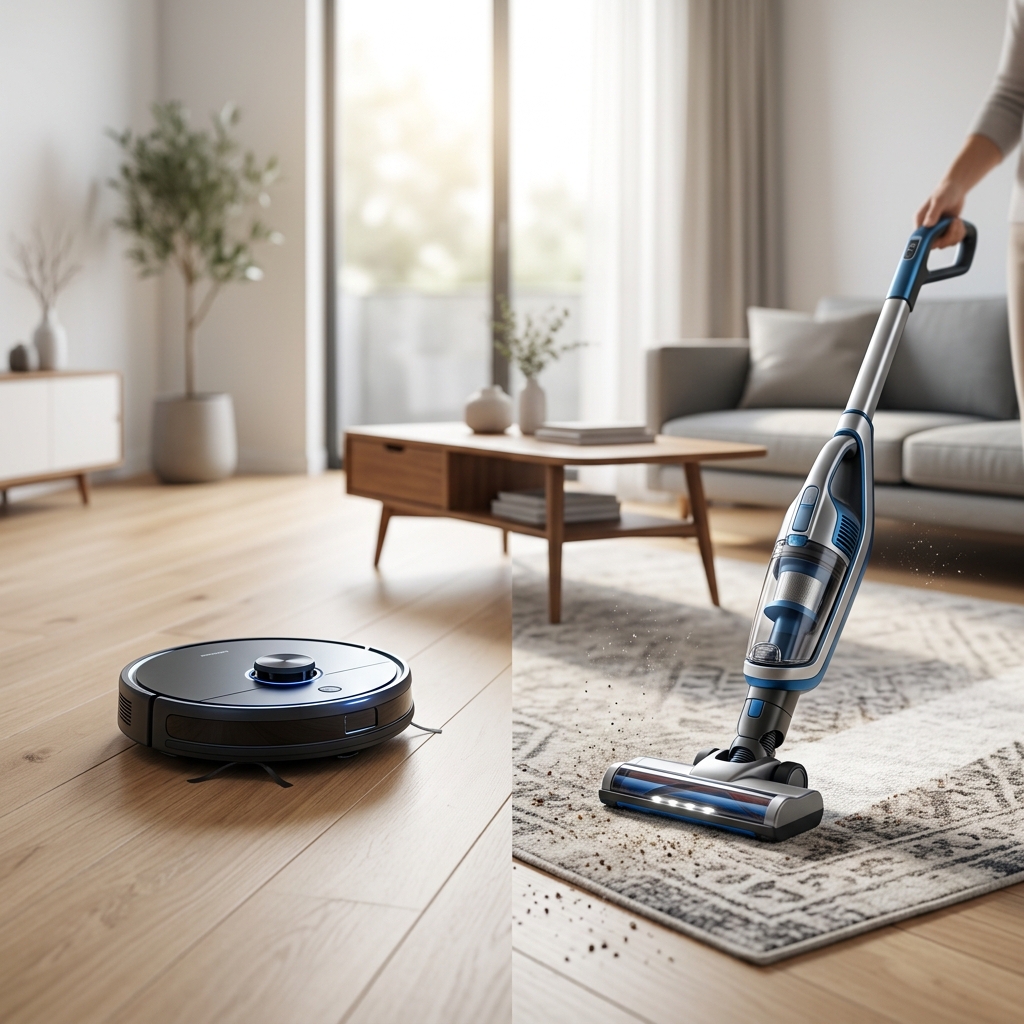
The humble vacuum cleaner has come a long way. In 2026, we’re seeing a marked shift in how people clean their homes. While traditional vacuums remain a stalwart, robot vacuums have exploded in popularity, driven by advancements in artificial intelligence, sensors, and battery technology. No longer are robot vacuums simply novelty items; they’re increasingly capable cleaning machines. Traditional vacuums, meanwhile, continue to innovate with more powerful motors, improved filtration systems, and streamlined designs. Both types offer compelling benefits, but which one is truly best for *your* home? This article will delve into the details, comparing performance, cost, features, and maintenance to help you make an informed decision.
Traditional Vacuums: A Tried and Tested Method
Traditional vacuums have a long history of reliable cleaning. They come in several main forms:
- Upright Vacuums: Powerful and designed for deep cleaning carpets, often with rotating brush heads.
- Cylinder Vacuums: More versatile than uprights, often lighter and easier to manoeuvre, making them good for both carpets and hard floors.
- Cordless Stick Vacuums: The most convenient type, offering freedom of movement without the hassle of a cord. They’re ideal for quick clean-ups and smaller homes.
Their strengths remain significant. Traditional vacuums generally offer the most powerful suction, a wide range of attachments for specialised cleaning (upholstery tools, crevice tools, dusting brushes), and are well-suited to tackling all floor types, including thick pile carpets and stubborn messes. The Dyson V18 Absolute (2026 Model) at £749.99, represents the pinnacle of traditional vacuum technology, boasting incredible suction and intelligent features.
Robot Vacuums: Automation and Convenience
Robot vacuums are designed for hands-free cleaning. They navigate your home autonomously, picking up dirt, dust, and debris. Key technologies driving their advancements include:
- LiDAR (Light Detection and Ranging): Uses lasers to create a detailed map of your home, enabling precise navigation.
- vSLAM (Visual Simultaneous Localization and Mapping): Uses cameras and sensors to build a map and determine the robot’s location within it.
- Self-Emptying Bins: Many models now come with docking stations that automatically empty the robot’s dustbin, reducing maintenance frequency.
- App Control: Modern robot vacuums are controlled via smartphone apps, allowing you to schedule cleaning sessions, define no-go zones, and monitor progress.
The biggest draw of robot vacuums is, undoubtedly, convenience. They allow you to maintain a consistently clean home with minimal effort. The iRobot Roomba j9+ (2026 Model) at £1299.99 is a prime example, offering intelligent mapping, object recognition, and automatic dirt disposal.
Performance Comparison: Robot vs Traditional – How Do They Stack Up?
While robot vacuums have improved dramatically, a performance gap still exists in some areas. Here’s a detailed comparison:
| Feature | Traditional Vacuum (Dyson V18 Absolute) | Robot Vacuum (iRobot Roomba j9+) |
|---|---|---|
| Suction Power (Air Watts) | 330 AW | 200 AW (estimated – varies by mode) |
| Edge Cleaning | Excellent – precise attachments | Good – improving with newer models, but can sometimes miss edges |
| Carpet Cleaning (Deep Pile) | Excellent – powerful motor and brush head | Good – can struggle with very thick carpets, requires multiple passes |
| Hard Floor Cleaning | Excellent – variety of brush heads for different hard floors | Excellent – often includes mopping attachment options |
| Obstacle Avoidance | Manual | Excellent – advanced sensors and object recognition |
| Coverage | Requires manual guidance | Automatic, full home coverage (with mapping) |
Recent studies (Consumer Reports, 2026) indicate that traditional vacuums still outperform robot vacuums in overall dirt removal, particularly on carpets. However, the gap is closing, and for everyday maintenance on hard floors and low-pile carpets, robot vacuums are often sufficient. Robot vacuums excel at consistent, automated cleaning, while traditional vacuums offer a more thorough, targeted clean when needed.
Cost Analysis: Initial Investment & Long-Term Expenses (2026 Pricing)
Cost is a significant factor. Here’s a breakdown:
| Vacuum Type | Initial Cost (GBP) | Running Costs (Annual – Estimated) | Potential Repair Costs (5 Years – Estimated) |
|---|---|---|---|
| Traditional (Shark IZ420UKT) | £399.0 | £30 (filters, brushes) | £50 – £150 (motor, hose) |
| Robot (Eufy RoboVac X9 Pro) | £699.99 | £50 – £100 (filters, brushes, bin bags if self-emptying) | £100 – £300 (battery, sensors) |
| High-End Traditional (Dyson V18 Absolute) | £749.99 | £40 (filters) | £100-£250 (motor, battery) |
| High-End Robot (iRobot Roomba j9+) | £1299.99 | £150-£250 (bin bags, filters) | £200-£500 (sensors, docking station) |
While the initial investment for a robot vacuum can be higher, the time saved and consistent cleaning may offset the cost for some. Traditional vacuums generally have lower running costs, but require more of your time and effort.
Features & Technology: What to Look for in 2026
In 2026, both categories continue to push boundaries:
- Traditional Vacuums: Expect even more powerful brushless motors, advanced filtration systems (including HEPA filters for allergy sufferers), and increasingly lightweight, ergonomic designs. Smart sensor technology is being integrated to automatically adjust suction power based on floor type.
- Robot Vacuums: Improvements in AI will lead to even more accurate object recognition (distinguishing between cables, shoes, and pet waste). Multi-floor mapping is becoming standard, and some models will offer room-specific cleaning preferences. Integration with smart home ecosystems (Amazon Alexa, Google Assistant) is seamless.
Maintenance & Upkeep: Which Requires More Effort?
Robot vacuums generally require less *frequent* maintenance, but still need attention. Regular filter cleaning and brush detangling are essential. Self-emptying bins reduce the frequency of emptying, but the bin within the docking station still needs to be emptied periodically. Traditional vacuums require more hands-on maintenance – emptying the dustbin or replacing bags, cleaning or replacing filters, and checking for blockages. However, repairs are often simpler and cheaper.
Who is Each Vacuum Best Suited For?
Here’s a quick guide:
- Pet Owners: Both can work, but a traditional vacuum with strong suction and a pet hair attachment (like the Dyson V18 Absolute) are ideal for tackling fur. Robot vacuums with anti-hair wrap technology (like the Eufy X9 Pro) can help manage shedding.
- Allergy Sufferers: Traditional vacuums with HEPA filters are essential. Some robot vacuums also offer HEPA filtration.
- Large Homes: A combination of both is often best – a robot vacuum for daily maintenance and a traditional vacuum for deep cleaning.
- Small Apartments: A cordless stick vacuum or a robot vacuum can be sufficient.
- Busy Professionals: A robot vacuum is a lifesaver, providing automated cleaning without requiring your time.
Conclusion: Making the Right Choice for Your Home
The “best” vacuum cleaner depends entirely on your individual needs and lifestyle. Robot vacuums offer unmatched convenience and are perfect for maintaining a consistently clean home with minimal effort. Traditional vacuums provide superior cleaning power and versatility, making them ideal for deep cleaning and tackling stubborn messes. In 2026, the lines are blurring, with both types offering increasingly advanced features. Consider your budget, floor types, home size, and cleaning habits to make the choice that’s right for you. Perhaps, for many, the ideal solution is a combination of both – leveraging the convenience of a robot vacuum for daily maintenance and the power of a traditional vacuum for more thorough cleaning when needed.
FAQ
- Are robot vacuums reliable? Reliability has significantly improved in recent years. High-end models from reputable brands are generally very reliable, but as with any technology, issues can occur.
- Can robot vacuums handle pet hair? Many models are specifically designed to handle pet hair, with tangle-free brush rolls and strong suction. However, very long or thick pet hair may still require occasional manual cleaning.
- How often do I need to empty a robot vacuum? This depends on the model and the amount of dirt in your home. Self-emptying models can go weeks between emptying, while others may need to be emptied daily.
- Are cordless stick vacuums as powerful as traditional vacuums? Modern cordless stick vacuums, like the Dyson V18 Absolute, are incredibly powerful and can rival traditional vacuums in many cases.
- Do robot vacuums work on all floor types? Most robot vacuums can handle a variety of floor types, but they may struggle with very thick pile carpets.