
Table of Contents
Introduction: The Rise of the Robot Vacuum in 2026
Robot vacuums have become increasingly popular in UK households, and 2026 promises even greater adoption. Driven by advancements in artificial intelligence, improved navigation, and a growing desire for convenience, these automated cleaning solutions are changing how we maintain our homes. Analysts predict the UK robot vacuum market will grow by 15% in 2026, reaching a value of over £500 million. This guide will help you navigate the options and find the perfect robot vacuum for your needs.
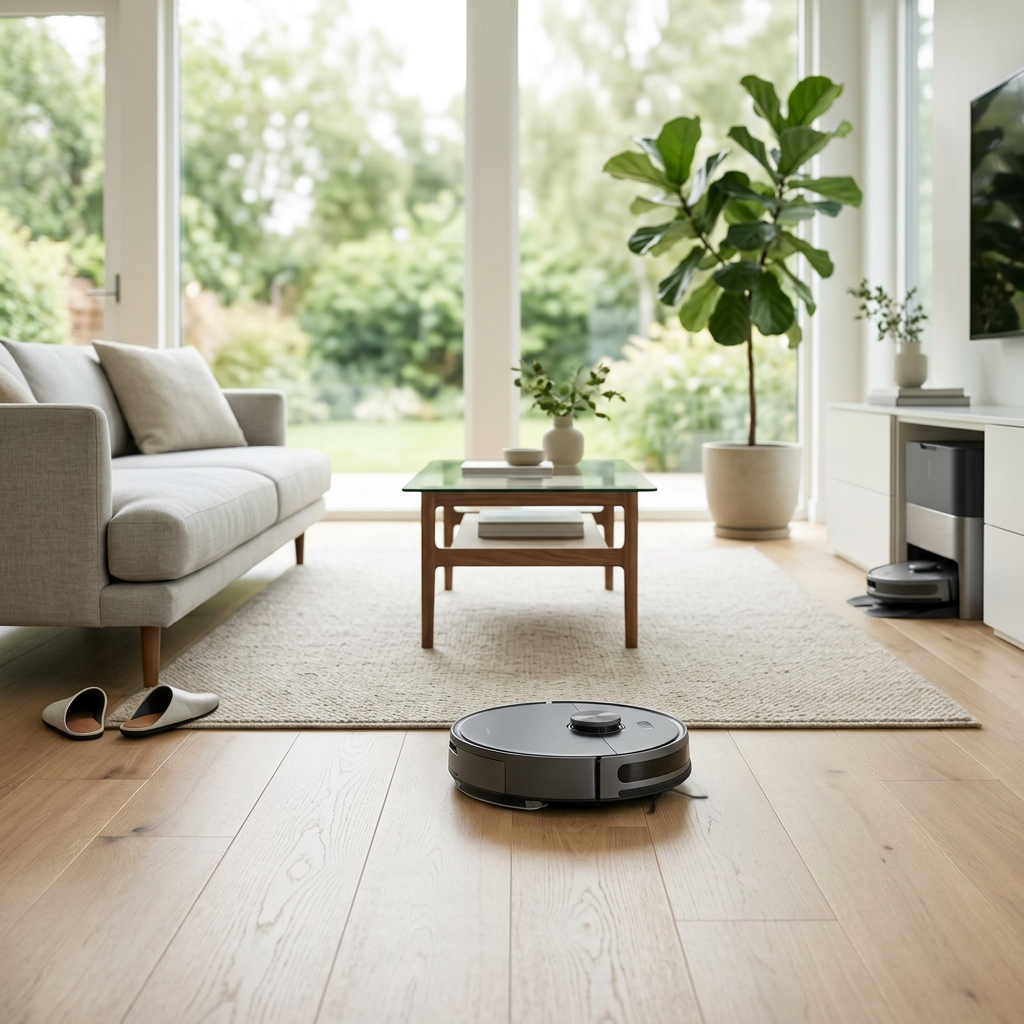
Understanding Robot Vacuum Technology: What’s New for 2026?
The core technologies powering robot vacuums continue to evolve. Here’s a breakdown of what’s on offer in 2026:
- Navigation Systems: LiDAR (Light Detection and Ranging) remains the gold standard, providing precise mapping. vSLAM (Visual Simultaneous Localization and Mapping) utilises cameras for navigation, becoming more reliable with improved image processing. Camera-based systems are now coupled with AI to identify and avoid obstacles more effectively.
- Suction Power: Measured in Pascals (Pa), suction power continues to increase. Most models now offer at least 2000Pa, with premium models exceeding 3000Pa for deep cleaning.
- Brush Types: Combination brush rolls (bristles & rubber) are standard, effectively tackling both hard floors and carpets. Anti-tangle technology is significantly improved preventing hair wrap.
- Filter Technologies: HEPA filters are common, capturing allergens and dust. Electrostatic filters are becoming more prevalent, improving air purification.
- New Developments for 2026: AI-powered object recognition is a major leap forward, allowing robots to identify and avoid specific objects like shoes, cables, and pet bowls. Improved multi-floor mapping now allows for detailed, customisable cleaning plans for each level of your home. Some models boast proactive cleaning suggestions based on room usage.
Key Features to Consider When Buying a Robot Vacuum
Choosing the right robot vacuum requires careful consideration of several key features:
- Suction Power (Pa): Higher Pa = better cleaning, especially on carpets.
- Battery Life (Runtime & Recharge Time): Look for at least 90 minutes of runtime. Auto-recharge and resume are essential.
- Dustbin Capacity: Larger capacity means less frequent emptying.
- Obstacle Avoidance: Crucial for navigating cluttered homes. AI-powered obstacle recognition is a valuable feature.
- Smart Home Integration (Alexa, Google Assistant): Voice control adds convenience.
- App Functionality: Scheduling, zone cleaning, virtual walls, and remote control.
- Virtual Walls/No-Go Zones: Define areas the robot should avoid.
- Multi-Floor Mapping: Essential for multi-story homes.
- Self-Emptying Bases: Convenient but add to the cost.
- Mopping Functionality: Hybrid models offer both vacuuming and mopping.
Robot Vacuum Types: Which is Best for You?
- Basic/Entry-Level (£200-£400): Simple features, basic navigation, suitable for small, uncluttered homes.
- Mid-Range (£400-£700): Improved suction, better navigation, smart home integration, suitable for medium-sized homes with some obstacles.
- High-End/Premium (£700-£1200+): Advanced features like LiDAR navigation, AI object recognition, self-emptying bases, suitable for large homes, pet owners, and tech enthusiasts.
- Hybrid (Vacuum & Mop) (£600-£1200+): Combine vacuuming and mopping in one device, ideal for homes with predominantly hard floors.
- Robot Mops (£300-£600): Specifically designed for mopping, offering features like spray control and multi-surface cleaning.
Top Robot Vacuum Models of 2026 (UK Market)
| Model | Price (GBP) | Key Features | Pros | Cons | Target User |
|---|---|---|---|---|---|
| iRobot Roomba i7+ | £799 | LiDAR Navigation, Self-Emptying Base, Smart Mapping | Excellent navigation, Powerful suction, Convenient self-emptying. | Relatively expensive, Can be noisy. | Pet owners, Large homes, Users who want convenience. |
| Shark IQ Robot Vacuum | £349 | Self-Emptying Base, Bagless Design, Wi-Fi Connectivity | Affordable self-emptying option, Good suction on carpets. | Navigation less precise than LiDAR models. | Budget-conscious buyers, Small to Medium homes. |
| Ecovacs Deebot X1 Omni | £1199 | All-in-One Omni Station (Wash, Dry, Empty), LiDAR Navigation, AI Object Recognition | Comprehensive cleaning solution, Auto mop washing, Smart obstacle avoidance. | Very expensive, Large Omni station takes up space. | Tech enthusiasts, Large homes, Users wanting a complete cleaning system. |
| Roborock S7 MaxV Ultra | £1099 | VibraRise Mopping System, ReactiveAI 2.0, Empty Wash Fill Dock | Excellent mopping performance, Intelligent obstacle avoidance, Auto-empty & mop washing. | High price point, Dock is bulky. | Users wanting a powerful vacuum and mopping solution. |
| Samsung Jet Bot AI+ | £999 | AI Object Recognition, LiDAR Navigation, Powerful Suction | Advanced AI features, Powerful cleaning, Sleek design. | Can be expensive, Battery life could be better. | Tech-savvy users, Pet owners, Larger homes. |
| DreameBot L10s Ultra | £849 | All-in-One Dock, LiDAR Navigation, Auto-Emptying & Mop Washing | Good value for money, Effective cleaning, Convenient features. | App could be more user-friendly, Obstacle avoidance not as refined as some competitors. | Users seeking a balance of price and performance. |
Self-Emptying Robot Vacuums: Convenience Comes at a Cost?
Self-emptying bases are a game-changer for convenience, eliminating the need to manually empty the dustbin for weeks or even months. However, they come with drawbacks:
- Benefits: Reduced maintenance, consistent suction power, ideal for pet owners.
- Drawbacks: Higher initial price, ongoing cost of replacement bags or dustbins (typically £20-£50 per year), larger base station footprint.
Whether they are worth the investment depends on your lifestyle and budget. If you have pets or a large home, the convenience is likely to outweigh the cost.
Robot Vacuums for Specific Home Types
- Hardwood Floors: Hybrid models with mopping functionality are ideal. Look for soft brush rolls to avoid scratches.
- Carpets: Choose a robot vacuum with strong suction and a brush roll designed for carpets.
- Tiles: Robot mops are excellent for tile floors.
- Pet Owners: Look for models with powerful suction, anti-tangle brush rolls, and HEPA filters. Self-emptying bases are highly recommended.
- Small Apartments: Basic or mid-range models are sufficient. Compact designs are a plus.
- Large Houses: High-end models with LiDAR navigation, multi-floor mapping, and self-emptying bases are essential.
- Homes with Stairs: Unfortunately, no robot vacuum can climb stairs. You’ll need multiple units or manually vacuum stairs.
Robot Vacuum Maintenance and Troubleshooting
- Cleaning Brushes: Regularly remove hair and debris from the brush roll (at least weekly).
- Emptying Dustbins: Even with self-emptying bases, the base itself needs emptying periodically.
- Replacing Filters: Replace filters every 3-6 months for optimal performance.
- Troubleshooting:
- Stuck Robot: Check for tangled cables, rugs, or other obstacles.
- Connectivity Problems: Restart the robot and your Wi-Fi router.
- Poor Cleaning Performance: Check the brush roll and filters.
Robot Vacuum Pricing in the UK (2026)
- Entry-Level: £200 – £400
- Mid-Range: £400 – £700
- Premium: £700 – £1200+
- Hybrid (Vacuum & Mop): £600 – £1200+
Where to Buy Robot Vacuums in the UK
- Currys
- Argos
- John Lewis
- Amazon UK
- Dyson (Direct)
- Robot Vacuum Brand Websites (e.g., iRobot, Ecovacs, Roborock)
Future Trends in Robot Vacuum Technology
The future of robot vacuums is exciting. Here are some trends to watch:
- Improved AI: More sophisticated object recognition and avoidance.
- Advanced Sensors: Better understanding of the environment, including texture and material detection.
- Smart Home Ecosystem Integration: Seamless integration with other smart home devices.
- Personalised Cleaning Plans: Based on user habits and preferences.
- More Affordable Self-Emptying Technology: Bringing self-emptying bases to a wider range of price points.
FAQ
- Q: How often should I empty the dustbin (or change the bag in a self-emptying base)?
A: This depends on usage and the amount of debris in your home. Typically, you’ll need to empty the dustbin every 1-2 weeks with a standard robot vacuum, and the self-emptying base every 1-3 months. - Q: Can robot vacuums clean all floor types?
A: Most robot vacuums can handle a combination of hard floors and carpets. However, some are better suited for specific floor types. Consider a hybrid model for predominantly hard floors. - Q: Are robot vacuums noisy?
A: Robot vacuums do produce some noise, but it’s generally comparable to a standard vacuum cleaner. Premium models tend to be quieter. - Q: Do I still need a traditional vacuum cleaner?
A: While robot vacuums are excellent for maintaining cleanliness, they may not replace a traditional vacuum cleaner entirely. A traditional vacuum is still useful for deep cleaning and tackling hard-to-reach areas. - Q: How long do robot vacuum batteries last?
A: Battery life varies, but most models offer 90-120 minutes of runtime. Batteries typically last for 2-3 years before needing replacement.