
Table of Contents
As an Amazon Associate, we earn from qualifying purchases. This means we may receive a small commission at no extra cost to you when you buy through links on this page.
Introduction: The Rise of the Robot Vacuum
Robot vacuums have moved from a futuristic novelty to a household staple. Initially clunky and often inefficient, the technology has dramatically advanced over the past decade, becoming a convenient and time-saving solution for maintaining clean floors. In 2026, they’re far more sophisticated, offering features like smart mapping, zoned cleaning, and even self-emptying capabilities. This guide breaks down exactly how these helpful little machines work, covering everything from their core components to the latest advancements.
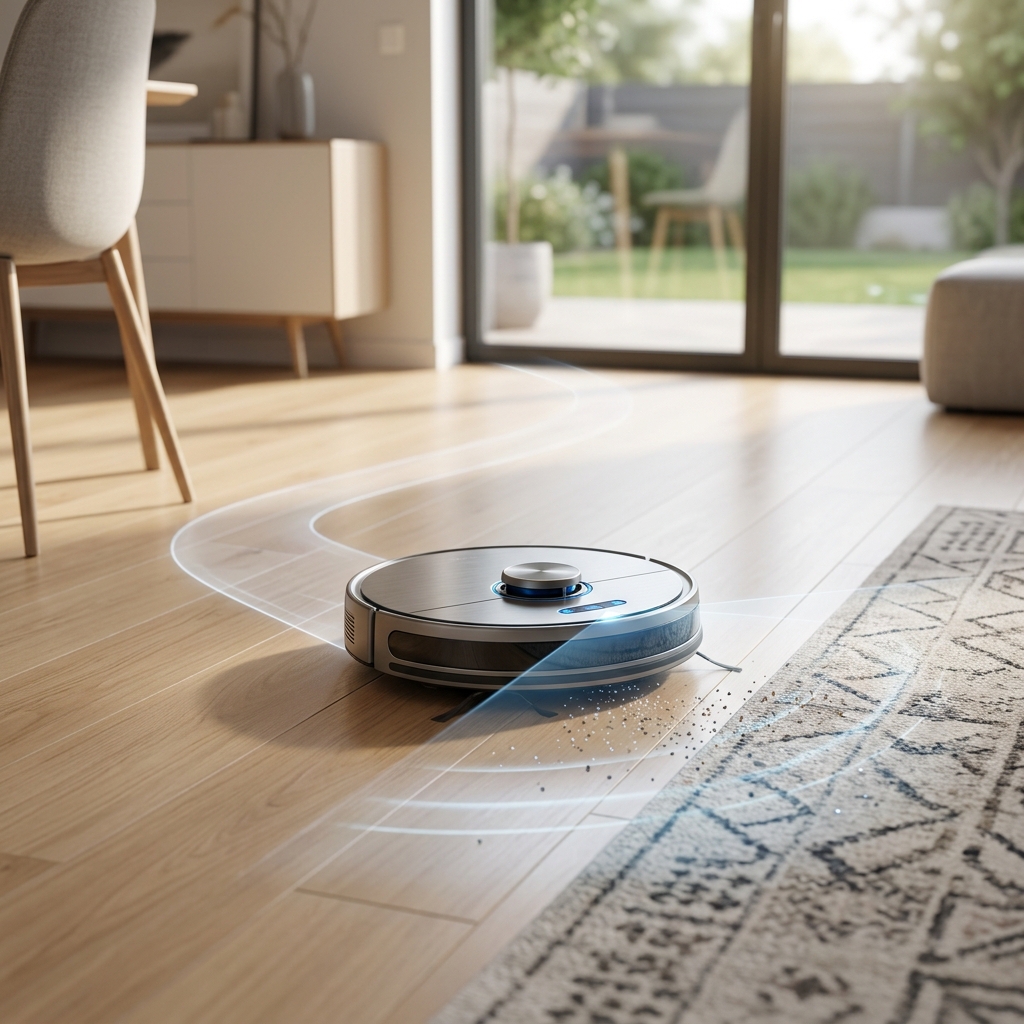
The Core Components: What’s Inside a Robot Vacuum?
A robot vacuum isn’t just a miniature vacuum cleaner; it’s a complex system of integrated hardware. Here’s a breakdown of the key parts:
- Motors: Most robot vacuums utilise at least two motors – one for suction and one or more for brush rotation. Suction motor power is measured in Pascals (Pa), with higher Pa indicating stronger suction.
- Battery: Lithium-ion batteries remain the standard in 2026, but advancements have increased energy density, leading to longer run times and faster charging.
- Dustbin: The container that collects dirt and debris. Capacity varies between models. Self-emptying models have a larger base station dustbin.
- Sensors: Crucial for navigation, obstacle avoidance, and cliff detection (more on this later).
- Wheels: Typically two driven wheels and a caster wheel for manoeuvrability. Larger wheels are better for navigating thresholds.
- Side Brushes: Rotating brushes that sweep debris from edges and corners into the path of the main brush.
Navigation Technology: How Do They ‘See’ Your Home?
Navigation is arguably the most important aspect of a robot vacuum. The technology used determines how efficiently and effectively it cleans. Here’s a comparison of common methods in 2026:
| Navigation Method | Effectiveness | Cost (Approx.) | Description |
|---|---|---|---|
| Random Bounce | Low | £200 – £300 | The robot moves randomly, changing direction when it bumps into obstacles. Least efficient but affordable. |
| Gyroscope | Medium | £300 – £500 | Uses internal sensors to track its movement, providing a more structured cleaning pattern than random bounce. Still prone to errors. |
| Visual SLAM (Simultaneous Localization and Mapping) | High | £500 – £800 | Uses a camera to create a visual map of the surrounding environment. Good for smaller spaces. Can struggle in low light. |
| LiDAR (Light Detection and Ranging) | Very High | £800 – £1500 | Emits laser beams to create a precise map of the room. Works well in both light and dark. Considered the gold standard for navigation. |
| Camera-Based Systems (with AI) | Very High | £900 – £1600 | Advanced cameras, combined with artificial intelligence, allow for object recognition and intelligent path planning. Becoming increasingly common. |
Sensor Breakdown: Avoiding Obstacles and Staying Safe
Robot vacuums rely on a suite of sensors to navigate and avoid problems:
- Cliff Sensors: Infrared sensors located on the underside of the robot prevent it from falling down stairs or off ledges.
- Bump Sensors: Detect collisions with furniture and walls, prompting the robot to change direction.
- Wall-Following Sensors: Allow the robot to clean along edges and baseboards efficiently.
- Object Recognition (AI-Powered): The latest models utilise cameras and AI to identify and avoid specific objects like shoes, cables, and pet waste, improving overall cleaning and preventing damage.
These sensors work in concert, creating a safety net that allows the robot to clean autonomously.
Cleaning Systems: Suction, Brushes, and Mopping
The cleaning power of a robot vacuum comes down to its suction, brushes, and increasingly, mopping capabilities:
- Suction Power: Measured in Pascals (Pa). Higher Pa generally means better performance on carpets and hard floors. Most 2026 models offer adjustable suction levels.
- Brush Types:
- Main Brush: Can be rubberised (better for pet hair and avoiding tangles) or bristled (more aggressive cleaning on carpets).
- Side Brushes: Sweep debris towards the main brush.
- Integrated Mopping Systems: Many robots now include a water tank and mopping pad, allowing them to simultaneously vacuum and mop hard floors. Advanced models offer adjustable water flow and vibrating mopping heads.
Mapping and Zoning: Smart Cleaning for a Smarter Home
Mapping capabilities have become a key differentiator. Robot vacuums create a virtual map of your home, allowing for:
- Zoned Cleaning: Specify areas to clean or avoid. For example, you can tell the robot to clean the kitchen after dinner but avoid the children’s play area.
- Virtual Walls: Create invisible barriers to prevent the robot from entering certain areas.
- App Control: Control the robot remotely via a smartphone app, schedule cleaning sessions, and view cleaning maps.
- Smart Home Integration: Compatibility with voice assistants like Amazon Alexa and Google Assistant for voice control.
Power and Charging: Battery Life and Auto-Docking
Lithium-ion battery technology continues to improve. In 2026, typical robot vacuum run times range from 90 to 180 minutes on a single charge. Auto-docking and auto-recharging are standard features, allowing the robot to return to its base station when the battery is low and resume cleaning where it left off.
Maintenance and Troubleshooting: Keeping Your Robot Running Smoothly
Regular maintenance is essential for optimal performance:
- Dustbin Emptying: Empty the dustbin after each cleaning session (or more frequently if you have pets).
- Filter Replacement: Replace filters every 2-3 months. HEPA filters are common.
- Brush Untangling: Regularly remove hair and debris from the brushes.
- Sensor Cleaning: Wipe sensors clean to ensure accurate navigation.
Component lifespan varies, but you can typically expect a battery to last 2-3 years, and brushes may need replacing annually.
The Future of Robot Vacuums: What’s Next?
The evolution of robot vacuums continues. Emerging trends include:
- Improved Object Recognition: More accurate and comprehensive object identification, allowing robots to navigate even cluttered environments.
- Self-Emptying Bases with Larger Capacity: Convenient bases that can hold weeks’ worth of debris.
- AI-Powered Cleaning Adjustments: Robots that learn from your cleaning habits and automatically adjust their cleaning strategy.
- Integration with Other Home Robots: Potential for robots to work together, such as a robot vacuum working in conjunction with a mopping robot.
Our Top Pick
For the best combination of performance, features, and value in 2026, we recommend the Ecovacs Deebot X2 Omni (£1199.99). Its advanced navigation, powerful suction, and self-emptying/mopping capabilities make it a standout choice for most homes.
Frequently Asked Questions (FAQ)
- Q: How often should I empty the dustbin?
A: Ideally, you should empty the dustbin after each cleaning cycle. This ensures optimal suction and prevents clogging. - Q: Can robot vacuums clean carpets effectively?
A: Yes, many robot vacuums are designed to clean carpets effectively, especially those with powerful suction and adjustable brush settings. Look for models specifically designed for carpets. - Q: What is SLAM and why is it important?
A: SLAM stands for Simultaneous Localization and Mapping. It’s a technology that allows the robot vacuum to create a map of your home while simultaneously figuring out where it is within that map. This is crucial for efficient and systematic cleaning. - Q: How do I troubleshoot a robot vacuum that’s stuck?
A: First, check for obstructions around the robot. Then, restart the robot and ensure the sensors are clean. If the problem persists, consult the manufacturer’s troubleshooting guide. - Q: Are robot vacuums suitable for pet owners?
A: Absolutely! Models with rubberised brushes and strong suction are particularly effective at picking up pet hair and dander.