
Table of Contents
As an Amazon Associate, we earn from qualifying purchases. This means we may receive a small commission at no extra cost to you when you buy through links on this page.
Introduction: Why Dustbin Capacity Matters
Robot vacuum cleaners have become increasingly popular in UK homes, offering a convenient way to maintain clean floors with minimal effort. But choosing the right model isn’t just about suction power or smart features; dustbin capacity is a critical factor. A robot vacuum’s dustbin capacity dictates how much debris it can collect before needing to be emptied. A smaller capacity means more frequent interruptions to your cleaning schedule, whereas a larger capacity offers greater convenience. In 2026, we’re seeing a clear trend towards larger capacities and, more importantly, the widespread adoption of auto-empty docks, fundamentally changing how we interact with these devices. This guide will help you navigate the options and find the perfect fit for your home.
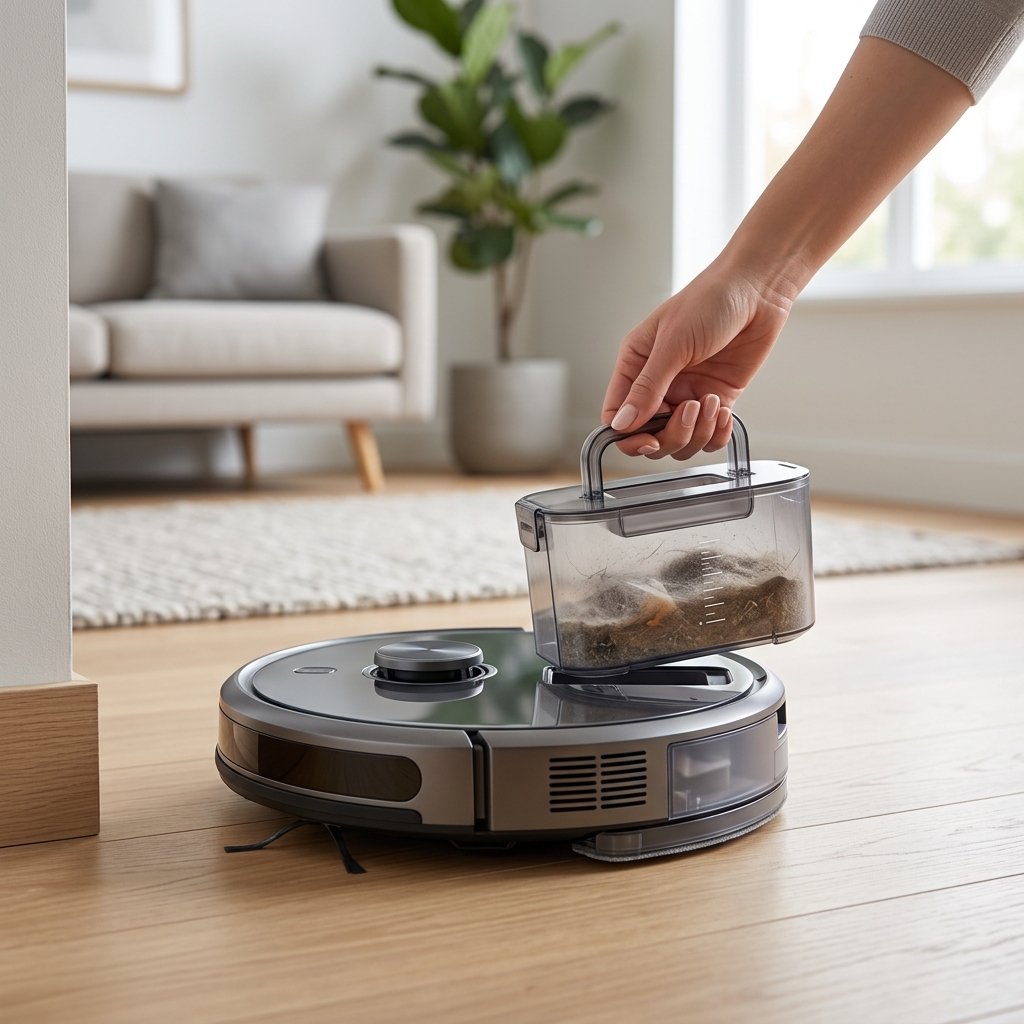
Understanding Dustbin Capacity: Millilitres (ml) & Litres (L)
Dustbin capacity is measured in millilitres (ml) and litres (L). 1000ml equals 1L. When considering robot vacuum dustbin sizes, understanding what each capacity level translates to in terms of cleaning area is crucial.
- ~300ml: Typically found in more basic or compact robot vacuum models. Good for very small apartments (under 50 square metres) with minimal carpet.
- ~400ml: A common size for mid-range robots. Suitable for smaller homes (50-80 square metres) or apartments with a mix of hard floors and low-pile carpet.
- ~600ml: A good compromise for medium-sized homes (80-120 square metres) with some carpet and potentially a pet.
- 800ml+: Ideal for larger homes (120+ square metres), homes with multiple pets, or those with significant carpeting.
Typical Dustbin Capacities & What They’re Best For
The chart below provides a more detailed comparison of typical dustbin capacities and the types of homes they suit best:
| Dustbin Capacity | Approximate Cleaning Area | Best For | Frequency of Emptying (Typical Use) | Estimated Price Range (Robot Vacuum) |
|---|---|---|---|---|
| ~300ml | Under 50m² | Very small apartments, primarily hard floors | Every clean or two | £200 – £400 |
| ~400ml | 50-80m² | Small homes, apartments, mix of floor types | Every 2-3 cleans | £300 – £600 |
| ~600ml | 80-120m² | Medium-sized homes, some carpet, potentially a pet | Every 3-5 cleans | £500 – £800 |
| 800ml+ | 120m²+ | Large homes, multiple pets, significant carpeting | Every 5-7 cleans (or with auto-empty dock, much less frequent) | £700+ |
Impact of Floor Type & Pet Ownership on Dustbin Capacity Needs
Different floor types and the presence of pets dramatically influence dust and debris accumulation. Hardwood and tile floors generally produce less dust but require more frequent cleaning for surface dirt. Carpets, however, trap a significant amount of dust, dirt, and pet dander, requiring a larger dustbin capacity.
Pet owners, in particular, will benefit from larger dustbins, or better yet, an auto-empty dock. Shedding fur, tracked-in mud, and general pet mess quickly fill up smaller dustbins. Homes with long-pile carpets also necessitate larger capacities as they hold onto debris more effectively. Failing to regularly empty a dustbin in these scenarios can lead to reduced suction power and compromised cleaning performance.
Auto-Empty Docks: The Game Changer for Dustbin Capacity
Auto-empty docks are revolutionising the robot vacuum market. These docks automatically empty the robot’s dustbin into a larger, sealed bag within the dock itself. This significantly extends the period between manual emptying – sometimes for weeks or even months – depending on usage.
In 2026, auto-empty docks are becoming increasingly integrated and affordable. Expect to see features like automatic bag sealing, odour filtration, and even smart diagnostics that monitor bag fullness. Early models cost upwards of £300-£400 extra, but prices are falling, with many mid-range robots now offering auto-empty dock options for around £150-£250. The convenience of not having to empty the dustbin daily (or even weekly) is a major selling point for many consumers.
Dustbin Capacity vs. Suction Power: Finding the Right Balance
While a large dustbin capacity is important, it doesn’t automatically equate to superior cleaning performance. Suction power is equally, if not more, critical. A robot with powerful suction can effectively pick up debris, but if the dustbin fills up quickly, the suction will diminish.
The ideal robot vacuum strikes a balance between dustbin capacity and suction power. Look for models that optimise both. Some manufacturers are now employing technologies like intelligent suction adjustments, which automatically increase suction on carpets and decrease it on hard floors, maximising both cleaning efficiency and dustbin capacity utilisation.
Top Robot Vacuums with Excellent Dustbin Capacity (2026 – UK Market)
Here are some of the top robot vacuum models available in the UK in 2026, known for their excellent dustbin capacity and overall performance:
- iRobot Roomba j7+ (with Clean Base): (£799.99) – 700ml dustbin + Clean Base auto-empty dock. Excellent obstacle avoidance and smart mapping.
- Shark AI Ultra Robot Vacuum: (£649.99) – 600ml dustbin + optional auto-empty dock (£249.99). Strong suction and effective pet hair removal.
- Ecovacs Deebot X2 Omni: (£1199.99) – 400ml dustbin + Omni Station (auto-empty, mop washing, water refill). A comprehensive all-in-one cleaning solution.
- Roborock S8 Pro Ultra: (£999.99) – 350ml dustbin + RockDock Ultra (auto-empty, mop washing, drying). Advanced features like VibraRise sonic mopping.
- DreameBot L200 Ultra: (£899.99) – 400ml dustbin + Auto-Empty dock. Excellent mopping capabilities and intelligent obstacle avoidance.
Maintenance & Cleaning Your Robot Vacuum Dustbin
Regular maintenance is crucial for maintaining optimal performance. Here’s how to properly empty and clean your robot vacuum’s dustbin:
- Empty frequently: Don’t wait until the dustbin is completely full. Empty it after each cleaning cycle, or at least every few cycles.
- Remove debris: Check for tangled hair or debris around the filters and brushes.
- Wash the dustbin: Wash the dustbin with warm, soapy water regularly (every month or so). Ensure it’s completely dry before reassembling.
- Clean the filter: Clean or replace the filter as recommended by the manufacturer. A clogged filter reduces suction power.
Future Trends in Robot Vacuum Dustbin Technology (2026 & Beyond)
The future of robot vacuum dustbin technology is exciting. We’re already seeing developments such as:
- Self-Compressing Dustbins: New designs that compress dust and debris, increasing capacity without increasing the physical size of the dustbin.
- Smarter Dustbin Full Indicators: More accurate sensors and AI algorithms that predict when the dustbin will be full, ensuring you’re notified before cleaning performance is affected.
- Dust Separation Technology: Systems that separate dust and larger debris within the dustbin, preventing clogging and improving airflow.
- AI-Powered Dustbin Management: Utilizing AI to learn your cleaning habits and optimise dustbin emptying schedules.
Conclusion: Choosing the Right Dustbin Capacity for Your Home
Choosing the right robot vacuum dustbin capacity is a crucial step towards a cleaner, more convenient home. Consider your home size, floor types, pet ownership, and cleaning frequency. For small apartments with hard floors, a 300-400ml dustbin may suffice. However, for larger homes with carpets and pets, an 800ml+ dustbin or a model with an auto-empty dock is highly recommended. Don’t just focus on capacity; balance it with suction power and other features to find the perfect robot vacuum for your needs and lifestyle.
FAQ
- How often should I empty the dustbin? It depends on your home and usage. Generally, empty it after each clean or every few cleans to maintain optimal suction.
- Is an auto-empty dock worth the extra cost? For pet owners or those with large homes, an auto-empty dock is a significant convenience and well worth the investment.
- Does a larger dustbin mean better cleaning? Not necessarily. Suction power is equally important. A balanced combination of both is ideal.
- What do I do if my dustbin keeps clogging? Ensure you’re regularly removing hair and debris from the brushroll and filter. Consider a robot vacuum with a dust separation system.
- Can I use replacement dust bags for auto-empty docks? Yes, you should only use bags specifically designed for your auto-empty dock model. Using incorrect bags can damage the system.