
Table of Contents
As an Amazon Associate, we earn from qualifying purchases. This means we may receive a small commission at no extra cost to you when you buy through links on this page.
Introduction: The Rise of Robot Vacuums in the UK
The UK has seen a dramatic surge in the popularity of robot vacuums over the past few years. No longer a futuristic novelty, these automated cleaning assistants are becoming a staple in many households, offering unparalleled convenience and saving precious time. In 2026, advancements in AI, mapping technology, and suction power have led to a new generation of robot vacuums capable of tackling even the most challenging cleaning tasks. This guide aims to provide a comprehensive comparison chart and reviews to help you find the perfect robot vacuum for your home.
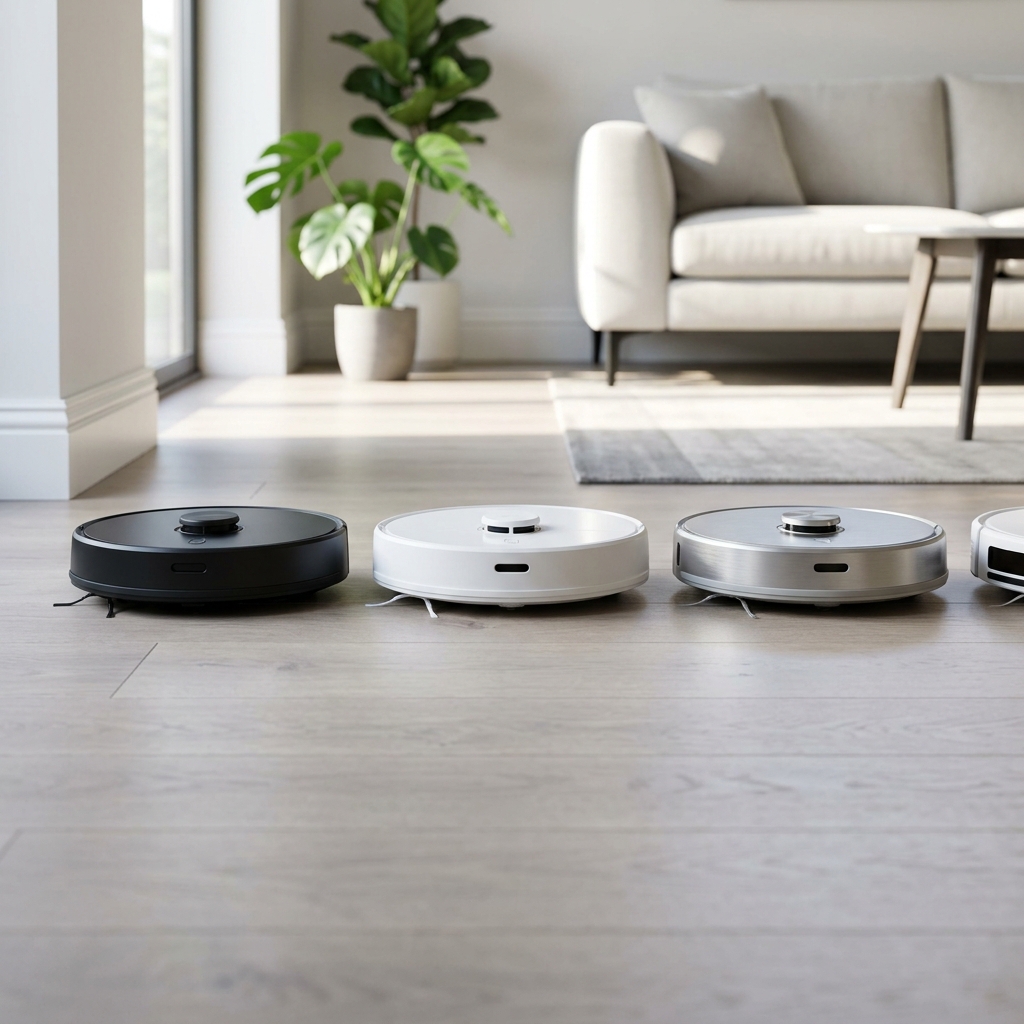
Key Features to Consider When Buying a Robot Vacuum (UK)
Choosing the right robot vacuum requires careful consideration of several key features:
- Suction Power (Pa): Measured in Pascals (Pa), suction power determines the vacuum’s ability to lift dirt and debris. Higher Pa values generally mean better cleaning, especially on carpets.
- Battery Life (minutes): Longer battery life is crucial for larger homes. Consider models with auto-recharge features that allow them to return to the base and continue cleaning where they left off.
- Smart Mapping (LiDAR vs. Camera-based): LiDAR (Light Detection and Ranging) uses lasers to create accurate maps, even in low light. Camera-based mapping relies on visual sensors, which can be less reliable in darkness.
- Navigation (algorithms): Sophisticated navigation algorithms ensure efficient cleaning patterns and prevent the robot from getting stuck.
- Dustbin Capacity (litres): A larger dustbin capacity means less frequent emptying.
- App Control & Voice Assistant Compatibility (Alexa/Google Assistant): App control allows you to schedule cleaning sessions, set virtual boundaries, and monitor progress remotely. Compatibility with Alexa or Google Assistant enables voice control.
- Brushroll Type (main/side): Brushroll design impacts performance on different floor types. Tangle-free brushrolls are essential for pet owners.
- Obstacle Avoidance: Newer models employ advanced sensors to identify and avoid obstacles like furniture, cables, and even pet waste.
- Self-Emptying Base: A self-emptying base automatically empties the dustbin into a larger bag, reducing maintenance.
- Multi-Floor Mapping: The ability to store maps of multiple floors is essential for multi-story homes.
- Zone Cleaning: Allows you to designate specific areas for cleaning, ideal for high-traffic zones.
Robot Vacuum Comparison Chart 2026 (UK)
| Model Name | Price (GBP) | Suction Power (Pa) | Battery Life (minutes) | Mapping Technology | Self-Emptying | Smart Features | Best For | Overall Score (out of 5) |
|---|---|---|---|---|---|---|---|---|
| iRobot Roomba j7+ | 799 | 3000 | 120 | LiDAR | Yes | Object Recognition, Smart Mapping, Zone Cleaning | Pet Owners, Mixed Floor Types | 4.5 |
| Shark AI Ultra Robot Vacuum | 649 | 2000 | 90 | Camera-Based | Yes | Matrix Cleaning, Multi-Surface Brushroll, Voice Control | Hard Floors, Low-Pile Carpets | 4.0 |
| Ecovacs Deebot X2 Omni | 1199 | 8000 | 180 | LiDAR | Yes (with Mop Wash & Dry) | All-in-One Station, Object Avoidance, Voice Control | Large Homes, Multi-Surface Cleaning | 4.8 |
| Roborock S8 Pro Ultra | 999 | 6000 | 150 | LiDAR | Yes (with Mop Wash & Dry) | VibraRise 2.0 Mopping, ReactiveAI 3.0 Obstacle Avoidance | Hard Floors, Carpets, Pet Owners | 4.7 |
| Samsung Jet Bot AI+ | 899 | 3000 | 90 | LiDAR | Yes | AI Object Recognition, Live View, Zone Cleaning | Smart Homes, Pet Owners | 4.3 |
| Dyson 360 Vis Nav | 1299 | 240 | 50 | Camera-Based | No | 360° Vision System, HEPA Filtration, Powerful Suction | Small Apartments, Allergy Sufferers | 4.2 |
| Neato Robotics D10 | 599 | 2500 | 120 | LiDAR | No | D-Shape Design, Zone Cleaning, Virtual No-Go Lines | Corners & Edges, Pet Hair | 3.8 |
Top Robot Vacuum Reviews (Detailed)
iRobot Roomba j7+
The Roomba j7+ remains a top contender in 2026. Its object recognition is genuinely impressive, avoiding everything from cables to, crucially, pet waste! Suction is excellent, handling both hard floors and carpets effectively. The self-emptying base adds significant convenience.
Pros: Excellent object avoidance, strong suction, self-emptying base, smart mapping.
Cons: Expensive, can be noisy.
Ecovacs Deebot X2 Omni
The Deebot X2 Omni is a premium all-in-one cleaning solution. The integrated station not only empties the dustbin but also washes and dries the mopping pads. Its suction power is among the highest on the market, and the mapping is precise.
Pros: All-in-one station, exceptional suction, comprehensive mapping, voice control.
Cons: Very expensive, large station footprint.
Roborock S8 Pro Ultra
The Roborock S8 Pro Ultra offers a fantastic balance of features and performance. The VibraRise 2.0 mopping system is a marked improvement, lifting the mop heads to avoid carpets. ReactiveAI 3.0 obstacle avoidance is highly effective.
Pros: Excellent mopping, strong suction, advanced obstacle avoidance, self-emptying.
Cons: Pricey, app can be complex.
Robot Vacuums for Pet Owners (UK)
Pet owners need robot vacuums that can handle copious amounts of fur and the occasional… accident. The iRobot Roomba j7+ and Roborock S8 Pro Ultra are excellent choices, thanks to their strong suction, tangle-free brushrolls and object avoidance capabilities. Regular brushroll cleaning is still recommended, even with tangle-free designs.
Robot Vacuums for Hard Floors vs. Carpets (UK)
For primarily hard floors, the Shark AI Ultra Robot Vacuum offers a great balance of performance and price. For homes with a significant amount of carpet, the Ecovacs Deebot X2 Omni and Roborock S8 Pro Ultra provide the suction power needed for deep cleaning.
Self-Emptying Robot Vacuums: Are They Worth It?
Self-emptying bases are a game-changer for convenience. While they add to the initial cost (typically £200-£400 extra), they significantly reduce maintenance. You’ll only need to replace the dust bag in the base every few months (bags cost around £20-£30). However, the base itself requires space, and some models can be quite bulky.
Robot Vacuum Maintenance & Troubleshooting (UK)
Regular maintenance is key to keeping your robot vacuum running smoothly:
- Brushroll Cleaning: Remove hair and debris from the brushroll at least once a week.
- Dustbin/Bag Emptying: Empty the dustbin (or replace the bag in a self-emptying base) regularly.
- Filter Replacement: Replace filters every 2-3 months.
- Troubleshooting: If the robot gets stuck, check for obstacles and ensure the sensors are clean. Reset the robot if navigation errors occur.
Future Trends in Robot Vacuum Technology (2026 & Beyond)
We’re seeing exciting developments in robot vacuum technology, including improved object recognition using AI, more powerful suction, and seamless integration with smart home ecosystems. Expect to see more models with advanced features like automatic mop washing and drying, and even the ability to identify and clean up specific spills.
Conclusion: Choosing the Right Robot Vacuum for Your Needs
Selecting the best robot vacuum for your home depends on your specific needs and budget. Consider your floor types, the size of your home, whether you have pets, and your desired level of automation. Use this comparison chart and the detailed reviews to make an informed decision. The Ecovacs Deebot X2 Omni offers the most comprehensive feature set, while the iRobot Roomba j7+ provides a great balance of performance and convenience. Don’t forget to factor in ongoing maintenance costs when making your choice.
FAQ
Q: How often should I empty the dustbin of my robot vacuum?
A: This depends on usage and the amount of debris in your home. Generally, emptying the dustbin 2-3 times per week is recommended for standard models, while self-emptying bases only require bag replacement every few months.
Q: Can robot vacuums climb over thresholds?
A: Most robot vacuums can handle thresholds up to around 2cm high. However, higher thresholds may require a ramp or manual assistance.
Q: Are robot vacuums noisy?
A: Robot vacuums do produce some noise, but newer models are becoming quieter. Noise levels typically range from 60-70 decibels.
Q: How long do robot vacuum batteries last?
A: Battery life varies by model, but most robot vacuums offer between 60 and 180 minutes of runtime on a single charge.
Q: Do I still need a traditional vacuum cleaner?
A: While robot vacuums are excellent for maintaining cleanliness, they may not replace a traditional vacuum cleaner entirely. A traditional vacuum is still useful for deep cleaning and tackling specific messes.