
Table of Contents
As an Amazon Associate, we earn from qualifying purchases. This means we may receive a small commission at no extra cost to you when you buy through links on this page.
What is a Robot Vacuum Self-Charging Station?
A robot vacuum self-charging station is the home base for your robotic cleaning companion. While basic robot vacuums can clean floors autonomously, they require manual intervention to recharge. A self-charging station eliminates this hassle. It’s a docking station designed to automatically recharge the robot vacuum’s battery when it’s low or after a cleaning cycle is complete. This is a significant step up in convenience and automation, allowing the robot to maintain a consistent cleaning schedule without relying on you to remember to plug it in.
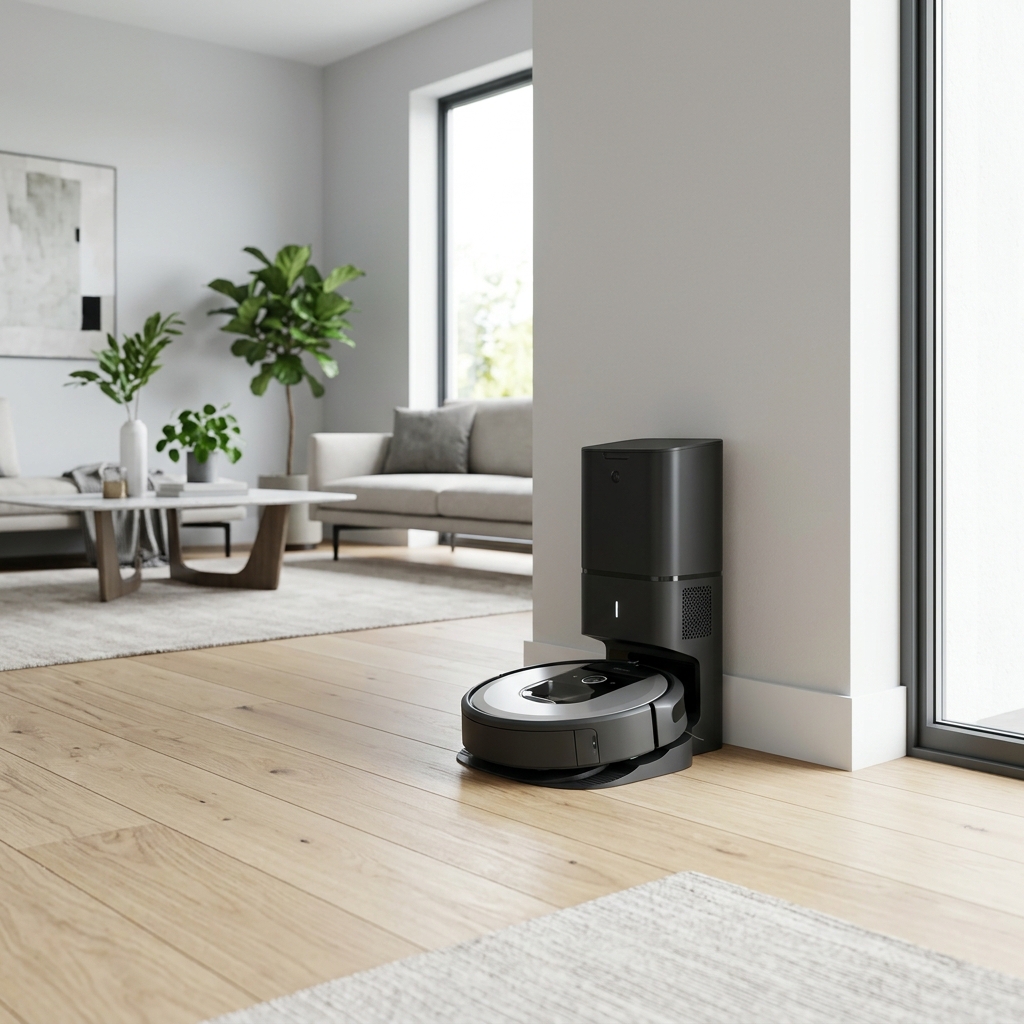
Think of it as a petrol station for your little cleaning helper! Without it, you’re constantly checking battery levels and manually initiating charging. A self-charging station provides true ‘set and forget’ operation, particularly valuable for larger homes or busy lifestyles.
How Do Robot Vacuum Self-Charging Stations Work?
The technology behind self-charging stations is surprisingly sophisticated. Most rely on a combination of infrared sensors and clever navigation systems. Here’s a breakdown:
- Infrared (IR) Sensors: The robot vacuum and the charging station communicate using infrared signals. The station emits an IR beacon, and the robot detects this signal to locate the dock.
- Docking Precision: Modern stations utilise more precise sensors, including cameras and LiDAR (Light Detection and Ranging), to ensure accurate docking, even in low-light conditions. Previous generations often struggled with alignment.
- Battery Management: The station isn’t just about power; it also manages the battery’s health. It uses intelligent charging algorithms to prevent overcharging and maximise battery lifespan.
- Navigation & Return: When the robot’s battery is low (typically below 20%), it initiates a return to base sequence. It uses its internal mapping system (often SLAM – Simultaneous Localisation and Mapping) to navigate back to the charging station.
However, issues can arise. Obstacles blocking the path to the dock, particularly in cluttered homes, can cause docking failures. Poor lighting, or a dirty IR sensor on either the robot or station, can also hinder the process. Software glitches, though less common in 2026 models, can occasionally cause navigation errors.
Benefits of Using a Self-Charging Robot Vacuum
Investing in a robot vacuum with a self-charging station offers several key advantages:
- Convenience: The most significant benefit. No more manual charging!
- Consistent Cleaning: The robot can maintain a regular cleaning schedule without your intervention, ensuring your floors are always tidy.
- Reduced User Effort: Free up your time for other tasks.
- Larger Homes: Essential for homes larger than a typical one-bedroom flat, where a single charge might not be sufficient to clean the entire area.
- Scheduled Cleaning (Even When Away): You can schedule cleaning cycles to run while you’re at work or on holiday, returning to a clean home.
Key Features to Consider When Choosing a Station (2026)
When selecting a robot vacuum *and* its charging station, look for these features:
- Docking Precision (Sensor Type): LiDAR-assisted docking is superior to IR-only systems, especially in challenging environments.
- Charging Speed: Faster charging means less downtime for the robot. Look for stations that offer rapid charging capabilities.
- Automatic Dustbin Emptying (Combo Stations): A significant convenience – the station automatically empties the robot’s dustbin into a larger, disposable bag.
- Compatibility: Ensure the station is compatible with your specific robot vacuum model. Not all stations are universal.
- Size of the Station: Consider available space. Some stations are quite bulky.
- Noise Level (for Combo Units): Automatic dustbin emptying can be noisy. Check decibel ratings if noise is a concern.
- Smart Home Integration (App Control): Most modern stations offer app control for scheduling, monitoring, and remote operation.
- Future-Proofing (Software Updates): Regular software updates ensure compatibility with new features and improve performance.
Top Robot Vacuum & Self-Charging Station Combinations (2026 – UK Market)
Here’s a comparison of some leading options available in the UK market:
| Product | Price (GBP) | Dustbin Emptying | Docking Precision | Smart Home | Suitability |
|---|---|---|---|---|---|
| iRobot Roomba j7+ with Clean Base | £899.99 | Yes | LiDAR & Camera | Google Assistant, Alexa | Large homes, pet owners, allergy sufferers |
| Shark AI Ultra Robot Vacuum with XL Self-Empty Base | £749.99 | Yes | LiDAR | Google Assistant, Alexa | Medium to large homes, good value |
| Ecovacs Deebot X2 Omni | £1199.0 | Yes (Wash & Dry) | A-3D vSLAM | Google Assistant, Alexa | Luxury option, comprehensive cleaning (mopping included) |
| Roborock S8 Pro Ultra | £1299.0 | Yes (Wash & Dry) | ReactiveAI 3D | Google Assistant, Alexa | High-end performance, advanced features |
| DreameBot L10s Ultra | £999.0 | Yes (Wash & Dry) | LiDAR Navigation | Google Assistant, Alexa | Strong suction, mop & dock features |
| Samsung Jet Bot AI+ | £949.0 | Yes | LiDAR & 3D Sensor | Bixby, Google Assistant, Alexa | Stylish design, powerful suction |
| Neato D10 with Auto Boost Base | £699.99 | Yes | LaserSmart | Google Assistant, Alexa | Good for corners & edges, D-shape design |
Robot Vacuum Self-Charging Stations with Automatic Dustbin Emptying: Are They Worth It?
Combo stations that automatically empty the robot’s dustbin are a premium feature, but are they worth the extra cost? For many, the answer is yes. The convenience of not having to empty the dustbin every few days (or even weeks) is significant. However, there are drawbacks.
Pros:
- Less frequent emptying – potentially only every 60 days depending on usage.
- Improved hygiene – less exposure to dust and allergens.
- More consistent suction – the robot isn’t hampered by a full dustbin.
Cons:
- Higher initial cost – these stations are considerably more expensive.
- Ongoing costs – you’ll need to replace the dustbin bags or filters regularly (typically £20-£40 per year).
- Station size – combo stations are generally larger and bulkier.
If you have pets, allergies, or simply dislike emptying dustbins, a combo station is a worthwhile investment. If you have a small home and limited dust accumulation, the extra cost might not be justified.
Troubleshooting Common Issues with Self-Charging Stations
Here’s a guide to resolving common problems:
- Robot Failing to Dock: Check for obstacles blocking the path. Ensure the IR sensor on both the robot and station are clean. Restart both devices.
- Docking Errors: Ensure the station is on a level surface. Poor lighting can also be a factor.
- Slow Charging: Check the power cable connection. A faulty power adapter might be the issue.
- Station Not Recognising Robot: Restart both devices. Check for software updates.
- Cleaning/Maintenance: Regularly clean the charging contacts on both the robot and station with a dry cloth. Empty the dustbin on the station (if applicable) as needed.
Future Trends in Robot Vacuum Self-Charging Technology
The future of robot vacuum self-charging technology is exciting. We can expect:
- Improved Docking Precision: Even more accurate docking, using advanced computer vision and AI.
- Faster Charging: The development of new battery technologies and charging protocols will enable significantly faster charging times.
- More Advanced Dustbin Emptying Systems: Perhaps even self-sealing and compression technology for even longer intervals between bag changes.
- Integration with Whole-Home Cleaning Ecosystems: Robot vacuums seamlessly coordinating with other smart home cleaning devices, like robot mops and window cleaners.
- Self-Cleaning Charging Stations: Stations that automatically clean the charging contacts and even manage the disposal of dustbin bags, further reducing user intervention.
FAQ
Q: How often will my robot vacuum need to return to the charging station?
This depends on the size of your home, the cleaning mode used, and the battery capacity of the robot. Typically, a robot will return to the station after approximately 60-90 minutes of cleaning, or when the battery drops below 20%.
Q: Can I use any charging station with my robot vacuum?
No. Compatibility is crucial. You need to use a charging station specifically designed for your robot vacuum model.
Q: What happens if the power goes out while my robot is charging?
The robot will stop charging, and when power is restored, it will resume charging from its current battery level. Most robots will remember their cleaning progress and resume where they left off.
Q: How much do replacement dustbin bags (for combo stations) cost?
The cost varies depending on the brand and quantity, but typically a pack of 30-60 bags costs between £20 and £40.
Q: Is a self-charging robot vacuum worth the extra money?
For most people, yes. The convenience and automation it offers are significant, especially for larger homes or those seeking a truly ‘set and forget’ cleaning solution.