
Table of Contents
As an Amazon Associate, we earn from qualifying purchases. This means we may receive a small commission at no extra cost to you when you buy through links on this page.
Introduction: The Rise of the Robot Vacuum
The UK has seen a significant surge in robot vacuum ownership in recent years. What started as a novelty item has become a genuine household helper, and by 2026, the market is brimming with sophisticated models. Driven by advancements in technology, robot vacuums now offer far more than basic floor cleaning. The benefits are clear: convenience, significant time-saving, and consistently improved home cleanliness. But with a vast array of features available, understanding what you actually *need* can be a challenge. This guide will break down the key features to consider when choosing a robot vacuum in 2026.
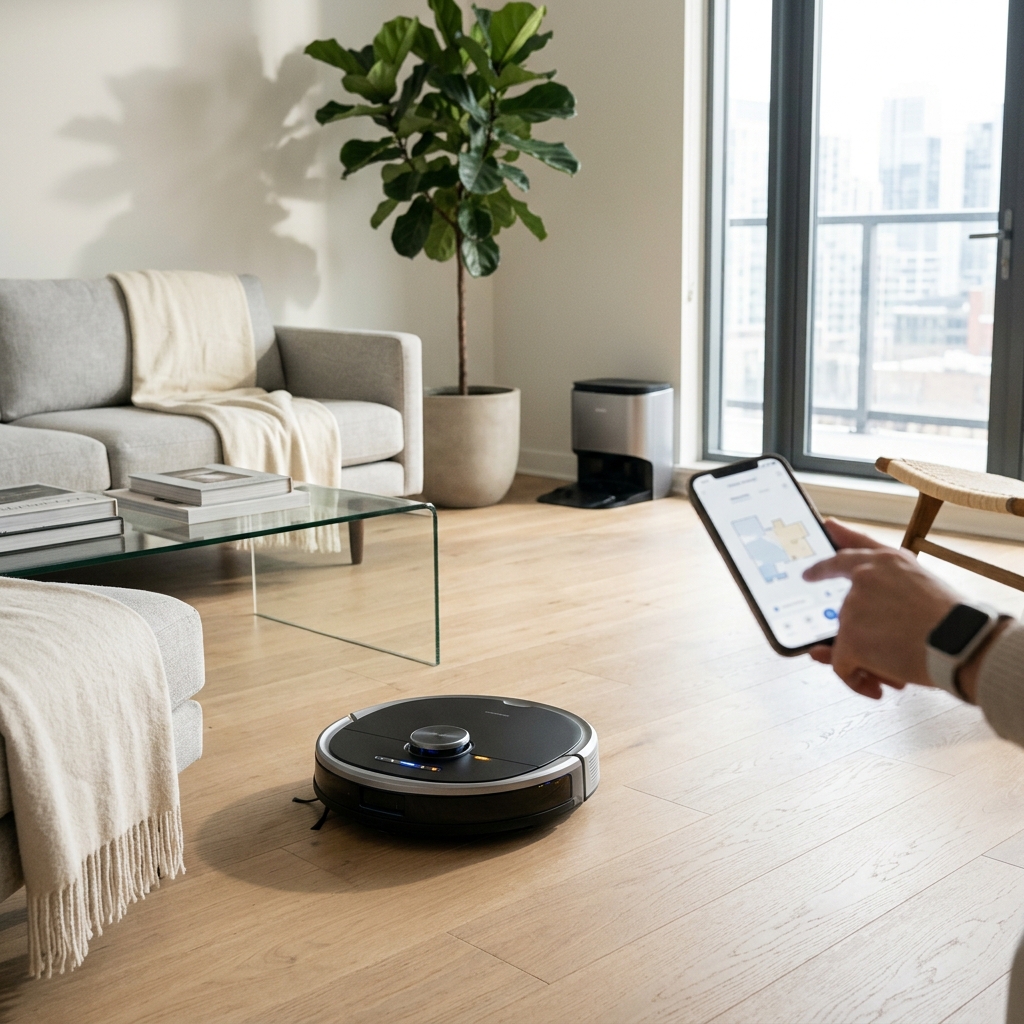
Navigation Technologies: How Does it Know Where to Go?
A robot vacuum’s ability to navigate your home effectively is crucial. Here’s a breakdown of the common technologies:
- Random Bounce: The simplest (and cheapest) method. Robots bounce off obstacles, covering the floor eventually, but with significant repetition and inefficiency. Becoming increasingly rare in newer models.
- Gyroscope: Uses internal sensors to track its movement, allowing for more systematic cleaning patterns than random bounce. Still prone to inaccuracies over larger areas.
- Visual Simultaneous Localization and Mapping (VSLAM): Employs a camera to build a map of the room as it cleans. Offers improved accuracy and efficiency compared to gyroscope-only systems.
- LiDAR (Light Detection and Ranging): Considered the gold standard. Uses lasers to create a highly detailed map of the environment. Offers the most accurate and efficient navigation, even in low-light conditions. Expect 2026 models to have LiDAR systems that are more compact and cheaper to produce.
By 2026, object recognition is becoming increasingly sophisticated. Systems can now accurately identify and avoid common household items like shoes, cables, and even pet waste, minimising the need for pre-cleaning.
| Navigation Technology | Accuracy | Efficiency | Approx. Price Range (2026) |
|---|---|---|---|
| Random Bounce | Low | Low | £150-£250 |
| Gyroscope | Medium | Medium | £250-£400 |
| VSLAM | High | High | £400-£650 |
| LiDAR | Very High | Very High | £650+ |
Cleaning Systems: Suction, Brushes, and More
The cleaning power of a robot vacuum depends on a combination of factors:
- Suction Power (Pa): Measured in Pascals. Higher Pa generally equates to better cleaning, especially on carpets. 2000Pa is considered a good starting point, with premium models exceeding 3000Pa.
- Brushroll Types:
- Main Brush: Typically either bristles or rubber. Bristles are better for deep carpet cleaning, while rubber is more effective on hard floors and less prone to hair tangles.
- Side Brushes: Sweep debris from edges and corners.
- Mopping Functionality: Many models now include mopping features, using a water tank and cleaning pad. Some offer sonic mopping for more effective stain removal.
Multi-surface cleaning is a key consideration. Robot vacuums should seamlessly transition between carpet, hardwood, and tile floors. Look for models with automatic carpet boost, which increases suction power on carpets.
Smart Mapping & Zoning: Cleaning Your Way
Smart mapping allows your robot vacuum to learn the layout of your home. This enables several useful features:
- Virtual Boundaries: Create no-go zones to prevent the robot from entering certain areas (e.g., around delicate furniture, pet food bowls).
- Zone Cleaning: Direct the robot to clean specific areas on demand.
- Multi-Floor Mapping: Store maps for multiple floors in your home.
- Room-Specific Cleaning Schedules: Schedule cleaning for individual rooms at different times.
Object avoidance is closely linked to smart mapping. Advanced algorithms and improved sensors mean 2026 models can identify and navigate around obstacles with greater accuracy and finesse.
Self-Emptying Bases: Less Work, More Clean
Self-emptying bases automatically empty the robot vacuum’s dustbin into a larger container, significantly reducing maintenance. This is a huge convenience for pet owners or those with large homes.
- Benefits: Reduced maintenance, larger dustbin capacity (typically several weeks’ worth of debris).
- How they work: The base uses powerful suction to pull debris from the robot vacuum.
- Cost Implications: Self-emptying bases add to the initial cost of the robot vacuum. You’ll also need to replace the dust bags in the base periodically (typically £20-£40 per pack).
App Control & Voice Assistant Integration: Control at Your Fingertips
Most robot vacuums come with a companion app that allows you to control the device remotely. Typical features include:
- Scheduling
- Zone cleaning
- Real-time mapping
- Cleaning history
- Firmware updates
Voice assistant integration (Amazon Alexa and Google Assistant) allows you to start, stop, and pause cleaning using voice commands. This adds another layer of convenience.
Advanced Features: What Else Can a Robot Vacuum Do?
Beyond the basics, here are some advanced features to consider:
- Object Recognition: Avoiding shoes, cables, pet waste.
- Pet Hair Specialists: Enhanced brushrolls and suction power for dealing with pet hair.
- Spot Cleaning: Concentrated cleaning in a small area.
- Edge Cleaning: Focused cleaning along walls and edges.
- Carpet Boost: Increased suction power on carpets.
- Automatic Brushroll Adjustment: Automatically adjusts the brushroll height to suit different floor types.
By 2026, we’re seeing increased integration of AI for cleaning optimisation. Robot vacuums can learn your cleaning habits and adjust their performance accordingly, for example, cleaning high-traffic areas more frequently.
Battery Life & Charging: Keeping it Powered
Battery capacity is measured in mAh (milliampere-hours). Larger mAh generally means longer run time. Expect run times of 90-120 minutes on a single charge. Automatic recharging and resuming cleaning functionality are standard features on most models.
Fast charging technologies are improving, with some 2026 models offering significantly reduced charging times.
Maintenance & Running Costs: What to Expect
Maintenance involves:
- Emptying dustbins (or replacing bags in self-emptying bases).
- Cleaning brushes (removing tangled hair and debris).
- Replacing filters (typically every 3-6 months – £15-£30 per filter).
Warranty information varies by manufacturer, but most offer a 1-2 year warranty.
Choosing the Right Features for You
Here’s a quick guide to help you choose:
- Small Apartment (under 800 sq ft): A basic model with gyroscope navigation and adequate suction power (£250-£400).
- Medium-Sized Home (800-1500 sq ft): VSLAM navigation, good suction power, and multi-floor mapping (£400-£650).
- Large Home (over 1500 sq ft) with Pets: LiDAR navigation, powerful suction, self-emptying base, and pet hair specialist features (£700+).
Our Top Pick
For an excellent balance of features and performance, the Roborock S8 Pro Ultra (GBP £849) stands out in 2026. It offers LiDAR navigation, powerful suction, self-emptying, and sonic mopping, making it a versatile choice for most homes. The Ecovacs Deebot X2 Omni (GBP £999) is a strong contender for those wanting top-of-the-line features and willing to pay a premium. The iRobot Roomba j7+ (GBP £799) is also highly rated for its intelligent object avoidance and effective cleaning.
FAQ
Q: How often should I empty the dustbin (or replace the bag)?
This depends on your home and usage. With regular use, you’ll likely need to empty the dustbin every 1-3 days, or replace the bag in a self-emptying base every 30-60 days.
Q: Can robot vacuums clean all floor types?
Most can, but performance varies. Look for models with automatic carpet boost and rubber brushrolls for optimal cleaning on different surfaces.
Q: Are robot vacuums noisy?
They do make some noise, but modern models are generally quieter than older versions. Noise levels typically range from 60-70dB.
Q: What happens if the robot vacuum gets stuck?
Most models will send a notification to your app if they get stuck. They will attempt to free themselves, but may require manual intervention.
Q: Is a self-emptying base worth the extra cost?
For many users, absolutely. The convenience of not having to empty the dustbin frequently outweighs the additional expense, especially for pet owners or those with large homes.