
Table of Contents
As an Amazon Associate, we earn from qualifying purchases. This means we may receive a small commission at no extra cost to you when you buy through links on this page.
Introduction: The Rise of the Robot Vacuum in the UK
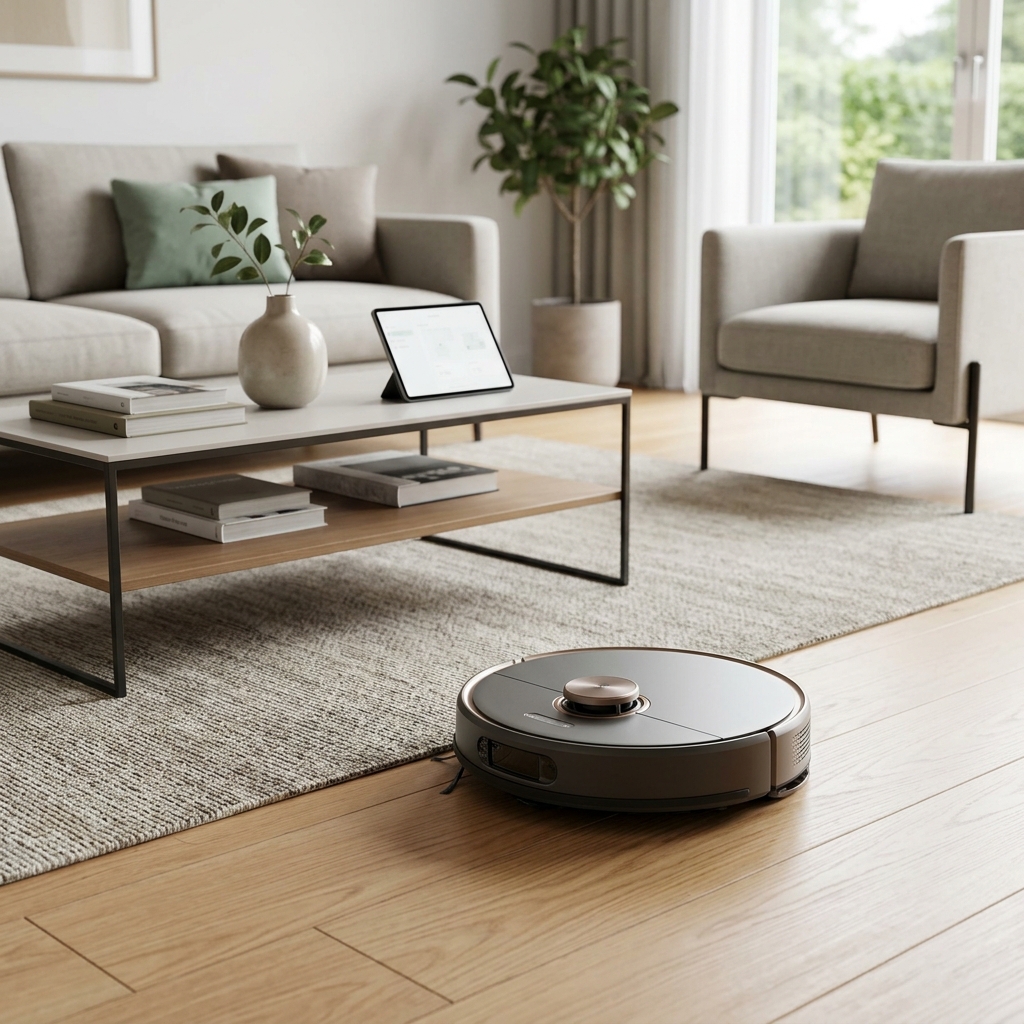
The UK robot vacuum market has experienced significant growth in recent years, and this trend is projected to continue into 2026. More and more households are embracing the convenience and time-saving benefits these automated cleaners offer. Busy lifestyles, coupled with technological advancements, are driving demand. In 2026, we expect to see further integration with smart home ecosystems, improved object recognition, and even more sophisticated mapping capabilities. The market is shifting towards premium models offering complete automation, including self-emptying, self-cleaning, and advanced mopping functions.
Navigation Technologies: How Does Your Robot ‘See’?
How a robot vacuum navigates your home profoundly impacts its cleaning efficiency. Here’s a breakdown of the key technologies:
- Random Bounce: The simplest and most affordable method. Robots with this technology move in random directions, bouncing off obstacles. Least effective for larger or cluttered homes.
- Gyroscope: Uses sensors to track its movement and create a basic map. More efficient than random bounce, but still prone to inaccuracies and can struggle with complex layouts.
- Camera-Based (VSLAM): Utilises a camera to create a visual map of the surroundings. Offers better accuracy than gyroscope-based systems, particularly in well-lit environments.
- LiDAR (Light Detection and Ranging): Emits laser beams to measure distances and create a highly detailed map. Considered the most accurate and reliable navigation technology, even in low-light conditions. LiDAR is now becoming more common in mid-range models.
By 2026, we’ll see even more refined VSLAM and LiDAR systems. Expect improved algorithms that allow robots to better identify and navigate around obstacles, and increasingly accurate mapping, even in dynamic environments with moving objects.
Navigation Technology Comparison (2026)
| Technology | Accuracy | Cost (Approx.) | Suitable For |
|---|---|---|---|
| Random Bounce | Low | £150 – £250 | Small, uncluttered apartments |
| Gyroscope | Medium | £250 – £400 | Small to medium-sized homes with simple layouts |
| VSLAM | High | £400 – £700 | Medium to large homes with moderate clutter |
| LiDAR | Very High | £700+ | Large, complex homes with lots of furniture and potential obstacles |
Suction Power & Brushroll Design: Cleaning Performance Explained
Suction power, measured in Pascals (Pa), is crucial for picking up dirt, dust, and debris. Higher Pa generally means better cleaning on carpets. However, suction power isn’t the only factor. Brushroll design also plays a vital role.
- Central Brushroll: A single brushroll located in the centre of the cleaning head. Effective on hard floors and low-pile carpets.
- Dual Brushrolls: Two counter-rotating brushrolls. Provide more powerful cleaning, especially on carpets, and are better at lifting embedded dirt.
- Tangle-Free Brushrolls: Designed to resist hair wrapping, reducing maintenance. A significant benefit for pet owners.
2026 models will showcase improved brushroll materials and designs. We anticipate more widespread adoption of tangle-free technologies and brushrolls that automatically adjust to different floor types.
Smart Mapping & Zoning: Cleaning Where *You* Want
Smart mapping enables robot vacuums to create a detailed map of your home, allowing for targeted cleaning. Key features include:
- Room Recognition: The robot identifies and names individual rooms.
- Virtual Boundaries/No-Go Zones: Allows you to designate areas the robot shouldn’t enter (e.g., around pet bowls, fragile objects).
- Selective Room Cleaning: Choose specific rooms to clean.
- Multi-Floor Mapping: Stores maps for multiple floors.
Mapping accuracy and ease of use have improved dramatically in recent years. By 2026, we expect even more intelligent mapping algorithms that can automatically detect furniture and obstacles, and dynamically adjust cleaning paths. The ability to edit maps via the app will also become more intuitive.
Self-Emptying Bases: Less Work, More Clean
Self-emptying bases automatically empty the robot’s dustbin into a larger container, reducing the frequency of manual emptying. Benefits include reduced maintenance and improved convenience.
Different base technologies exist:
- Bagged Bases: Use disposable bags to collect dust and debris. Hygienic but require regular bag replacements (approx. £20-£30 for a pack of 6).
- Bagless Bases: Empty dust and debris into a container that you manually empty. More environmentally friendly, but can be messier.
In 2026, self-emptying bases will become more affordable and commonplace, even in mid-range models. Expect larger dustbin capacities and more efficient emptying mechanisms.
Advanced Features: Mopping, Object Recognition & Voice Control
Many robot vacuums now offer additional features:
- Mopping Capabilities: Some models combine vacuuming and mopping. Technologies include vibration mopping, sonic mopping (high-frequency vibrations), and rotating mop pads.
- Object Recognition: Uses cameras and AI to identify and avoid obstacles like shoes, cables, and pet waste. Still imperfect, but improving rapidly.
- Voice Control: Compatible with voice assistants like Alexa, Google Assistant, and Siri, allowing you to start, stop, and schedule cleaning with voice commands.
Battery Life & Charging: Run Time & Return to Base
Battery capacity (measured in mAh) determines how long the robot can clean on a single charge. Typical run times range from 60 to 120 minutes. Auto-recharge and resume cleaning functionality is standard on most models. For larger homes, consider a robot with a longer run time or one that quickly recharges and resumes cleaning.
By 2026, battery technology will continue to improve, offering longer run times and faster charging speeds.
App Control & Smart Home Integration: Taking Control
Robot vacuum apps allow you to control all aspects of the cleaning process: scheduling, cleaning modes, map management, and remote control. Integration with other smart home devices (e.g., smart lights) via IFTTT is also common. App usability and feature richness are key considerations.
Maintenance & Running Costs: Keeping Your Robot Happy
Routine maintenance tasks include emptying dustbins, cleaning brushrolls, and replacing filters. HEPA filters trap allergens and dust mites, improving air quality. Filter replacement costs vary (approx. £20-£40 per filter). Long-term running costs include electricity consumption and the cost of consumables like filters and bags (if applicable).
Choosing the Right Robot Vacuum: A 2026 Checklist
Here’s a checklist to help you choose the right robot vacuum:
- Home Size & Layout: Larger homes require longer run times and more advanced navigation.
- Floor Type: Carpet vs. hard floors will influence suction power and brushroll requirements.
- Pets: Tangle-free brushrolls and strong suction are essential for pet owners.
- Budget: Prices range from £150 to over £1300.
- Smart Features: Consider mapping, zoning, and voice control if these are important to you.
- Self-Emptying Base: Worth the investment if you want minimal maintenance.
Product Comparison (2026)
| Product Name | Price (GBP) | Navigation | Self-Emptying | Mopping |
|---|---|---|---|---|
| iRobot Roomba j7+ | £799.99 | VSLAM | Yes | No |
| Shark AI Ultra Robot Vacuum | £549.99 | VSLAM | No | No |
| Ecovacs Deebot X2 Omni | £1099.99 | LiDAR | Yes | Yes (Sonic) |
| Roborock S8 Pro Ultra | £1299.99 | LiDAR | Yes | Yes (Vibration) |
| Samsung Jet Bot AI+ | £999.99 | LiDAR | Yes | No |
FAQ
Q: How often do I need to empty the dustbin (if not using a self-emptying base)?
Typically, you’ll need to empty the dustbin after every 1-2 cleaning cycles, depending on the amount of debris picked up.
Q: Are robot vacuums noisy?
Robot vacuums do produce some noise, but many models are designed to be relatively quiet. Noise levels vary, but typically range from 60-70 decibels.
Q: Can robot vacuums handle thick carpets?
Yes, but models with higher suction power and dual brushrolls are best suited for thick carpets. Some models can automatically increase suction power when detecting carpets.
Q: Will a robot vacuum work on dark carpets?
Some older models struggled with dark carpets because their sensors had difficulty recognizing the floor surface. However, 2026 models incorporate improved sensor technology to better handle dark floors.
Q: How do I keep my robot vacuum running smoothly?
Regular maintenance is key! Empty the dustbin, clean the brushrolls, replace filters as needed, and check for any tangled hair or debris.