
Table of Contents
As an Amazon Associate, we earn from qualifying purchases. This means we may receive a small commission at no extra cost to you when you buy through links on this page.
Introduction: The Rise of Robotic Floor Cleaning
In the UK, the demand for convenient home cleaning solutions has skyrocketed in recent years. Robot vacuums and mop robots have become increasingly popular, offering a hands-off approach to maintaining spotless floors. By 2026, advancements in artificial intelligence, sensor technology, and battery life are expected to make these devices even more efficient and intelligent. They are no longer a luxury but a practical solution for busy households, offering time savings and consistent cleaning performance. This article breaks down the key differences, pros and cons, and provides guidance to help you choose the right robotic cleaner for your home.
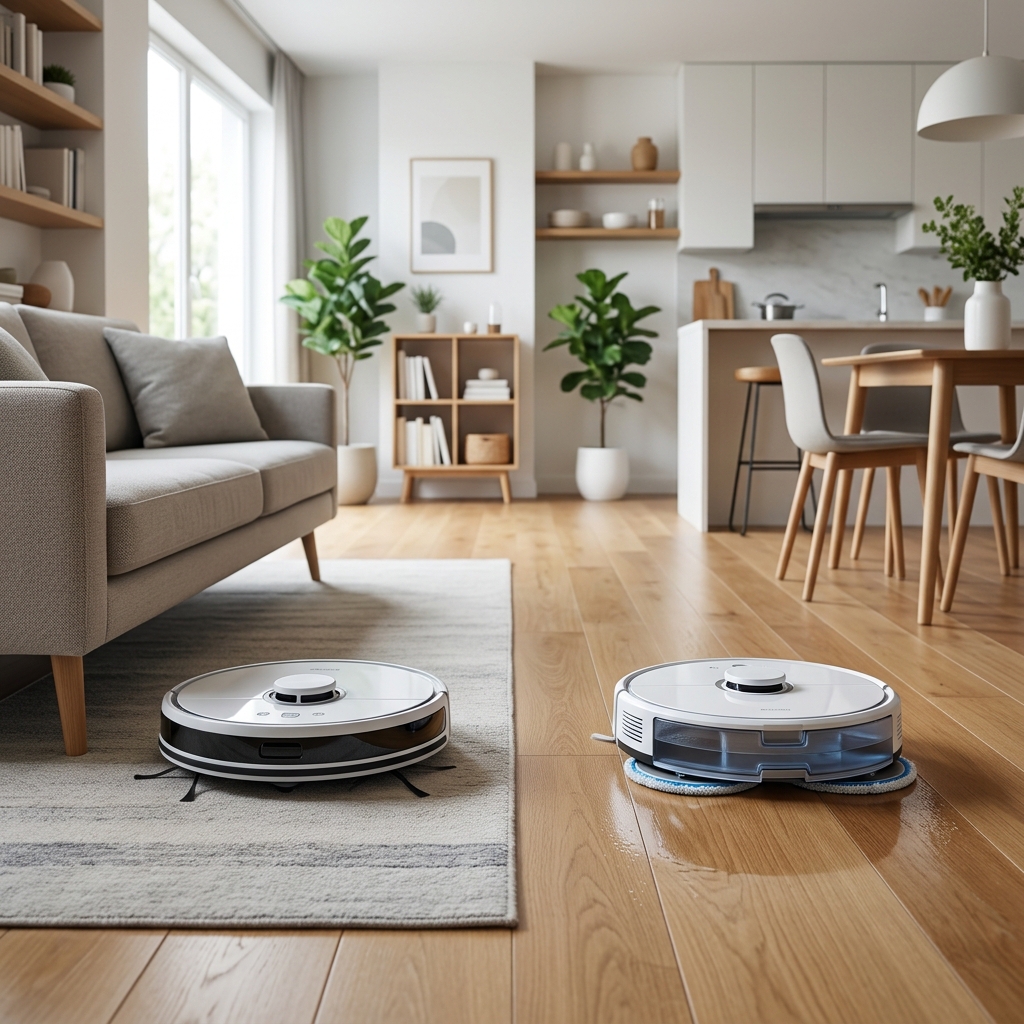
What is a Robot Vacuum?
Robot vacuums are autonomous devices designed to clean floors by sucking up dust, dirt, and debris. Most modern models utilise a combination of brushes and powerful suction. Common types include cyclone vacuums (offering consistent suction), bagless vacuums (easy to empty), and models with self-emptying bases (reducing manual intervention). By 2026, we anticipate significant improvements in navigation – utilising advanced SLAM (Simultaneous Localisation and Mapping) technology – resulting in more efficient cleaning paths and fewer missed spots. Obstacle avoidance will be refined with improved object recognition, allowing robots to navigate around furniture, toys, and even pet messes with greater ease. Suction power will also continue to increase, tackling even embedded dirt on carpets.
What is a Robot Mop?
Robot mops, as the name suggests, are designed to wash hard floors. They differ from vacuums in their cleaning mechanism, utilising either scrubbing pads, spray mops, or even steam mops. Scrubbing mops use rotating pads to physically scrub the floor, while spray mops dispense cleaning solution and wipe the surface. Steam mops use heated water to sanitise and clean. Water tank capacity is a crucial factor, determining how much area the robot can mop before needing a refill. By 2026, we’ll see more effective stain removal technologies integrated into robot mops, potentially utilising targeted cleaning solutions and increased scrubbing pressure. Larger water tanks and automatic water replenishing systems will also become more common, allowing robots to cover greater areas without requiring frequent intervention.
Robot Vacuum vs. Robot Mop: Key Differences
Here’s a direct comparison:
| Feature | Robot Vacuum | Robot Mop |
|---|---|---|
| Cleaning Mechanism | Suction, Brushes | Scrubbing, Spraying, Steaming |
| Suitable Floor Types | Carpets, Hard Floors, Rugs | Hard Floors (Tile, Wood, Laminate) |
| Types of Dirt Tackled | Dust, Debris, Pet Hair, Small Particles | Spills, Stains, Sticky Messes |
| Maintenance Requirements | Emptying Dustbin, Cleaning Brushes, Filter Replacement | Refilling Water Tank, Cleaning Mopping Pads, Cleaning Solution |
| Noise Levels | Generally Louder (60-75dB) | Generally Quieter (50-65dB) |
Robot Vacuum Pros & Cons
Pros:
- Excels at cleaning carpets and removing embedded dirt.
- Effectively removes dust, debris, and pet hair.
- Self-emptying base models minimise manual intervention.
- Advanced navigation systems ensure thorough cleaning.
- Good for allergy sufferers, trapping allergens in the dustbin.
Cons:
- Struggles with sticky messes and wet spills.
- Requires frequent dustbin emptying (unless self-emptying).
- Can be noisy during operation.
- May struggle with thick pile carpets or high obstacles.
Robot Mop Pros & Cons
Pros:
- Ideal for cleaning hard floors and removing spills.
- Effectively removes stains and sticky messes.
- Quieter operation compared to robot vacuums.
- Some models offer steam cleaning for sanitisation.
Cons:
- Doesn’t work effectively on carpets or rugs.
- Requires clean water refills and mopping pad cleaning.
- May leave streaks or residue if not properly maintained.
- Less effective at removing dry dust and debris.
2-in-1 Robot Vacuums & Mops: The Best of Both Worlds?
Combination robot vacuums and mops offer a compromise, vacuuming and mopping in a single pass. Typically, they vacuum first and then engage a mopping function, either by dragging a damp cloth or dispensing cleaning solution. However, these models often have limitations. Mopping performance can be less effective than dedicated robot mops, and the vacuuming process may be compromised while the mopping attachment is engaged. By 2026, we expect significant improvements in 2-in-1 models, with the ability to simultaneously vacuum and mop, utilising advanced technologies to separate dust and water efficiently, and offering adjustable mopping pressure for different floor types.
Which is Right for You? A Decision Guide
Consider these factors:
- Flooring Type: Primarily carpets? Choose a robot vacuum. Primarily hard floors? Choose a robot mop. A mix? Consider a 2-in-1.
- Lifestyle: Busy household with frequent spills? A robot mop or 2-in-1 is ideal. Pet owners with shedding animals? A robot vacuum with strong suction is recommended.
- Cleaning Needs: Focus on dust and debris removal? Robot vacuum. Focus on stain removal and floor sanitisation? Robot mop.
- Allergies: Robot vacuums with HEPA filters are best for allergy sufferers.
Top Robot Vacuums & Mops to Buy in the UK (2026)
Entry-Level (£200 – £400)
- Proscenic V9 Pro: Reliable vacuuming, good suction, affordable.
- ILIFE V3s Pro: Budget-friendly 2-in-1 option, suitable for small apartments.
Mid-Range (£400 – £800)
- Yeedi Vac Max: Excellent suction, good navigation, app control.
- Bissell SpinWave R5: Effective hard floor mopping, good value for money.
Premium (£800+)
- iRobot Roomba j9+ (Complete Clean): Advanced features, self-emptying base, intelligent mapping. (£1199)
- DreameBot L20s Ultra: All-in-one cleaning station, mopping and drying function. (£1399)
- Ecovacs Deebot X2 Omni: Powerful suction, comprehensive cleaning system, self-emptying and mopping. (£1499)
- Roborock S8 Pro Ultra: Exceptional cleaning performance, self-emptying, self-washing mop. (£1599)
- Narwal Freo: Focus on mopping performance, unique cleaning system. (£999)
Future Trends in Robotic Floor Cleaning (2026 & Beyond)
The future of robotic floor cleaning is bright. We anticipate:
- AI-Powered Cleaning: Robots will learn your home layout and cleaning preferences, adapting their cleaning strategies accordingly.
- Object Recognition: Improved ability to identify and avoid obstacles, including cables, shoes, and even pet waste.
- Smart Home Integration: Seamless integration with smart home ecosystems like Amazon Alexa, Google Home, and Apple HomeKit.
- Advanced Sensor Technology: More precise mapping and navigation, allowing robots to clean even the most complex floor plans.
- Sustainable Cleaning Solutions: Eco-friendly cleaning solutions and biodegradable mopping pads.
Conclusion: Making the Smart Choice for a Cleaner Home
Choosing between a robot vacuum and a robot mop depends on your individual needs and flooring. Robot vacuums excel at carpets and dry debris, while robot mops are ideal for hard floors and spills. 2-in-1 models offer a compromise, but may not match the performance of dedicated devices. By carefully considering your flooring type, lifestyle, and cleaning preferences, you can make the smart choice and enjoy a cleaner, more convenient home in 2026 and beyond.
FAQ
Q: Can robot vacuums clean both carpets and hard floors?
A: Yes, most robot vacuums can handle both carpet and hard floors. However, performance may vary depending on the type of carpet and the robot’s suction power.
Q: How often do I need to empty the dustbin or refill the water tank?
A: This depends on the robot model and the size of your home. Self-emptying bases significantly reduce the frequency of dustbin emptying. Water tank capacity dictates how often refills are needed, typically ranging from one to three times per cleaning cycle.
Q: Are robot vacuums and mops noisy?
A: Robot vacuums are generally noisier than robot mops, typically operating between 60-75dB. Robot mops are usually quieter, around 50-65dB.
Q: Can robot vacuums and mops navigate around furniture?
A: Most modern robots utilise sensors and mapping technology to navigate around furniture. However, low-hanging furniture or small obstacles may pose a challenge.
Q: Are robot vacuums and mops suitable for pet owners?
A: Yes, especially robot vacuums with strong suction and specialised pet hair brushes. They can effectively remove pet hair from carpets and hard floors.