
Table of Contents
As an Amazon Associate, we earn from qualifying purchases. This means we may receive a small commission at no extra cost to you when you buy through links on this page.
Introduction: Why Brushroll Type Matters
Robot vacuums have become increasingly sophisticated, but at their heart, the brushroll remains a crucial component dictating cleaning performance. This rotating cylinder, responsible for agitating dirt and debris from your floors, dramatically influences how effectively your robot vacuum cleans various surfaces – from smooth hardwood to plush carpets and everything in between. Choosing the right brushroll isn’t just about convenience; it’s about ensuring you’re getting the deepest clean possible.
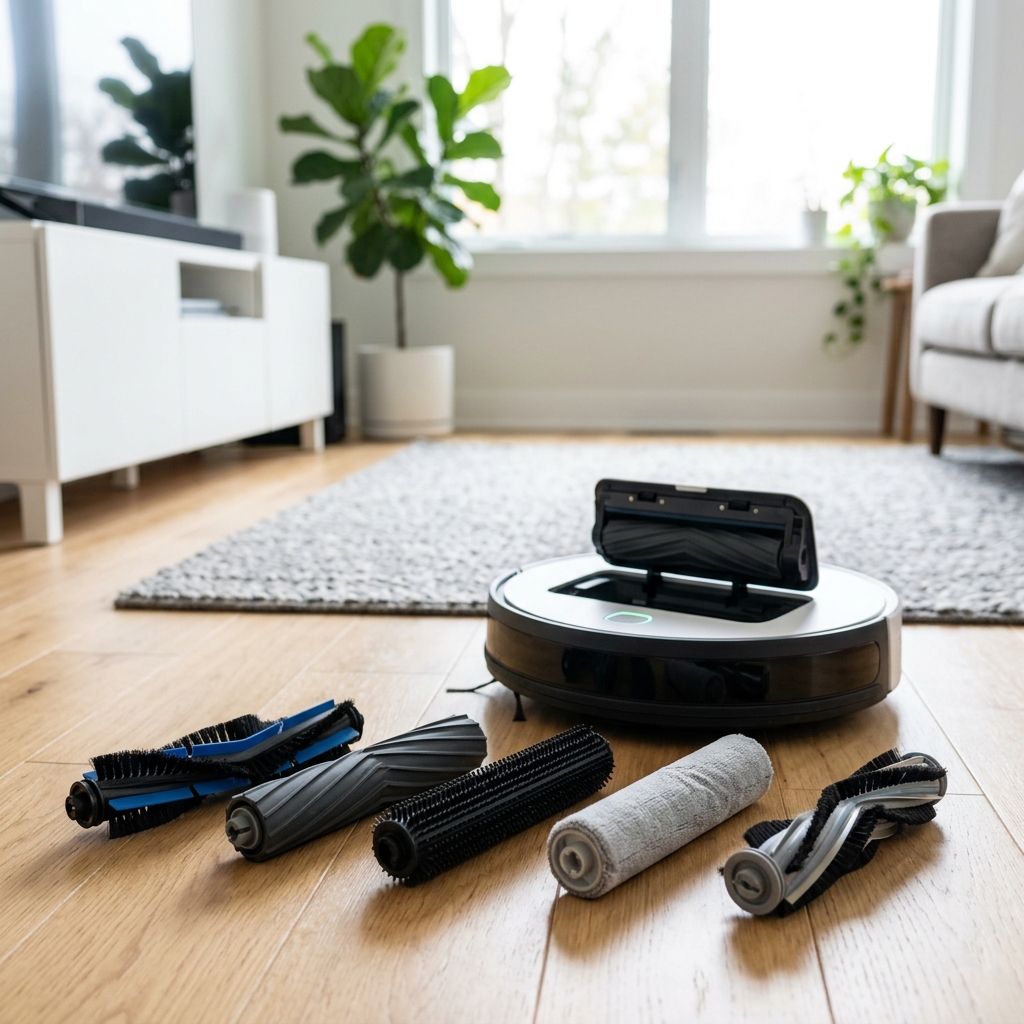
In 2026, we’re seeing a surge in smart brushroll technology. Expect more dynamically adjusting brushrolls that respond to floor type, self-cleaning mechanisms to reduce maintenance, and even integrated sensors to optimise cleaning based on debris detection. Understanding the different types of brushrolls available will be paramount to selecting a robot vacuum that truly meets your home’s needs.
The Main Brushroll Types Explained
There’s a surprisingly diverse range of brushroll designs. Each type offers unique advantages and disadvantages, making them better suited for certain floor types and cleaning challenges. Let’s delve into the primary types you’ll encounter:
- Bristle Brushrolls: The traditional workhorse.
- Rubber Brushrolls: Gentle yet effective, especially for hard floors.
- Combination Brushrolls: Aiming for versatility.
- V-Shaped Brushrolls: Focused on edges and corners.
- Detangling Brushrolls: Designed to tackle hair and pet fur.
Bristle Brushrolls: The Standard Option
Bristle brushrolls, often made of nylon or polypropylene, have been the standard for years. These brushrolls use a series of bristles to agitate dirt and debris, lifting it for suction. They are generally effective on hard floors, picking up dust and smaller particles. On low-pile carpets, they provide enough agitation to dislodge dirt embedded in the fibres.
Pros:
- Effective on hard floors and low-pile carpets.
- Relatively inexpensive.
- Widely available.
Cons:
- Can struggle with thicker carpets, lacking sufficient agitation.
- Prone to tangling with pet hair and long human hair.
- Can scratch delicate hard floors if bristles are too stiff.
Rubber Brushrolls: Gentle & Effective
Rubber brushrolls are gaining popularity, especially for homes with a mix of hard floors and carpets. These brushrolls use a series of rubber fins or blades to sweep debris into the suction path. They’re significantly gentler on hard floors, minimising the risk of scratches. Their flexible nature also makes them surprisingly effective at picking up pet hair, as it tends to roll *up* rather than wrap *around* the brush.
By 2026, we anticipate advancements in rubber compounds, offering increased durability and improved grip for even more effective cleaning. Some manufacturers are experimenting with textured rubber patterns to enhance agitation on carpets.
Pros:
- Excellent for hard floors – won’t scratch.
- Very effective at picking up pet hair.
- Quieter operation compared to bristle brushrolls.
- Good for allergy sufferers, as they don’t kick up as much dust.
Cons:
- May not be as effective on very thick or plush carpets.
- Can sometimes struggle with larger debris.
Combination Brushrolls: The Best of Both Worlds?
Combination brushrolls attempt to bridge the gap between bristle and rubber technology. They typically feature a central core of rubber fins interspersed with rows of bristles. This design aims to provide the gentleness of rubber on hard floors while retaining the agitation power of bristles on carpets.
Pros:
- Versatile – can handle both hard floors and carpets reasonably well.
- Generally good at picking up pet hair.
Cons:
- Often a compromise – may not excel on either surface compared to dedicated brushroll types.
- Can still be prone to tangling, though usually less so than pure bristle brushrolls.
V-Shaped Brushrolls: Corner & Edge Cleaning Specialists
V-shaped brushrolls feature a distinctive V-shaped design, with brush bristles angled outwards. This allows them to reach further into corners and along edges, where dirt often accumulates. These brushrolls are typically found in robot vacuums designed for more focused cleaning in smaller areas.
Pros:
- Excellent corner and edge cleaning.
- Effective at tackling dirt buildup along walls.
Cons:
- Less effective on larger, open areas – coverage can be slower.
- May not have the same overall agitation power as other brushroll types.
Detangling Brushrolls: A Solution for Long Hair & Pet Owners
For households with long-haired individuals or shedding pets, tangled brushrolls are a constant frustration. Detangling brushrolls employ various technologies to minimise this issue. These include comb-like structures within the brushroll, anti-tangle end caps, and specifically designed fin shapes that prevent hair from wrapping around the central shaft.
Pros:
- Significantly reduces hair tangling.
- Saves time and effort on maintenance.
- Improves cleaning performance by maintaining consistent agitation.
Cons:
- Can be more expensive than standard brushrolls.
- May still require occasional cleaning, though less frequently.
Advanced Brushroll Technologies in 2026
The future of robot vacuum brushrolls is looking innovative. Here are a few emerging technologies:
- Self-Cleaning Brushrolls: These utilise integrated combs and suction to automatically remove hair and debris from the brushroll during operation.
- Dynamically Adjusting Brushrolls: Sophisticated sensors detect floor type and automatically adjust the brushroll’s height and speed for optimal cleaning.
- Brushrolls with Integrated Sensors: Some models now include sensors *within* the brushroll to detect the amount and type of debris, allowing the vacuum to adjust its suction power accordingly.
Choosing the Right Brushroll for Your Home
Selecting the right brushroll depends on your specific needs. Here’s a quick guide:
Decision Table:
| Floor Type | Pet Ownership | Recommended Brushroll |
|---|---|---|
| Mostly Hard Floors | No | Rubber Brushroll |
| Mostly Hard Floors | Yes | Rubber Brushroll or Detangling Brushroll |
| Mostly Low-Pile Carpet | No | Bristle Brushroll |
| Mostly Low-Pile Carpet | Yes | Detangling Brushroll or Combination Brushroll |
| Mix of Hard Floors & Carpet | No | Combination Brushroll |
| Mix of Hard Floors & Carpet | Yes | Detangling Brushroll or Combination Brushroll |
Brushroll Maintenance & Replacement
Regular maintenance is crucial for keeping your robot vacuum’s brushroll performing optimally. Remove any tangled hair, debris, and dust regularly – ideally after each use. Most robot vacuums have easily removable brushrolls for cleaning.
Brushrolls will eventually wear out and need replacing. The lifespan varies depending on usage and floor type, but generally, you can expect to replace a brushroll every 6-12 months. Replacement brushroll kits are readily available.
Estimated 2026 Prices (GBP):
- iRobot Roomba j7+ with Object Detection (Brushroll Replacement Kit): £45
- Shark AI Ultra Robot Vacuum (Multi-Surface Brushroll): £30
- Ecovacs Deebot X2 Omni (Deep Clean Brushroll): £50
- Roborock S8 Pro Ultra (VibraRise 2.0 Mopping System & Brushroll): £65
- DreameBot L10s Ultra (Dual Brushroll System): £40
- Samsung Jet Bot AI+ (Pet Hair Brushroll): £35
Conclusion: Maximising Your Robot Vacuum’s Cleaning Power
The brushroll is the engine of your robot vacuum’s cleaning power. By understanding the different types available and choosing the one that best suits your home’s floor surfaces and your lifestyle, you can significantly enhance your cleaning results. Don’t underestimate the importance of regular maintenance, and be prepared to replace your brushroll when necessary to keep your robot vacuum operating at peak performance. With advancements in 2026, selecting the correct brushroll will be key to a truly automated and effective cleaning experience.
FAQ
Q: How often should I clean my robot vacuum’s brushroll?
Ideally, clean your brushroll after every use, or at least every few uses. This removes hair, debris, and dust that can reduce its effectiveness.
Q: Can I use any brushroll with any robot vacuum?
No. Brushrolls are typically designed specifically for certain robot vacuum models. Always check your robot vacuum’s manual or manufacturer’s website for compatible brushroll replacements.
Q: What’s the difference between a main brushroll and a side brush?
The main brushroll is the larger cylinder that agitates the floor and lifts debris. Side brushes are smaller, spinning brushes used to sweep dirt from edges and corners into the path of the main brushroll.
Q: Are self-cleaning brushrolls worth the extra cost?
For pet owners or those with long hair, self-cleaning brushrolls can be a significant time-saver and reduce maintenance requirements. They are a worthwhile investment if you value convenience.
Q: Will a rubber brushroll damage my hardwood floors?
Generally, no. Rubber brushrolls are designed to be gentle on hard floors. However, if your floors are particularly delicate or have a special finish, it’s always a good idea to test the brushroll in an inconspicuous area first.