
Table of Contents
As an Amazon Associate, we earn from qualifying purchases. This means we may receive a small commission at no extra cost to you when you buy through links on this page.
What is Robot Vacuum Mapping & Why Does It Matter?
In 2026, a robot vacuum without mapping technology is almost a relic of the past. Mapping allows your robot vacuum to intelligently navigate your home, creating a virtual floorplan to clean efficiently. There are three primary mapping technologies:
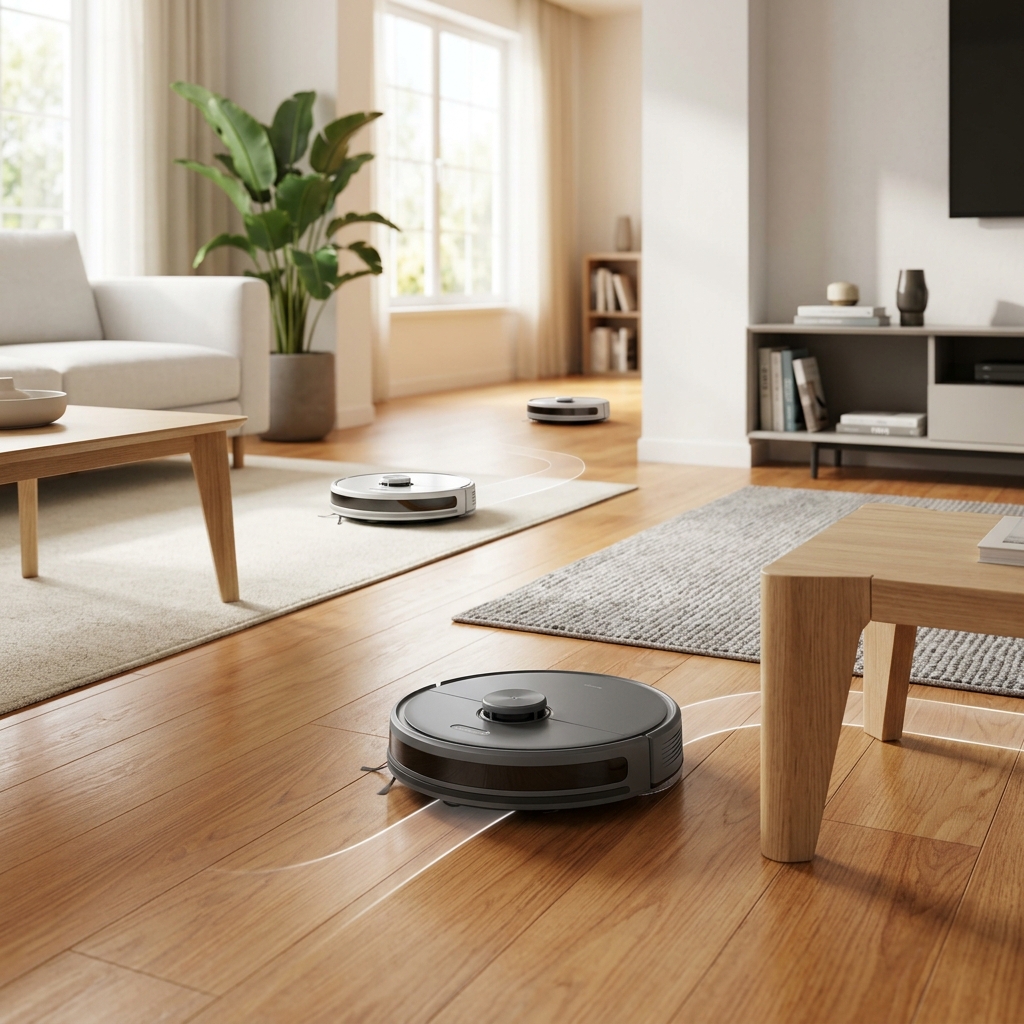
- LiDAR (Light Detection and Ranging): Uses lasers to create a precise map of your surroundings. It’s highly accurate, even in low light.
- vSLAM (Visual Simultaneous Localization and Mapping): Employs cameras and algorithms to build a map based on visual landmarks. Performance can be affected by dim lighting.
- Camera-Based Mapping: Relies solely on a camera to navigate. Similar limitations to vSLAM regarding low-light conditions, but often more affordable.
Why is mapping crucial? It unlocks features like:
- Efficient Cleaning: Avoids repetitive cleaning of the same areas.
- No-Go Zones: Designate areas to avoid (pet bowls, children’s toys).
- Multi-Floor Mapping: Stores maps for multiple levels of your home.
- Zoned Cleaning: Target specific rooms or areas for cleaning.
Key Features to Consider When Buying a Mapping Robot Vacuum (2026)
Beyond the type of mapping, several other factors influence your buying decision:
- Suction Power (Pa): Higher Pa values indicate stronger suction, better for carpets and pet hair. Aim for at least 2000Pa.
- Battery Life (Minutes): Essential for larger homes. Look for at least 90-120 minutes of runtime.
- Dustbin Capacity (Litres): A larger dustbin means less frequent emptying. 0.5L or greater is recommended.
- App Features: Robust apps allow scheduling, zone control, no-go zone setup, and real-time monitoring.
- Obstacle Avoidance: Advanced sensors (often utilising AI) to avoid furniture, cables, and pet waste.
- Smart Home Compatibility: Integration with Alexa and Google Assistant for voice control.
- Self-Emptying Base: Conveniently empties the dustbin into a larger bag, reducing maintenance.
Top 5 Robot Vacuums with Mapping (2026) – Reviews & Comparisons
Here’s a breakdown of five leading robot vacuums currently available in the UK:
| Model | Mapping Technology | Suction Power (Pa) | Battery Life (mins) | Self-Emptying? | Price (£) |
|---|---|---|---|---|---|
| iRobot Roomba j9+ (Self-Emptying) | LiDAR | 3000 | 120 | Yes | 999.99 |
| Ecovacs Deebot X2 Omni (All-in-One Dock) | LiDAR | 6000 | 150 | Yes (Wash & Dry) | 849.99 |
| Shark AI Ultra Robot Vacuum | vSLAM | 2500 | 100 | No | 599.99 |
| Roborock S8 Pro Ultra (Empty, Wash, Dry) | LiDAR | 6000 | 180 | Yes (Self-Empty, Wash & Dry) | 799.99 |
| Dreame L10s Ultra (Mopping & Vacuuming) | LiDAR | 5000 | 130 | Yes (Self-Empty, Wash & Dry) | 649.99 |
iRobot Roomba j9+ (Self-Emptying) – £999.99
Pros: Excellent cleaning performance, particularly on carpets. Smart mapping and object recognition are top-notch. Reliable app and self-emptying convenience.
Cons: Expensive. Can be noisy.
Ecovacs Deebot X2 Omni (All-in-One Dock) – £849.99
Pros: Incredible suction power. The all-in-one dock offers self-emptying, mopping pad cleaning and drying, and auto water refill. Advanced obstacle avoidance.
Cons: The dock is large and requires significant space.
Shark AI Ultra Robot Vacuum – £599.99
Pros: Affordable compared to LiDAR models. Good suction power. Effective cleaning on hard floors.
Cons: vSLAM can struggle in low light. No self-emptying option.
Roborock S8 Pro Ultra (Empty, Wash, Dry) – £799.99
Pros: Excellent value for money with a comprehensive set of features. Impressive suction and cleaning performance. Self-emptying, mopping, washing, and drying functionality.
Cons: App can be slightly complex.
Dreame L10s Ultra (Mopping & Vacuuming) – £649.99
Pros: Strong suction and effective mopping capabilities. Self-emptying, wash, and dry features are convenient. Competitive price point.
Cons: Object avoidance isn’t quite as advanced as the Roomba j9+.
Budget-Friendly Robot Vacuums with Mapping (Under £400)
While premium models offer the most features, several robots under £400 provide acceptable mapping capabilities. Expect trade-offs in suction power, battery life, and advanced features like self-emptying. These are ideal for smaller homes or first-time buyers.
Premium Robot Vacuums with Advanced Mapping Features (£400 – £800)
This price range strikes a balance between features and affordability. Expect improved suction, longer battery life, and more sophisticated mapping technology than budget options. The Shark AI Ultra and Roborock S8 Pro Ultra fall into this category, offering excellent value.
High-End Robot Vacuums with Mapping & Self-Emptying (Over £800)
For larger homes and tech enthusiasts, models like the iRobot Roomba j9+ and Ecovacs Deebot X2 Omni provide a truly hands-free cleaning experience. These robots boast comprehensive features, including self-emptying docks, object recognition, and advanced app control.
Robot Vacuum Mapping Technology: A Deep Dive (LiDAR vs. vSLAM vs. Camera)
LiDAR: The gold standard for accuracy. It’s less susceptible to lighting conditions, making it ideal for homes with varying light levels. However, LiDAR robots tend to be more expensive.
vSLAM: A more affordable option, but relies heavily on visual landmarks. Performance degrades in low light or homes with minimal visual features. Good for hard floors and well-lit spaces.
Camera-Based: The most budget-friendly. Similar limitations to vSLAM. Often used in combination with other sensors to improve performance.
Maintaining Your Mapping Robot Vacuum: Tips & Troubleshooting
Regular maintenance is crucial for optimal performance:
- Filter Replacement: Replace filters every 2-3 months.
- Brush Maintenance: Remove tangled hair and debris from the brushes regularly.
- Software Updates: Keep the robot’s software updated for the latest features and bug fixes.
- Sensor Cleaning: Wipe down sensors to ensure accurate mapping and obstacle avoidance.
Future of Robot Vacuum Mapping: What to Expect in 2027 & Beyond
The future of robot vacuum mapping is exciting. Expect to see:
- AI-Powered Obstacle Avoidance: Even more intelligent object recognition and avoidance.
- 3D Mapping: Creating more detailed and accurate maps of your home.
- Integration with Other Smart Home Devices: Seamless integration with lighting, security systems, and other smart home platforms.
- Personalised Cleaning Routines: Robots that learn your cleaning preferences and adjust accordingly.
FAQ
Q: How often should I empty the dustbin?
A: This depends on the size of your home and the amount of debris. With a self-emptying base, you may only need to empty it every few weeks. Without a self-emptying base, expect to empty it after every 1-2 cleaning cycles.
Q: Can robot vacuums handle pet hair?
A: Yes, many models are specifically designed for pet hair, boasting stronger suction and tangle-free brushes. Look for models with a rubber brushroll.
Q: What if my robot vacuum gets stuck?
A: Most robot vacuums will attempt to free themselves. If they can’t, they’ll send a notification to your app. Identify the obstacle and remove it.
Q: How accurate is robot vacuum mapping?
A: LiDAR-based mapping is the most accurate. vSLAM and camera-based mapping can be less precise, especially in challenging lighting conditions.
Q: Are robot vacuums noisy?
A: They do produce some noise, but most modern models are relatively quiet. Noise levels vary depending on the model and suction power.