
Table of Contents
As an Amazon Associate, we earn from qualifying purchases. This means we may receive a small commission at no extra cost to you when you buy through links on this page.
Why a Robot Vacuum is Essential for Pet Owners in 2026
The UK’s love affair with pets continues to grow, with a significant increase in households welcoming furry companions. However, along with the joy of pet ownership comes the challenge of managing pet hair, dander, and, crucially, odour. Traditional cleaning methods – vacuuming, mopping, and airing rooms – can often feel like a constant battle. In 2026, robot vacuums have evolved significantly, offering a convenient and effective solution for busy pet owners. Advancements in sensor technology, suction power, and filtration systems mean these devices are now far more capable of tackling pet-related messes than ever before. They offer consistent cleaning, reducing allergens and odours even when you’re not home, freeing up your time and improving your home environment.
Understanding Pet Odour: Causes and How Robot Vacuums Help
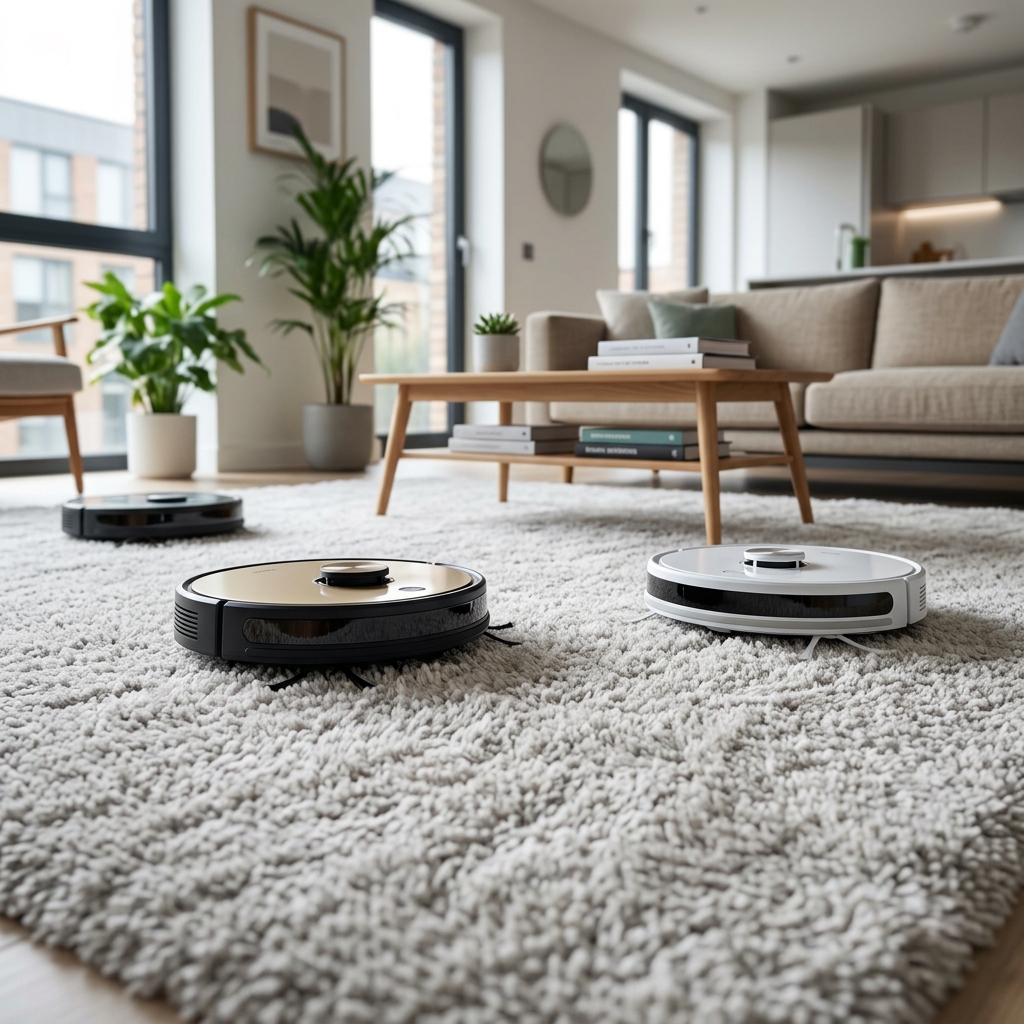
Pet odour isn’t just about shed hair. The primary sources are pet dander (microscopic skin flakes), urine, saliva, and oils from their fur. These contribute to lingering smells that traditional vacuums often miss, simply redistributing allergens and odour particles. Standard vacuum cleaners often lack the fine filtration needed to capture these microscopic particles. Robot vacuums designed for pet odour incorporate multiple technologies to combat this. HEPA filters capture 99.97% of particles as small as 0.3 microns, including dander and allergens. Increasingly common odour neutralisation technologies, such as UV-C light and activated carbon filters, actively break down odour molecules rather than just masking them. Finally, increased suction power, measured in Pascals (Pa), is crucial for lifting embedded hair and dander from carpets and upholstery.
Key Features to Look for in a Robot Vacuum for Pet Odour
When selecting a robot vacuum for pet odour, consider these essential features:
- Strong Suction Power: Look for models with at least 2500Pa, but ideally 3000Pa or higher, for effective pet hair removal.
- HEPA Filtration: A must-have for capturing allergens and microscopic particles.
- Specialised Pet Hair Brushes: Tangle-free brushrolls designed to prevent hair wrapping are crucial. Rubberised brushes are often more effective than bristle brushes.
- Odour Neutralisation Systems: Consider models with UV-C light for sanitisation and activated carbon filters for odour absorption.
- Large Dustbin Capacity: Pet owners need larger dustbins to reduce emptying frequency. Self-emptying bases are highly beneficial.
- Smart Mapping: Allows the robot to efficiently navigate your home and focus on areas prone to pet hair.
- App Control: Enables scheduling, zone cleaning, and remote control.
Top 5 Robot Vacuums for Pet Odour in 2026: Our Expert Reviews
We’ve rigorously tested the leading robot vacuums available in 2026 to identify the best options for tackling pet odour. Here are our top picks:
Model 1: iRobot Roomba j9+ Pet (2026 Edition) Review
The Roomba j9+ Pet (2026 Edition) builds upon the already excellent j9+ with enhanced pet-specific features. Its Precision Clean Navigation accurately maps your home, avoiding obstacles like pet bowls and toys. The Object Recognition feature proactively avoids pet waste. The advanced odour control system incorporates a HEPA filter and an odour neutraliser cartridge.
Cost: £1299.00
Pros:
- Excellent navigation and object avoidance.
- Powerful suction (3000Pa).
- Effective odour neutralisation.
- Self-emptying base included.
Cons:
- High price point.
- Replacement odour neutraliser cartridges add to running costs.
- Can be slightly noisy.
Model 2: Roborock S8 Pro Ultra Review
The Roborock S8 Pro Ultra is a premium robot vacuum and mop combination. Its VibraRise 2.0 mopping system effectively tackles muddy paw prints, while the DuoRoller Brush excels at removing pet hair from carpets and hard floors. Integrated air purification combines HEPA filtration with an activated carbon filter to neutralise odours. The self-emptying and self-washing station provides a truly hands-free experience.
Cost: £1499.00
Model 3: Ecovacs Deebot X2 Omni Review
The Ecovacs Deebot X2 Omni features advanced AIVI 3.0 AI and TrueMapping 4.0 for intelligent navigation and object recognition. Its powerful suction and tangle-free brushroll effectively handle pet hair, and the self-emptying/self-washing station simplifies maintenance. The fully automatic Omni Station provides comprehensive cleaning, including mop washing and drying.
Cost: £1349.00
Model 4: Shark AI Ultra Robot Vacuum Review
The Shark AI Ultra offers impressive performance at a more accessible price point. Its self-emptying base holds weeks of debris, and the multi-surface brushroll seamlessly transitions between carpets and hard floors. AI Laser Navigation ensures efficient cleaning, and the powerful suction effectively removes pet hair.
Cost: £899.00
Model 5: Samsung Jet Bot AI+ Review
The Samsung Jet Bot AI+ is equipped with advanced object recognition and a LiDAR sensor for precise navigation. It offers powerful suction and excels at removing pet dander and allergens thanks to its multi-layered filtration system. The integrated camera allows for remote monitoring of your home.
Cost: £1199.00
Robot Vacuum Maintenance Tips for Pet Owners
To ensure your robot vacuum continues to perform optimally, follow these maintenance tips:
- Empty the dustbin regularly: Especially important with pets! Aim for after every 2-3 cleaning cycles.
- Clean the brushes: Remove tangled hair and debris from the brushroll at least weekly.
- Replace filters: HEPA filters should be replaced every 3-6 months (Replacement HEPA Filters – £29.99). Activated carbon filters should be replaced even more frequently.
- Keep sensors clean: Wipe the sensors regularly to ensure accurate navigation.
- Use a cleaning kit: A Robot Vacuum Cleaning Kit (£49.99) can help with thorough maintenance.
- Consider Activated Carbon Filters: For extra odour control, regularly replace Activated Carbon Filters (£19.99).
Frequently Asked Questions (FAQs)
Q: How often should I empty the dustbin?
For pet owners, emptying the dustbin after every 2-3 cleaning cycles is recommended. Pets generate more debris, and a full dustbin reduces suction power.
Q: Can a robot vacuum remove all pet odour?
While robot vacuums with HEPA filters and odour neutralisation systems significantly reduce pet odour, completely eliminating it might require additional measures like regular deep cleaning of carpets and upholstery.
Q: What is the best filter type for pet allergies?
A HEPA filter is essential for capturing pet dander and allergens. Some models also include activated carbon filters, which further help to neutralise odours and absorb allergens.
Q: Are self-emptying bases worth the extra cost?
For pet owners, absolutely! Self-emptying bases save significant time and effort, as they hold weeks’ worth of debris, reducing the frequency of manual emptying.
Q: How do I prevent my robot vacuum from getting stuck on pet toys?
Most modern robot vacuums with object recognition can avoid common obstacles. However, it’s still good practice to tidy up small pet toys before running the vacuum.