
Table of Contents
Introduction: Why a HEPA Filter Matters in a Robot Vacuum
Robot vacuums have become increasingly popular in UK homes, offering a convenient way to maintain clean floors with minimal effort. But for allergy sufferers, pet owners, or anyone concerned about indoor air quality, simply having a vacuum isn’t enough. A High-Efficiency Particulate Air (HEPA) filter is crucial. HEPA filters are designed to trap at least 99.97% of particles as small as 0.3 microns, including dust mites, pollen, pet dander, mould spores, and other allergens. Without a HEPA filter, your robot vacuum might effectively clean your floors, but it could also be redistributing these irritants back into the air you breathe. This guide will help you navigate the world of robot vacuums with HEPA filters and find the perfect model for your home in 2026.
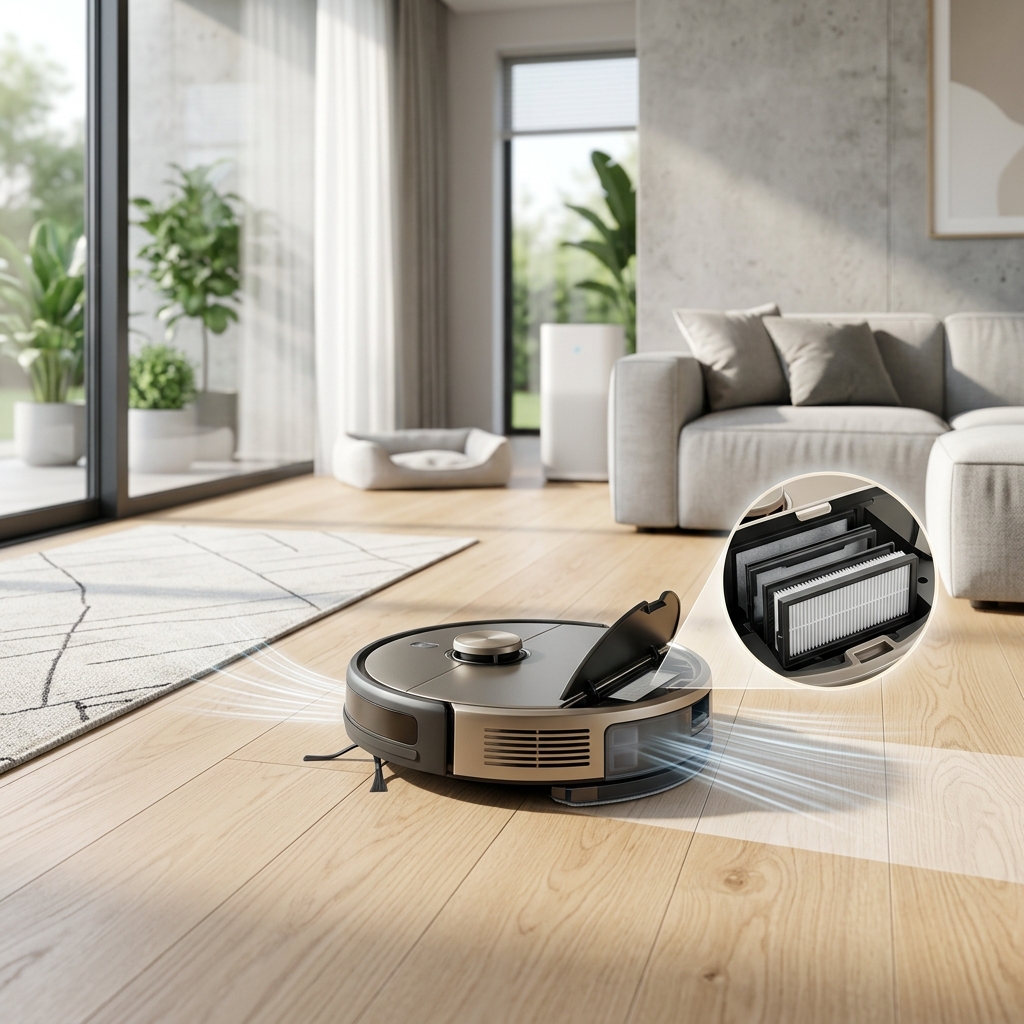
Understanding HEPA Filters: What to Look For
Not all filters marketed as “HEPA-type” are created equal. Here’s a breakdown:
- True HEPA Filters: These meet the industry standard, capturing 99.97% of particles 0.3 microns in size. Look for this designation.
- HEPA-Type Filters: These may capture a significant percentage of particles, but haven’t been officially certified to meet the True HEPA standard. They can still be effective, but may not be ideal for severe allergies.
- Filter Replacement: Most HEPA filters in robot vacuums need replacing every 6-12 months, depending on usage and filter type. Some models have combined filter/sponge systems requiring more frequent changes.
- Filter Costs: Replacement HEPA filters typically range from £20 to £60, depending on the model.
Robot Vacuum Features to Consider (Beyond HEPA)
A HEPA filter is essential, but several other features impact a robot vacuum’s performance and value. Consider these:
- Suction Power (Pa): Measured in Pascals (Pa), higher suction power generally means better cleaning, especially on carpets. 2000Pa is a good baseline, with 3000Pa+ being excellent.
- Battery Life: Look for models offering at least 90 minutes of runtime, enough to clean most average-sized homes.
- Navigation: (See section below) The ‘brain’ of the robot.
- Smart Home Integration: Compatibility with Alexa, Google Assistant, or Siri allows voice control and integration with your smart home ecosystem.
- Dustbin Capacity: A larger dustbin means less frequent emptying. Models with self-emptying bases are a significant convenience.
These features directly impact price. Basic models with HEPA filters start around £200, while those with advanced navigation, self-emptying bases, and higher suction power can exceed £800.
Navigation Technologies: How Do Robot Vacuums ‘See’?
Effective navigation is vital for a robot vacuum to clean efficiently and avoid obstacles. Here’s a comparison:
| Technology | Accuracy | Effectiveness on Different Floors | Price Impact |
|---|---|---|---|
| LiDAR (Light Detection and Ranging) | Highest – Creates detailed maps. | Excellent on all floor types. | £400+ |
| vSLAM (Visual Simultaneous Localization and Mapping) | Good – Uses a camera to build maps. | Good on most floors, can struggle in low light. | £300-£500 |
| Camera-Based | Moderate – Relies heavily on visual recognition. | Can struggle with dark floors or cluttered spaces. | £200-£350 |
Robot Vacuum Types: Which is Best for Your Home?
- Basic Models: Offer HEPA filtration and basic cleaning functionality. Suitable for smaller homes with simple layouts.
- Hybrid Vacuum-Mops: Combine vacuuming and mopping capabilities. Excellent for hard floors.
- Self-Emptying Base Models: Automatically empty the dustbin into a larger bag, reducing maintenance. Ideal for pet owners or those who want maximum convenience.
Consider your home size, flooring types, and cleaning habits when choosing a type.
Budget Breakdown: Robot Vacuums with HEPA Filters – Price Ranges (2026)
- Under £200: Basic models with HEPA filters, camera-based navigation. Limited features. (e.g., some Proscenic models)
- £200 – £500: Models with vSLAM navigation, good suction, and potentially hybrid vacuum-mop functionality. (e.g., Yeedi Vac Max)
- £500 – £800: Models with LiDAR navigation, strong suction, smart home integration, and potentially longer battery life. (e.g., Shark AI Ultra Robot Vacuum, iRobot Roomba j7+)
- £800+: Premium models with self-emptying bases, advanced features, and top-of-the-line performance. (e.g., Ecovacs Deebot X2 Omni, Roborock S8 Pro Ultra, Dyson V12 Detect Slim Robotic Vacuum)
Top Robot Vacuum Brands with HEPA Filters (UK Market)
- iRobot: Known for reliable performance and advanced navigation. The Roomba j7+ with Clean Base (approx. £799) is a popular choice.
- Dyson: Offers powerful suction and innovative technology. The Dyson V12 Detect Slim Robotic Vacuum (approx. £649) is a high-end option.
- Shark: Provides excellent value for money with good cleaning performance. The Shark AI Ultra Robot Vacuum (approx. £499) offers a good balance of features.
- Ecovacs: Offers a wide range of models, including those with self-emptying bases and mopping capabilities. The Ecovacs Deebot X2 Omni (approx. £999) is a premium all-in-one solution.
- Roborock: Renowned for strong suction and advanced features. The Roborock S8 Pro Ultra (approx. £899) is a top contender.
Maintenance & Filter Replacement: Keeping Your Robot Vacuum Healthy
Regular maintenance is crucial for optimal performance. This includes:
- Emptying the Dustbin: After each use or when full.
- Cleaning Brushes: Remove hair and debris from the main brush and side brushes weekly.
- Replacing HEPA Filters: Every 6-12 months (or as recommended by the manufacturer).
- Cleaning Sensors: Wipe sensors regularly to ensure accurate navigation.
Replacement filters can be purchased from the manufacturer’s website, Amazon, or specialist appliance retailers. Expect to pay between £20 and £60 depending on the model.
Troubleshooting Common Issues with HEPA Robot Vacuums
- Reduced Suction: Check for clogs in the brush roll, dustbin, or filter. Replace the filter if necessary.
- Error Messages: Consult the user manual for specific error code explanations.
- Filter Clogging: Replace the filter more frequently if you have pets or live in a dusty environment.
- Navigation Issues: Ensure sensors are clean and the robot has a clear path to navigate.
Conclusion: Choosing the Right HEPA Robot Vacuum for Your Needs
Choosing the right robot vacuum with a HEPA filter depends on your specific needs and budget. If you suffer from allergies or have pets, a True HEPA filter is non-negotiable. Consider your home’s size and layout when selecting a navigation system. For maximum convenience, a self-emptying base is a worthwhile investment. By carefully evaluating these factors, you can find a robot vacuum that effectively cleans your floors and improves your indoor air quality, leaving you with a cleaner, healthier home in 2026.
Our Top Pick
For a balance of performance, features, and value, the Shark AI Ultra Robot Vacuum (approx. £499) stands out. It offers excellent suction, LiDAR navigation, and HEPA filtration at a competitive price point. However, for those seeking premium convenience and top-of-the-line performance, the Ecovacs Deebot X2 Omni (approx. £999) is a standout choice.
FAQ
- Q: How often should I replace the HEPA filter?
A: Generally, every 6-12 months, but this depends on usage and the filter type. Check your user manual for specific recommendations. - Q: Can a robot vacuum replace a traditional vacuum?
A: For regular maintenance cleaning, yes. However, a traditional vacuum is still recommended for deep cleaning and tackling specific messes. - Q: What is the difference between LiDAR and vSLAM?
A: LiDAR uses lasers for precise mapping, while vSLAM uses a camera. LiDAR is generally more accurate, especially in low light. - Q: Are self-emptying bases worth the extra cost?
A: If you have pets or dislike emptying the dustbin frequently, yes. They offer significant convenience. - Q: Will a robot vacuum work on all floor types?
A: Most robot vacuums are designed for both hard floors and carpets, but some perform better on specific surfaces. Check the product specifications.