
Table of Contents
Introduction: The Rise of Robot Vacuums in the UK
Robot vacuums have surged in popularity across UK homes, transforming from a futuristic novelty to a practical cleaning solution. The convenience of automated cleaning, freeing up valuable time, is a major draw. By 2026, we’re seeing significant advancements – improved navigation, object recognition, and even more sophisticated mopping capabilities. This guide will walk you through everything you need to know to choose the best robot vacuum for your needs and budget here in the UK.
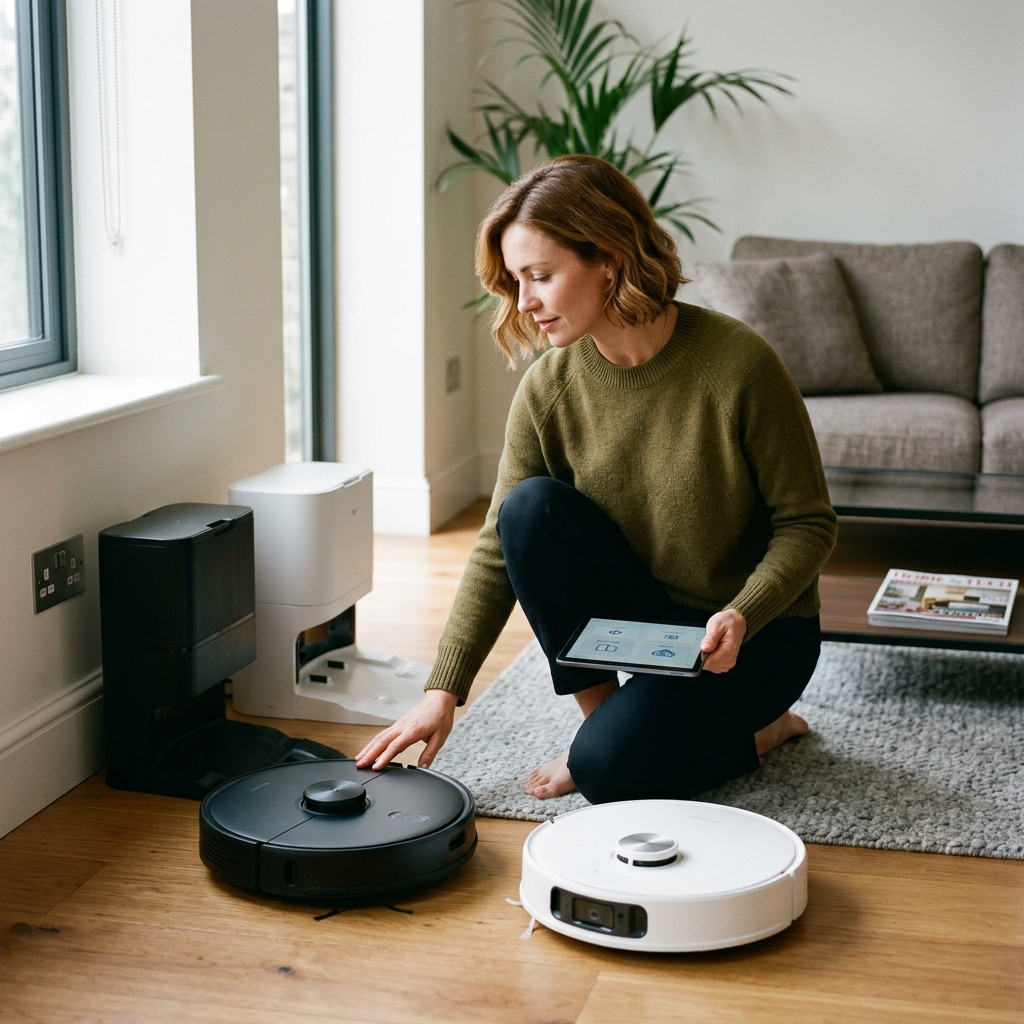
Understanding Different Types of Robot Vacuums
The robot vacuum market is now segmented into several tiers, each offering different features and price points. Here’s a breakdown:
Basic Entry-Level Robots (<£400)
These models typically rely on bump-and-go navigation and are best suited for smaller, simpler homes with mostly hard floors. They lack advanced mapping and often have limited smart features.
- Pros: Affordable, easy to use.
- Cons: Less efficient cleaning, can miss spots, limited features.
Mid-Range with Mapping (£400 – £700)
These vacuums utilise technologies like vSLAM or LiDAR for more systematic cleaning. They create maps of your home, allowing for zoned cleaning and virtual boundaries. Smart home integration is common.
- Pros: Better cleaning coverage, zoned cleaning, virtual walls, app control.
- Cons: May struggle with complex layouts, object avoidance can be limited.
High-End with Advanced Features (£700+)
These are the premium options, boasting self-emptying docks, advanced object recognition (avoiding shoes, cables, pet waste!), and often integrated mopping systems. Expect accurate navigation and seamless smart home integration.
- Pros: Maximum convenience, superior cleaning performance, advanced features, minimal maintenance.
- Cons: High price tag, potential for more complex troubleshooting.
Key Features to Consider in 2026
Choosing the right robot vacuum requires careful consideration of its features.
Navigation (LiDAR, vSLAM, Camera-Based)
This is crucial for efficient cleaning. LiDAR (Light Detection and Ranging) uses lasers, vSLAM (Visual Simultaneous Localisation and Mapping) uses cameras and algorithms, and camera-based systems rely solely on visual data. LiDAR is generally the most accurate.
Suction Power (Pa)
Measured in Pascals (Pa), higher suction power is better for carpets and removing stubborn dirt. Look for at least 2000Pa, with 3000Pa+ for thicker carpets.
Battery Life
Consider the size of your home. Longer battery life (90+ minutes) is essential for larger spaces. Self-returning to the dock to recharge is a valuable feature.
Smart Home Compatibility (Alexa, Google Assistant, Apple HomeKit)
Integration with your existing smart home ecosystem allows for voice control and automated cleaning schedules.
App Control
A user-friendly app is vital for scheduling, monitoring cleaning progress, and adjusting settings.
Brush Types (Main Brush, Side Brushes, Edge Brushes)
Different brush types excel on different surfaces. Rubber brushes are gentler on hard floors, while bristle brushes are better for carpets.
Filter Types (HEPA)
HEPA (High-Efficiency Particulate Air) filters trap allergens and dust mites, making them essential for allergy sufferers.
Navigation Technologies Explained: LiDAR vs. vSLAM vs. Camera
| Feature | LiDAR | vSLAM | Camera-Based |
|---|---|---|---|
| Accuracy | Highest | Good | Moderate |
| Effectiveness in Dark | Excellent | Limited | Poor |
| Cost | Higher | Moderate | Lower |
| Complexity | Moderate | Moderate | Lower |
| 2026 Advancements | Improved obstacle avoidance through AI | Enhanced algorithms for better map building | More sophisticated object recognition |
Robot Vacuums for Different Floor Types
Your flooring will influence your choice:
- Hard Floors: Focus on suction power and brush type (rubber brushes are ideal).
- Low Pile Carpets: Most robots will perform well. Look for adjustable suction.
- Medium Pile Carpets: Higher suction power and a brush roll with strong bristles are crucial.
- High Pile Carpets: Premium models with maximum suction and aggressive brush rolls are required.
Self-Emptying Robot Vacuums: Convenience at a Cost?
Self-emptying docks automatically empty the robot’s dustbin into a larger bag in the base. This significantly reduces maintenance, but comes at a cost.
- Pros: Reduced maintenance, longer cleaning intervals.
- Cons: Higher upfront cost, bag replacement costs (£20-£40 per pack), potential for clogging.
In 2026, expect self-emptying docks to become more affordable, with base models starting around £300-£400.
Mopping Robot Vacuums: 2-in-1 Convenience
Many robot vacuums now include mopping functionality, offering a convenient 2-in-1 solution. Mopping methods vary from simple damp dragging to vibrating mop pads and automated water dispensing.
Considerations:
- Water Tank Capacity: Larger tanks allow for more extensive mopping.
- Mopping Mode: Vibrating or sonic mopping provides better cleaning.
- Floor Type: Avoid using mopping functions on unsealed wood floors.
Budget Breakdown: How Much Should You Spend?
Here’s a guide to what you can expect at different price points:
| Price Range | Features | Total Cost of Ownership |
|---|---|---|
| £200 – £400 | Basic cleaning, bump-and-go navigation, limited features. | Low: £20-£30 per year (filters). |
| £400 – £700 | Mapping, zoned cleaning, app control, moderate suction. | Moderate: £50-£80 per year (filters, occasional brush replacement). |
| £700+ | Self-emptying, advanced object recognition, high suction, premium features. | High: £150+ per year (filters, bags, brush replacement). |
Top Brands to Watch in 2026 (UK Market)
- iRobot: Known for reliability and advanced features (Roomba j7+ – £799.99).
- Roborock: Excellent value for money and powerful suction (S8 Pro Ultra – £1499.0).
- Ecovacs: Innovative features and strong mopping capabilities (Deebot X2 Omni – £1699.0).
- Dyson: Powerful suction and advanced filtration (Dyson 360 Vis Nav – £1299.99).
- Samsung: Sleek designs and smart home integration (Jet Bot AI+ – £1199.0).
- Xiaomi: Competitive pricing and good performance (X10+ – £699.0)
Robot Vacuum Maintenance & Troubleshooting
Regular maintenance is key to prolonging your robot vacuum’s lifespan:
- Empty the dustbin: After each use or as needed.
- Clean the brushes: Remove hair and debris regularly.
- Replace filters: Every 3-6 months.
- Check the sensors: Wipe clean to ensure accurate navigation.
Future Trends in Robot Vacuum Technology (2026 & Beyond)
- Advanced Object Recognition: More accurate identification and avoidance of obstacles.
- AI-Powered Cleaning: Vacuums that learn your cleaning habits and optimise performance.
- Multi-Floor Mapping Improvements: Seamless navigation between floors.
- Integrated Air Purification: Vacuums that also filter and purify the air.
Conclusion: Finding the Perfect Robot Vacuum for Your Home
Choosing the right robot vacuum involves considering your budget, floor type, home size, and desired features. By carefully evaluating these factors, you can find a model that simplifies your cleaning routine and frees up your time. Here’s a quick checklist:
- Budget: Determine how much you’re willing to spend.
- Floor Type: Choose a vacuum suited to your flooring.
- Navigation: Prioritise LiDAR for accuracy.
- Features: Select the features you need (self-emptying, mopping, etc.).
- Brand Reputation: Research reliable brands.