
Affiliate disclosure: this article contains paid links. As an Amazon Associate I earn from qualifying purchases.
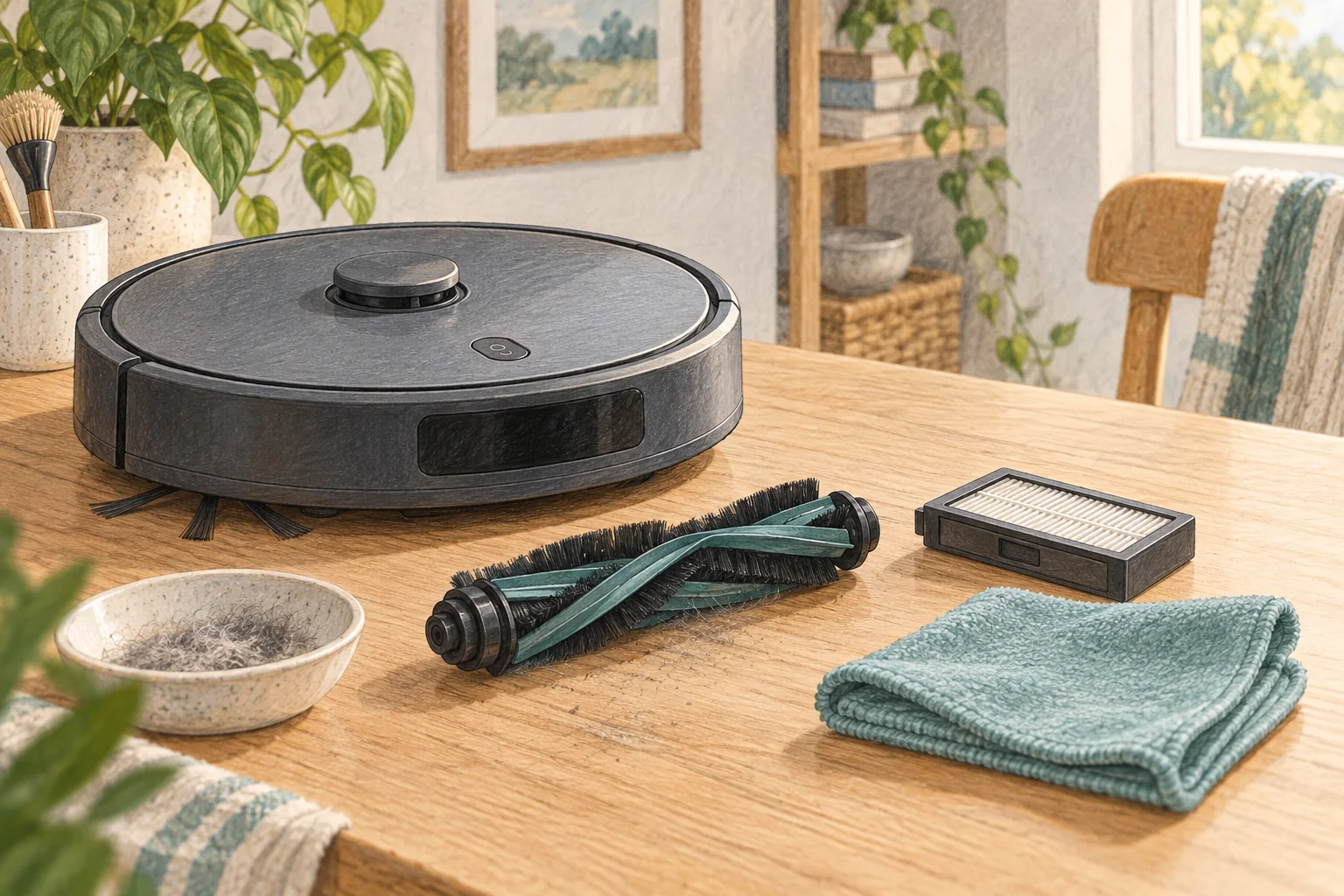
A noisy emptying cycle does not prove the dust path is clear. Check the robot outlet, station inlet and bag seating before increasing the emptying frequency.
Table of Contents
Start with these checks
- Switch off and unplug the dock before inspecting accessible passages.
- Remove compacted dry debris only through the user-serviceable openings.
- Fit the correct bag securely and retry an emptying cycle using the manual.
What this looks like at home
Long hair can bridge the outlet while fine dust still passes, leaving the bin partly full after a normal-sounding cycle.
Dust automation still needs an open path
| Check | What matters |
|---|---|
| Robot bin | Check the outlet and closure. |
| Station path | Inspect permitted openings for dry blockages. |
| Bag and timing | Confirm correct seating and model-specific emptying rules. |
A mistake to avoid
Do not push a metal tool into powered ducting or open the dock casing.
Buy a part only after identifying the cause
Check the exact model and part reference before buying. If cleaning resolves the problem, a replacement may be unnecessary.
Browse Amazon UK results for robot vacuum auto empty dust bags. These are search results, not a verified recommendation for your particular machine.
What the result tells you
After clearing a permitted blockage, inspect the next emptied bin rather than judging by noise alone. If the station runs but the same hair plug returns, shorten the interval between suitable bin checks.
Related guidance
- How Often Should You Empty Your Robot Vacuum Bin? (2026 Guide)
- Robot Vacuum Maintenance Tips UK: Keep Your Cleaner Running Smoothly
Sources and scope
Checked on 9 September 2026. Manufacturer instructions apply to the models they name; use your own exact manual for button sequences, removable parts and cleaning permissions. Product specifications are advertised claims. Examples illustrate decisions and are not hands-on test results.