
Affiliate disclosure: this article contains paid links. As an Amazon Associate I earn from qualifying purchases.
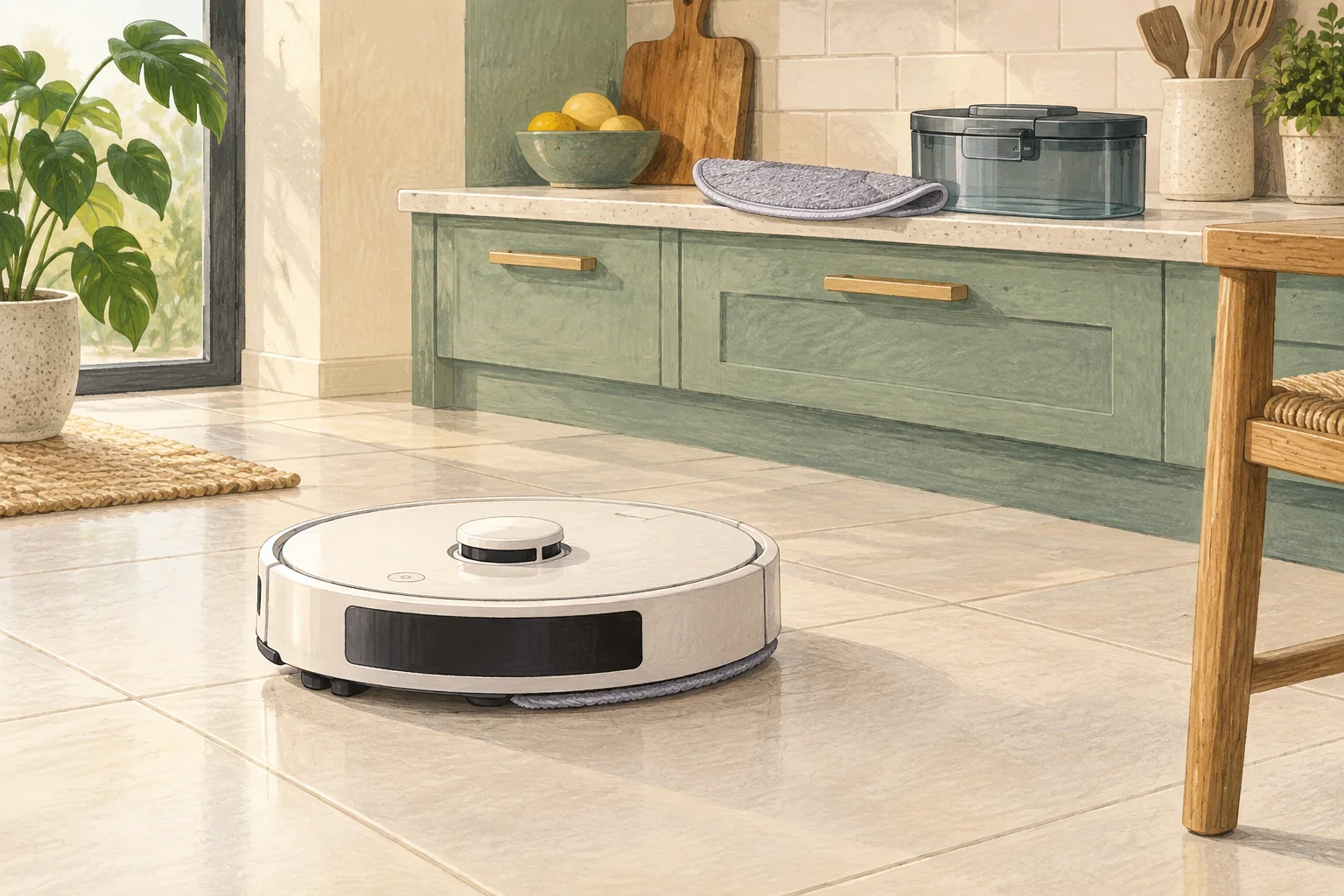
Dirty-water tanks need emptying and cleaning even when the mop is washed automatically. Warm stored wastewater can develop odour between cleaning sessions.
Table of Contents
Start with these checks
- Empty wastewater promptly using the manual's instructions.
- Rinse the tank and clean accessible seals or floats only as specified.
- Let allowed removable parts dry and refit them correctly before the next run.
What this looks like at home
A dock can have dry mop pads yet still smell because yesterday's dirty water remains sealed in the tank.
Keep clean water, dirty water and dry dust separate
| Check | What matters |
|---|---|
| Clean-water side | Use the permitted water and solution method. |
| Dirty-water side | Empty and clean the removable tank as directed. |
| Pads, roller and tray | Inspect, clean and dry only as the manual allows. |
A mistake to avoid
Fragrance and extra detergent do not replace removing dirty water.
Buy a part only after identifying the cause
Check the exact model and part reference before buying. If cleaning resolves the problem, a replacement may be unnecessary.
Browse Amazon UK results for soft bottle cleaning brush. These are search results, not a verified recommendation for your particular machine.
What the result tells you
Check the tank separately from the pads and tray so the source of the smell is clear. A cleaner floor fragrance is not evidence that the wastewater container itself has been cleaned properly.
Related guidance
- Robot Vacuum Maintenance Tips UK: Keep Your Cleaner Running Smoothly
- How to Choose a Robot Vacuum: Complete Buyer's Guide
Sources and scope
Checked on 9 September 2026. Manufacturer instructions apply to the models they name; use your own exact manual for button sequences, removable parts and cleaning permissions. Product specifications are advertised claims. Examples illustrate decisions and are not hands-on test results.