
Table of Contents
Introduction: Why Robot Vacuum Filters Matter
Robot vacuums have become increasingly popular in UK homes, offering convenience and a helping hand with floor cleaning. But their effectiveness isn’t just about suction power; it’s heavily reliant on the filters they use. In 2026, with a growing emphasis on indoor air quality and smart home integration, understanding robot vacuum filter types is more crucial than ever. Filters trap dust, allergens, and debris, preventing them from being recirculated into the air you breathe. Neglecting filter maintenance doesn’t just reduce cleaning performance; it can also shorten the lifespan of your robotic companion. This guide will break down everything you need to know about robot vacuum filters, helping you choose the right one and keep your home – and your air – clean.
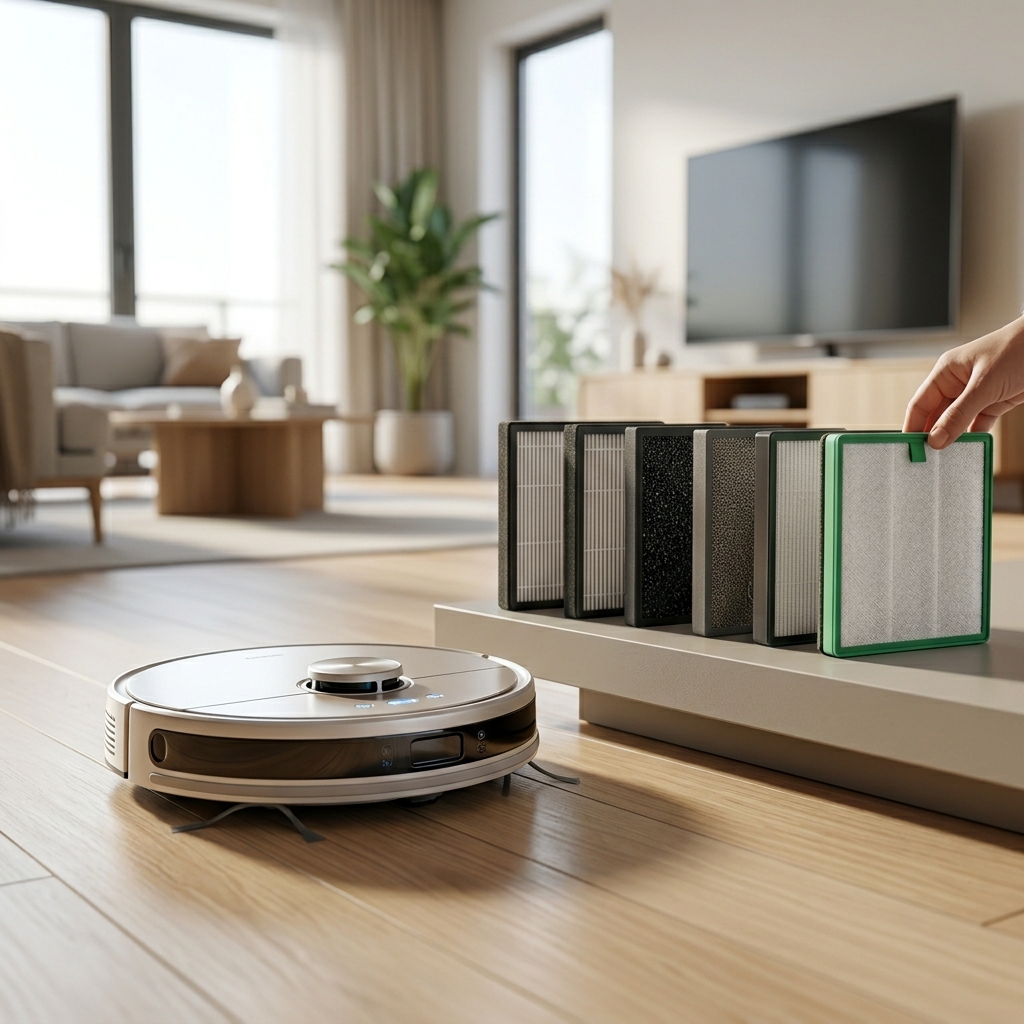
Understanding the Basics: What Do Robot Vacuum Filters Do?
The primary role of a robot vacuum filter is to trap particles that the vacuum sucks up. This includes everything from visible dust and dirt to microscopic allergens like pollen, pet dander, and dust mites. Without a filter, these particles would be exhausted back into the room, negating the benefits of vacuuming for those with allergies or respiratory sensitivities. A clogged filter significantly reduces suction power, meaning your robot has to work harder, draining the battery faster and potentially overheating the motor. Over time, a severely clogged filter can even damage the motor, leading to costly repairs or replacement.
HEPA Filters: The Gold Standard for Allergy Sufferers
HEPA stands for High-Efficiency Particulate Air. HEPA filters are widely considered the gold standard in air filtration. To qualify as HEPA, a filter must capture at least 99.97% of particles 0.3 microns in diameter. This is small – to put it into perspective, a human hair is around 50-75 microns wide! This makes them incredibly effective at trapping allergens like pollen, dust mites, pet dander, mould spores, and even some bacteria and viruses.
For UK households with allergy sufferers, asthma patients, or simply those concerned about indoor air quality, a robot vacuum *with* a HEPA filter is highly recommended. Many of the premium robot vacuum models available in the UK in 2026, such as the iRobot Roomba i7+ and Dreame Bot L10s Ultra, feature HEPA filtration as standard.
Foam Filters: Pre-Filtering and Protecting Your Motor
Foam filters are often used as a pre-filter in robot vacuum systems. Their primary function is to capture larger debris – hair, larger dust particles, crumbs – before they reach the more delicate HEPA filter. This extends the lifespan of the HEPA filter and prevents it from becoming clogged prematurely.
Foam filters are typically washable, making them a cost-effective and environmentally friendly option. They should be rinsed with water every 2-4 weeks, depending on usage, and allowed to dry completely before being reinstalled. Always refer to the manufacturer’s instructions for specific cleaning recommendations. Regular cleaning of the foam filter is also crucial for protecting the robot vacuum’s motor, as it prevents larger particles from entering and causing damage.
Nylon/Mesh Filters: Lightweight and Versatile
Nylon or mesh filters are lighter-weight and often used in conjunction with other filter types. You’ll frequently find them as an initial layer of filtration, catching larger particles before they reach the foam or HEPA filters. Some models may also use them as a final layer to further refine the air.
While nylon/mesh filters are effective at trapping some debris, they are generally less efficient than HEPA filters at capturing microscopic allergens. Their main benefit lies in their versatility and ability to contribute to the overall filtration system, rather than acting as a standalone solution.
Specialty Filters: Carbon & Scented Options
Carbon filters contain activated carbon, which is excellent at absorbing odours. This is particularly useful for homes with pets or those prone to cooking smells. They won’t trap dust or allergens, but they’ll help keep your home smelling fresher.
Scented filters are also available, releasing a fragrance as the robot vacuum cleans. However, these are often divisive. Some people enjoy the fresh scent, while others may find it artificial or irritating, particularly those with sensitivities. They also add to the cost and don’t contribute to the actual cleaning process. For UK consumers, the added expense of scented filters may not be justified for the limited benefit.
Filter Maintenance: Cleaning vs. Replacement
Proper filter maintenance is vital for maintaining optimal performance and extending the life of your robot vacuum.
- Washable Filters (Foam, Some Nylon): These should be rinsed with clean water every 2-4 weeks, depending on usage. Ensure they are *completely dry* before reinstalling to prevent mould growth. Avoid using harsh detergents or soaps.
- Replacement Filters (HEPA, Carbon): These filters cannot be washed and must be replaced periodically.
Replacement Frequency:
- HEPA Filters: Every 3-6 months, or sooner if you have pets, allergies, or live in a dusty environment.
- Carbon Filters: Every 3 months, as their odour-absorbing capabilities diminish over time.
Choosing the Right Filter for Your Needs (2026)
Selecting the right filter(s) depends on your specific needs:
- Allergy Sufferers: Prioritize a robot vacuum *with* a HEPA filter.
- Pet Owners: A combination of a foam pre-filter, HEPA filter, and potentially a carbon filter to manage pet odours is ideal.
- Hard Floors: Basic foam and nylon filters may suffice, but a HEPA filter will still improve air quality.
- Carpeted Floors: HEPA filters are particularly important for trapping dust and allergens embedded in carpets.
- Home Size: Larger homes with more foot traffic will require more frequent filter replacement/cleaning.
When choosing filters, ensure they are compatible with your specific robot vacuum model. Generic filters may not fit properly or provide adequate filtration.
Where to Buy Robot Vacuum Filters in the UK (2026)
Robot vacuum filters are readily available from a variety of retailers in the UK. Here are some popular options:
- Amazon UK: Wide selection, competitive prices, and fast delivery.
- Currys: Good range of robot vacuums and filters, with in-store availability.
- Argos: Convenient for click-and-collect, offers a selection of popular models and filters.
- Direct from Manufacturers: iRobot, Shark, Eufy, Dreame, and Yeedi all sell filters directly on their websites.
Approximate Price Ranges (2026):
- Eufy RoboVac 11S Max Filter Kit – £14.99
- Shark IQ Robot Self-Empty XL Filter Kit – £19.99
- Yeedi Vac Max Filter Kit – £24.99
- iRobot Roomba i7+ Filter Kit – £29.99
- Dreame Bot L10s Ultra Filter Kit – £34.99
Conclusion: Breathe Easier with the Right Robot Vacuum Filter
Robot vacuum filters are a small but crucial component of a clean and healthy home. By understanding the different filter types available and prioritizing regular maintenance, you can ensure your robot vacuum performs optimally, extends its lifespan, and – most importantly – provides cleaner air for you and your family. Don’t underestimate the power of a good filter; it’s an investment in your well-being.
FAQ
How often should I replace my robot vacuum filter?
Generally, HEPA and carbon filters should be replaced every 3-6 months, depending on usage and environmental factors. Foam filters should be washed every 2-4 weeks.
Can I use a generic filter instead of the manufacturer’s filter?
While generic filters may be cheaper, they may not fit properly or provide the same level of filtration as the manufacturer’s filters. It’s generally recommended to use genuine filters for optimal performance.
What’s the difference between a HEPA filter and a carbon filter?
A HEPA filter traps dust, allergens, and particles, improving air quality. A carbon filter absorbs odours, leaving your home smelling fresher. They serve different purposes and can often be used together for comprehensive air purification.
My robot vacuum seems to be losing suction. Could it be the filter?
Yes, a clogged filter is a common cause of reduced suction power. Check your filters and clean or replace them as needed.
Are scented filters worth the extra cost?
Scented filters are a matter of personal preference. While they add a fragrance, they don’t improve cleaning performance and may be irritating to some individuals.