
Table of Contents
Introduction: Why Robot Vacuum Filters Matter
Robot vacuums have become indispensable for maintaining a clean home, but their effectiveness hinges on more than just suction power. The filters within these devices are crucial for capturing dust, allergens, and debris, ensuring not only a thorough clean but also improving indoor air quality. Neglecting filter maintenance can lead to reduced cleaning performance, motor damage, and even the recirculation of harmful particles. For allergy sufferers, choosing the right filter type is particularly vital. This guide will comprehensively explore the different types of robot vacuum filters available in 2026, helping you make an informed decision for your home.
Understanding the Basics of Robot Vacuum Filtration
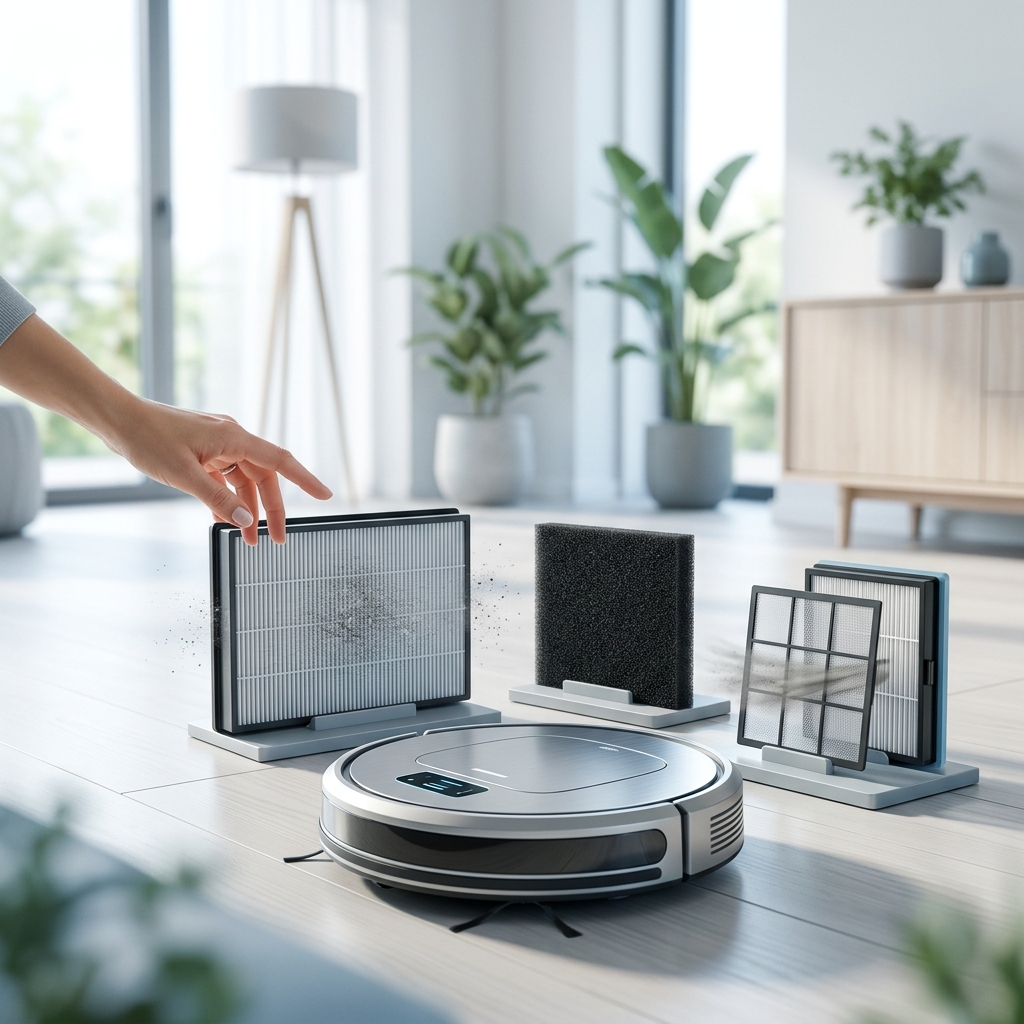
Robot vacuum filters work by physically trapping particles as air is drawn in during the cleaning process. Most models employ a multi-stage filtration system, beginning with a pre-filter to catch larger debris and progressing to finer filters for microscopic particles. This staged approach prevents the more delicate filters from becoming clogged quickly and extends their lifespan. The efficiency of the filtration system is measured by its ability to capture particles of varying sizes – a key metric when considering filters for allergy control.
HEPA Filters: The Gold Standard for Allergy Sufferers
HEPA (High-Efficiency Particulate Air) filters are widely recognised as the gold standard in air filtration. A True HEPA filter is certified to capture 99.97% of particles 0.3 microns in size, including dust mites, pollen, pet dander, mould spores, and some bacteria. This makes them exceptionally beneficial for individuals with allergies, asthma, or other respiratory sensitivities. However, it’s important to differentiate between ‘True HEPA’ and ‘HEPA-type’ filters. ‘HEPA-type’ filters may capture a significant portion of airborne particles, but they don’t meet the stringent certification standards of True HEPA filters. In 2026, advancements in HEPA filter materials are leading to even more effective particle capture and longer filter lifespans.
HEPA Filters: Pros & Cons
- Pros: Excellent particle capture, ideal for allergy sufferers, improves indoor air quality.
- Cons: Can be more expensive than other filter types, require regular replacement, can restrict airflow if clogged.
Foam Filters: Pre-Filtration and Larger Debris
Foam filters are typically used as a pre-filter in robot vacuum systems. Their porous structure effectively captures larger particles like pet hair, larger dust clumps, and crumbs. This protects the more sensitive HEPA filter from becoming overloaded and maintains its overall efficiency. A significant advantage of foam filters is their washability. Most can be rinsed with water and allowed to air dry, extending their usable life considerably. However, they need to be completely dry before being re-inserted into the robot vacuum.
Mesh Filters: Protecting the Motor and Extending Filter Life
Mesh filters, often made of a fine metal or plastic screen, serve a vital protective function. They prevent larger debris, such as small toys or bits of plastic, from entering the robot vacuum’s motor, which could cause damage. By capturing these larger items, mesh filters also contribute to the longevity of the entire filtration system, as they reduce the load on the subsequent filters. They are typically washable and should be checked regularly for blockages.
Carbon Filters: Odour Elimination and Air Purification
Carbon filters, often incorporating activated carbon, are designed to absorb odours, smoke, and volatile organic compounds (VOCs). Activated carbon has a large surface area, allowing it to effectively trap these odour-causing molecules. They are particularly useful for pet owners, smokers, or those living in areas with high levels of air pollution. While they don’t capture particulate matter like HEPA filters, carbon filters significantly enhance overall air quality. In 2026, some carbon filters are being infused with antimicrobial agents for added air purification benefits.
Electret Filters: Enhanced Electrostatic Capture
Electret filters are a more recent development in filtration technology. They utilise a permanently charged material to create an electrostatic charge, attracting and capturing even smaller particles than standard filters. This electrostatic attraction enhances the filter’s ability to capture fine dust, allergens, and pollutants. They are often used in conjunction with HEPA filters to provide a more comprehensive filtration solution. Electret filters offer a performance boost over traditional filters without significantly restricting airflow.
Filter Combinations: What You’ll Find in Popular Robot Vacuums
Most robot vacuum brands employ a combination of filter types to achieve optimal performance. Here’s a breakdown of common setups in 2026:
| Brand | Typical Filter Setup |
|---|---|
| iRobot Roomba | Pre-filter (foam), HEPA filter (often a combination True HEPA and Electret filter) |
| Roborock | Washable pre-filter, HEPA filter, sometimes with a carbon filter layer |
| Eufy RoboVac | Foam filter, HEPA filter, some models include a carbon filter. |
| Dyson | Multi-stage filtration including HEPA filters and carbon filters |
| Shark | Foam filter, HEPA filter, sometimes with odour neutralising technology. |
| Proscenic | Pre-filter, HEPA filter, carbon filter. |
How to Choose the Right Filter for Your Needs (2026)
Selecting the right filter depends on your specific needs and circumstances. Here’s a guide:
- Allergies/Asthma: Prioritise True HEPA filters.
- Pets: Combine a HEPA filter with a carbon filter to address both allergens and odours.
- Hard Floors: A basic HEPA and foam filter combination may suffice.
- Carpets: A multi-stage filtration system with a HEPA filter and pre-filter is recommended.
- Home Size: Larger homes may benefit from more robust filtration systems and more frequent filter changes.
In 2026, advancements in filter materials are offering improved performance and longevity. Look for filters incorporating graphene or other innovative materials for enhanced particle capture and odour absorption.
Robot Vacuum Filter Maintenance: Cleaning and Replacement
Regular filter maintenance is essential for maintaining optimal performance. Washable filters (foam and mesh) should be rinsed with water every 2-4 weeks, ensuring they are completely dry before re-installation. HEPA and carbon filters are typically non-washable and require replacement. The frequency of replacement depends on usage and filter type:
- Foam & Mesh Filters: Clean every 2-4 weeks. Replace every 6-12 months.
- HEPA Filters: Replace every 3-6 months.
- Carbon Filters: Replace every 3-6 months.
Many robot vacuums now feature indicators to alert you when filters need replacing. Ignoring these alerts can lead to reduced suction power and potential motor damage.
Where to Buy Replacement Robot Vacuum Filters (UK)
You can purchase replacement filters from a variety of UK retailers:
- Amazon UK: Wide selection, competitive prices. (Example: iRobot Roomba i7+ Replacement Filter Kit – £29.99)
- Currys: Reputable retailer, often stocks filters for popular brands.
- Direct from Manufacturer Websites: iRobot, Roborock, Eufy, Dyson, Shark, Proscenic all offer filters directly. (Example: Roborock S8 Pro Ultra Filter Pack – £34.99)
- Specialist Vacuum Cleaner Retailers: Many independent retailers specialise in vacuum cleaners and accessories.
(Example: Eufy RoboVac X8 Hybrid Replacement Filter – £19.99, Dyson 360 Vis Nav Filter – £49.99, Shark AI Ultra Robot Vacuum Filter – £24.99, Proscenic V9 Pro Filter Kit – £14.99)
Future Trends in Robot Vacuum Filtration (2026 & Beyond)
The future of robot vacuum filtration is looking increasingly innovative. Several emerging trends are expected to become more prevalent in the coming years:
- Anti-Bacterial Filters: Filters incorporating antimicrobial agents to kill bacteria and viruses.
- Self-Cleaning Filters: Systems that automatically remove dust and debris from filters, extending their lifespan.
- Smart Filter Monitoring: Filters with sensors that provide real-time data on filter condition and performance.
- Biodegradable Filters: Environmentally friendly filters made from sustainable materials.
- Advanced Materials: Increased use of graphene and other advanced materials for improved filtration efficiency.
These advancements promise to further enhance the cleaning performance, air quality benefits, and convenience of robot vacuum cleaners.