
Table of Contents
Introduction: The Importance of Quiet Robot Vacuums
Robot vacuums have become increasingly popular in UK homes, offering a convenient solution for maintaining clean floors with minimal effort. However, with greater convenience comes a potential drawback: noise. In 2026, a significant portion of the UK workforce continues to work from home, and many households include young children or pets. Therefore, the noise level of a robot vacuum is no longer a secondary consideration – it’s a crucial factor for a peaceful, productive home environment. A loud robot vacuum can disrupt meetings, disturb naps, and stress out sensitive animals. Sound is measured in decibels (dB). Generally, anything below 60dB is considered quiet enough for conversation, 60-70dB is comparable to normal conversation, and above 70dB can be disruptive. A truly ‘quiet’ robot vacuum aims for levels below 65dB, and ideally, even lower during standard cleaning modes.
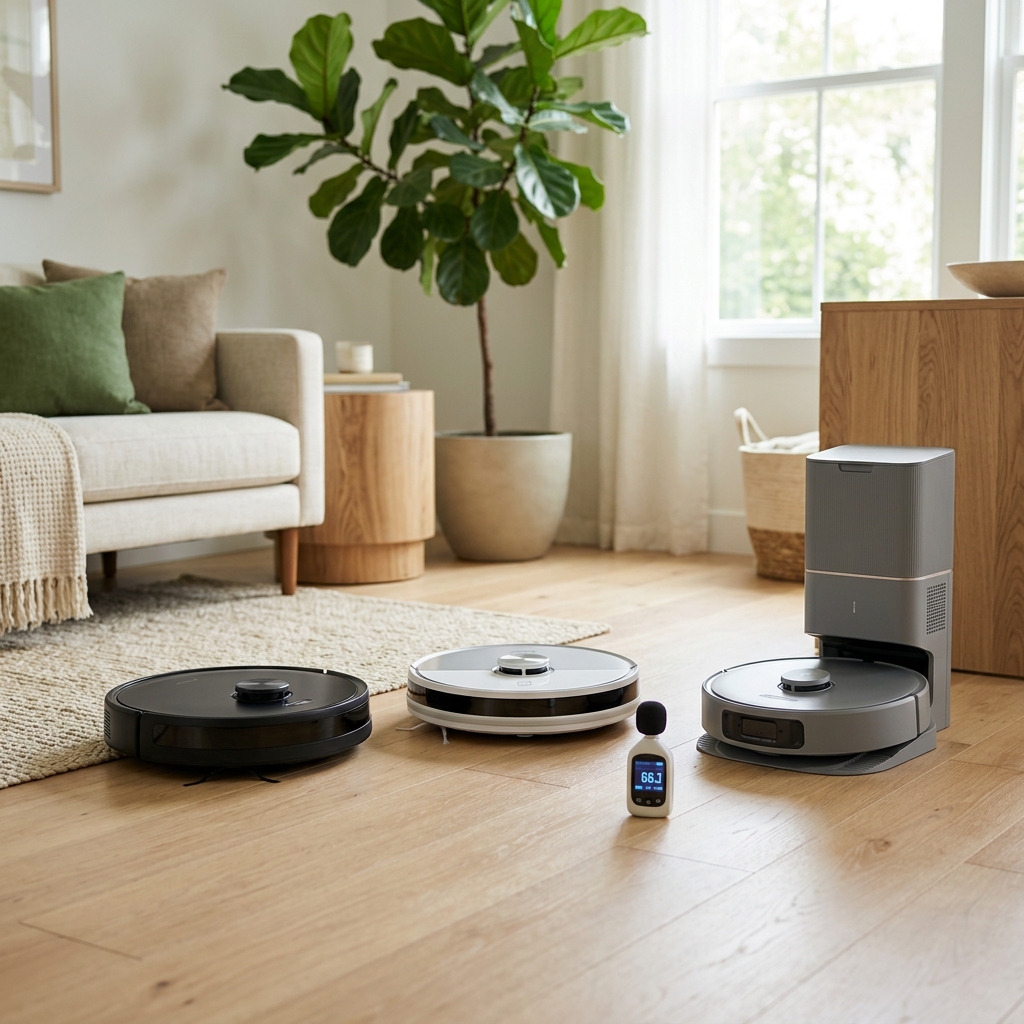
Understanding Robot Vacuum Noise: What Causes the Sound?
Several components contribute to the overall noise produced by a robot vacuum. The motor is a primary source, generating sound as it spins to power the suction. Suction power itself creates noise as air is rapidly drawn in. Brushes, particularly those rotating at high speeds to agitate carpets, can also be noisy. Finally, the movement of the vacuum across different floor surfaces – bumping into furniture or traversing thresholds – adds to the overall soundscape.
Technological advancements are making a difference. Brushless motors, for example, are significantly quieter than traditional brushed motors, as they lack the friction that causes much of the noise. Optimised fan designs and improved sound dampening materials within the vacuum’s housing also reduce noise levels. The floor type also plays a role; hardwood floors generally produce less noise than carpets, as the vacuum doesn’t need to work as hard to generate suction and the brushes don’t need to agitate as aggressively.
Noise Level Measurement Methodology (2026 Standards)
Robot vacuum noise levels are typically measured in decibels (dB) using a sound level meter placed at a standardised distance (usually 1 metre) from the operating vacuum. By 2026, testing standards in the UK are aligning more closely with European regulations, demanding more consistent and transparent reporting. Manufacturers are now required to specify noise levels for different cleaning modes (e.g., Quiet, Standard, Max) and floor types.
However, a crucial point to remember is that advertised noise levels often differ from real-world performance. Lab conditions don’t perfectly replicate the acoustics of a typical home. Factors like room size, furniture placement, and the type of flooring all influence the perceived noise level. Independent testing by consumer organisations, like Which?, remains vitally important for providing accurate and unbiased comparisons. Consistent testing methodologies across different review sources are also becoming more common, making it easier to compare results.
Quietest Robot Vacuums of 2026: Our Top Picks (Detailed Comparison)
Here’s a comparison of some of the leading robot vacuum models of 2026, focusing on their noise levels and key features:
| Model | Noise Level (dB) – Quiet Mode | Noise Level (dB) – Standard Mode | Suction Power (Pa) | Smart Home Integration | Battery Life (Minutes) | Price (GBP) |
|---|---|---|---|---|---|---|
| iRobot Roomba j9+ (Complete Clean) | 60 | 68 | 3000 | Alexa, Google Assistant | 120 | £999.99 |
| Roborock S8 Pro Ultra | 58 | 65 | 6000 | Alexa, Google Assistant, Matter | 180 | £1399.99 |
| Eufy RoboVac X8 Hybrid | 62 | 67 | 2000 | Alexa, Google Assistant | 150 | £649.99 |
| DreameBot L20s Ultra | 61 | 69 | 7000 | Alexa, Google Assistant | 140 | £1199.99 |
| Shark AI Ultra Robot Vacuum | 63 | 72 | 2500 | Alexa, Google Assistant | 90 | £599.99 |
| Samsung Jet Bot AI+ | 59 | 66 | 3000 | Alexa, Google Assistant, SmartThings | 100 | £899.99 |
| Neato D10 | 64 | 70 | 3000 | Alexa, Google Assistant | 120 | £749.99 |
Model Spotlight: Roborock S8 Pro Ultra – A Deep Dive
The Roborock S8 Pro Ultra consistently ranks among the quietest and most powerful robot vacuums available. Its noise level of just 58dB in Quiet mode is remarkably low, making it ideal for homes with noise-sensitive individuals or pets. Beyond its quiet operation, the S8 Pro Ultra boasts a staggering 6000Pa of suction power, easily handling both hard floors and thick carpets. The ‘Ultra’ designation refers to its self-emptying dock, which also washes and dries the mop heads, simplifying maintenance. Its smart home integration, now including Matter support, offers seamless control and customisation. However, its high £1399.99 price tag makes it a significant investment. It’s best suited for larger homes with a mix of floor types and owners who prioritise both cleaning performance and quiet operation.
Model Spotlight: Eufy RoboVac X8 Hybrid – A Deep Dive
For those seeking a more budget-friendly option, the Eufy RoboVac X8 Hybrid offers excellent value for money. While not as silent as the Roborock S8 Pro Ultra, its 62dB noise level in Quiet mode is still respectable. The X8 Hybrid combines vacuuming and mopping capabilities, offering versatility for different cleaning needs. It provides a good balance between suction power (2000Pa) and affordability. Its 150-minute battery life is sufficient for cleaning most average-sized homes on a single charge. At £649.99, it’s significantly cheaper than premium models, making it a great choice for smaller homes or users new to robot vacuum technology.
Noise Reduction Technologies to Look For
Several technologies contribute to quieter robot vacuum operation. As highlighted earlier, brushless motors are a key advancement. Optimised fan designs, often utilising aerodynamic principles, reduce turbulence and noise. Sound dampening materials, such as foam and rubber, absorb vibrations and dampen sound waves. More sophisticated models employ software algorithms that automatically adjust suction power based on the floor type, reducing noise when cleaning hard surfaces. Dynamic suction adjustment is becoming more common, prioritising quiet operation when possible.
Robot Vacuum Noise vs. Price: Is Paying More Worth It?
Generally, there’s a positive correlation between price and noise level: more expensive models tend to be quieter. This is because premium manufacturers invest in advanced technologies like brushless motors, sophisticated sound dampening, and intelligent software. However, it’s not always a direct relationship. Some mid-range models have made significant strides in noise reduction, offering a good balance between performance and affordability. The ‘worth it’ factor depends on your individual needs and budget. If quiet operation is a top priority, investing in a higher-end model is likely worthwhile. However, if you’re less sensitive to noise, a more affordable option might suffice. Consider the total package – suction power, features, battery life – alongside noise level when making your decision.
Tips for Minimising Robot Vacuum Noise
Even with a quiet robot vacuum, you can take steps to further reduce noise during operation:
- Schedule Cleaning During Off-Peak Hours: Run the vacuum when you’re out of the house or during times when noise is less disruptive.
- Use Quiet Modes: Most robot vacuums offer a ‘Quiet’ or ‘Eco’ mode, which sacrifices some suction power for significantly reduced noise.
- Avoid Cleaning Rugs with Deep Pile: Deep pile carpets require more suction, resulting in increased noise.
- Ensure the Vacuum is Well-Maintained: Regularly clean the brushes, filters, and dustbin to maintain optimal performance and minimise noise.
- Consider Room Layout: Removing obstacles and ensuring clear pathways can reduce bumping and unnecessary noise.
Future Trends in Robot Vacuum Noise Reduction
The quest for quieter robot vacuums is ongoing. Future innovations are likely to focus on several areas. Advanced motor technology, such as even more efficient brushless motors and novel motor designs, will further reduce noise. AI-powered noise cancellation, similar to technology used in headphones, could actively filter out unwanted sounds. New materials, including lighter and more effective sound-absorbing polymers, will play a role. Finally, expect to see even more sophisticated software algorithms that dynamically adjust cleaning parameters to minimise noise while maximising cleaning performance.
Conclusion: Choosing the Right Quiet Robot Vacuum for You
Choosing the right robot vacuum requires careful consideration of your individual needs and priorities. If quiet operation is paramount, the Roborock S8 Pro Ultra and Samsung Jet Bot AI+ stand out as excellent choices, albeit at a premium price. The Eufy RoboVac X8 Hybrid provides a compelling value proposition for those on a tighter budget. Remember to consider the floor types in your home, the size of your living space, and your smart home ecosystem when making your decision. By carefully weighing the factors discussed in this guide, you can find the perfect quiet robot vacuum to keep your home clean and peaceful in 2026.
FAQ
Q: What decibel level is considered acceptable for a robot vacuum?
Generally, a robot vacuum with a noise level below 65dB is considered relatively quiet. Below 60dB is ideal for noise-sensitive environments.
Q: Does suction power affect the noise level?
Yes, higher suction power typically results in increased noise. However, advanced technologies like brushless motors and optimised fan designs can mitigate this effect.
Q: Will a robot vacuum be quieter on hard floors than on carpets?
Yes, robot vacuums generally operate more quietly on hard floors, as they require less suction power and brush agitation.
Q: Are advertised noise levels accurate?
Advertised noise levels can be optimistic. Independent testing from reputable sources like Which? provides a more realistic assessment of real-world performance.
Q: What is Matter support, and why is it important for a robot vacuum?
Matter is a new smart home connectivity standard designed to improve interoperability between devices from different manufacturers. If a robot vacuum supports Matter, you’ll have more flexibility and control over it within your existing smart home setup.