
Affiliate disclosure: this article contains paid links. As an Amazon Associate I earn from qualifying purchases.
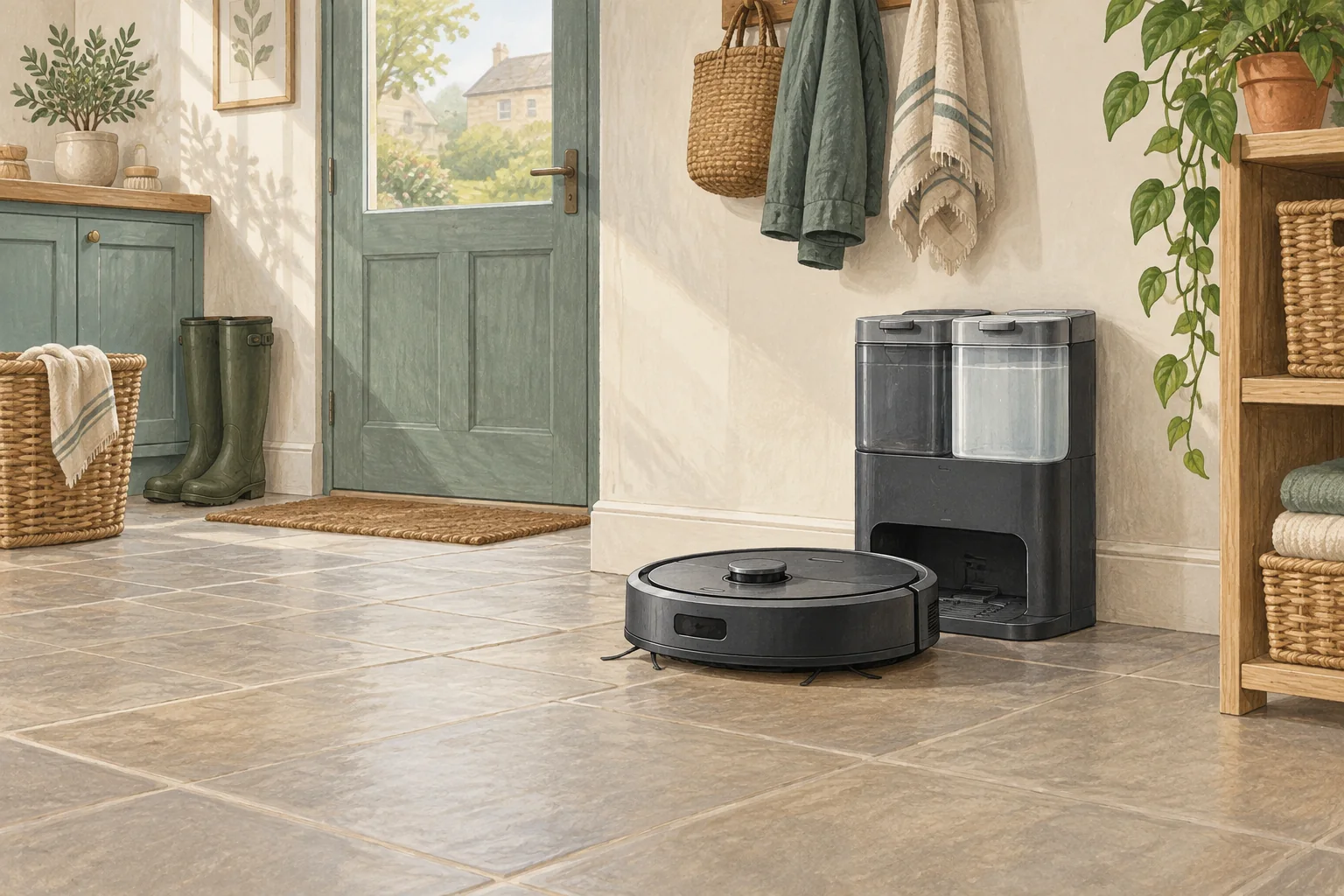
A curled ramp, slippery surface or misaligned approach can prevent the final docking movement. Inspect the last few centimetres rather than the whole route.
Table of Contents
Start with these checks
- Check the dock sits level and its ramp is correctly attached.
- Remove debris and any remaining protective packaging from the approach.
- Retry on the manual's recommended floor surface with clear access.
What this looks like at home
A thick rug beneath a station can tilt the ramp enough to cause repeated failed approaches.
Allow space for the work you do at the station
| Check | What matters |
|---|---|
| Robot approach | Use the installation clearances for the exact station. |
| Human access | Allow tank, tray, cover and bag removal. |
| Floor and power | Choose a suitable dry, stable location near an appropriate socket. |
A mistake to avoid
Do not improvise a steep ramp that changes the charging alignment.
Buy a part only after identifying the cause
Check the exact model and part reference before buying. If cleaning resolves the problem, a replacement may be unnecessary.
Browse Amazon UK results for robot vacuum dock floor protector. These are search results, not a verified recommendation for your particular machine.
What the result tells you
Watch the point where the wheels meet the ramp. Slipping before entry, catching on an edge and reaching the contacts without charging are distinct observations worth preserving for support.
Related guidance
- Robot Vacuum Charging Station Placement: The Ultimate UK Guide
- Robot Vacuum Maintenance Tips UK: Keep Your Cleaner Running Smoothly
Sources and scope
Checked on 9 September 2026. Manufacturer instructions apply to the models they name; use your own exact manual for button sequences, removable parts and cleaning permissions. Product specifications are advertised claims. Examples illustrate decisions and are not hands-on test results.