
Table of Contents
What is a Robot Vacuum with Voice Control?
Robot vacuums have surged in popularity in the UK, offering a convenient way to maintain clean floors with minimal effort. These autonomous cleaning devices navigate your home, vacuuming floors on a schedule or on demand. The addition of voice control – compatibility with assistants like Amazon Alexa and Google Assistant – elevates this convenience further. While Apple’s Siri integration is becoming more common, it often remains limited in functionality compared to Alexa and Google Assistant, typically requiring more specific commands and offering less seamless integration. The UK smart home market is booming, and robot vacuums are a key component, offering a practical application of connected technology. Modern robot vacuums utilise sophisticated mapping technology, such as LiDAR (Light Detection and Ranging) and vSLAM (Visual Simultaneous Localisation and Mapping), to create a detailed map of your home, enabling efficient and targeted cleaning.
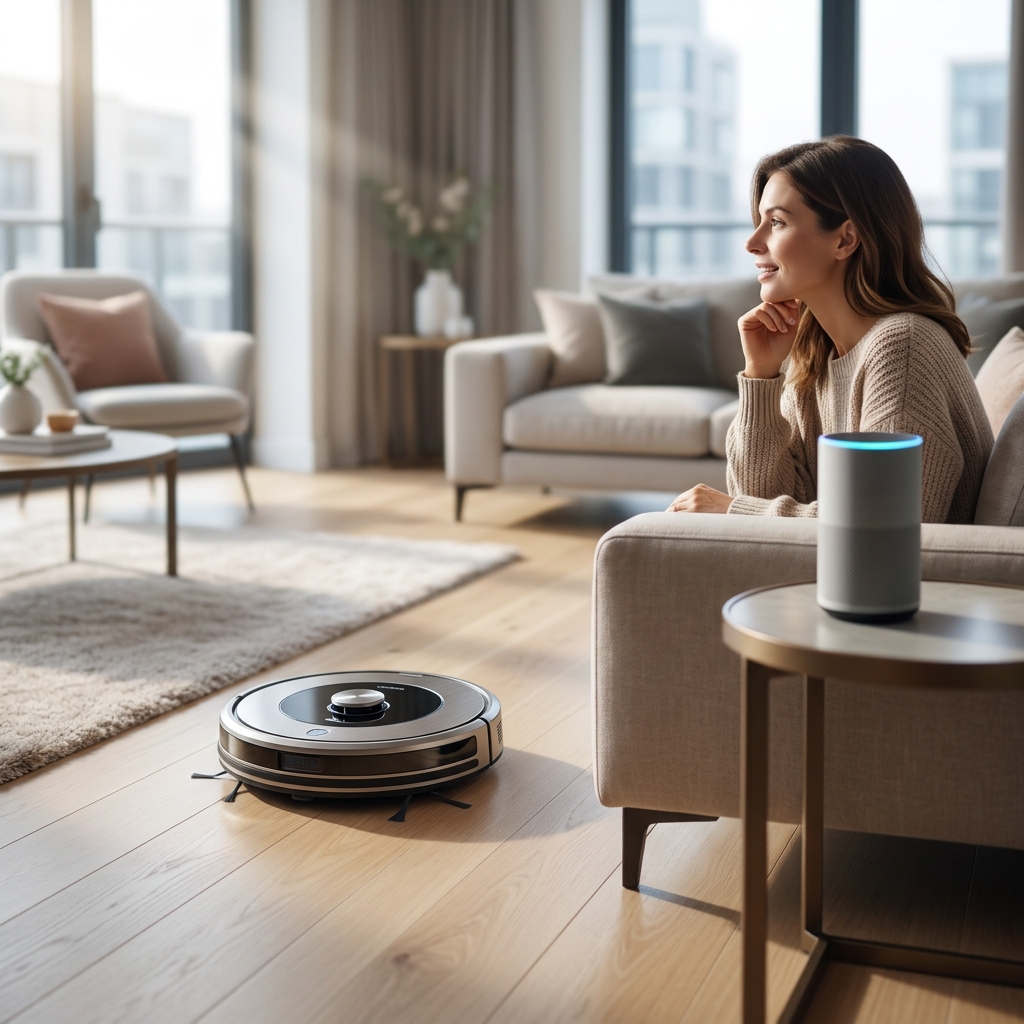
Why Choose a Voice-Controlled Robot Vacuum in 2026?
In 2026, the benefits of a voice-controlled robot vacuum are more compelling than ever. Hands-free operation is the primary draw – simply use a voice command like “Alexa, start the vacuum” to begin cleaning. This is especially useful when your hands are full or you’re relaxing. Integration with existing smart home ecosystems is seamless; you can incorporate cleaning into routines, such as starting a clean while you’re at work. Remote control via voice allows you to initiate cleaning from anywhere with an internet connection. Scheduling ensures your floors are consistently clean, even when you’re away. Current trends show increased AI integration, leading to improved obstacle avoidance (recognising and avoiding shoes, cables, and even pet messes!). We’re also seeing more personalised cleaning routines, adapting to your home’s layout and cleaning preferences.
Key Features to Look for in 2026
Choosing the right robot vacuum requires considering several key features:
- Suction Power (Pa): Higher Pa indicates stronger suction, crucial for carpets and pet hair. Look for at least 2000Pa, with premium models exceeding 3000Pa.
- Battery Life (minutes): Longer battery life is vital for larger homes. Aim for at least 90 minutes, with many models offering up to 180 minutes.
- Dustbin Capacity (litres): A larger dustbin means less frequent emptying. 0.4-0.6 litres is standard, with self-emptying docks significantly increasing capacity.
- Navigation: LiDAR offers the most precise mapping and navigation. vSLAM is a good alternative, using visual cues. Camera-based systems are improving but can struggle in low light.
- App Functionality: A user-friendly app is essential for scheduling, zone cleaning, and controlling features remotely.
- Multi-Floor Mapping: Allows the robot to store maps for multiple floors of your home.
- Zone Cleaning: Enables you to specify areas for targeted cleaning.
- No-Go Zones & Virtual Walls: Restricts the robot from entering specific areas.
- Brush Technology: Look for tangle-free brushrolls, especially if you have pets.
- Filtration Systems: HEPA filters are crucial for allergy sufferers, trapping dust mites and allergens.
Top Robot Vacuums with Voice Control UK (2026) – Our Reviews
iRobot Roomba j7+
Price: £799
The Roomba j7+ remains a top contender, renowned for its intelligent navigation and object recognition. It reliably avoids obstacles and delivers powerful cleaning performance.
Pros
- Excellent object avoidance
- Powerful suction
- Self-emptying dock
- Good app control
Cons
- Relatively expensive
- Can be noisy
Shark AI Ultra Robot Vacuum
Price: £649
The Shark AI Ultra offers a compelling balance of features and price. Its AI-powered navigation and multi-surface brushroll perform well on both hard floors and carpets.
Pros
- Good value for money
- Effective on multiple surfaces
- Self-emptying base
Cons
- Navigation not as refined as Roomba
- Dustbin capacity could be larger
Ecovacs Deebot X2 Omni
Price: £1199
The Deebot X2 Omni is a premium offering with a fully automated cleaning experience. It features auto-emptying, mop lifting, and hot air drying for the mopping pad.
Pros
- Fully automated cleaning
- Excellent mopping functionality
- Powerful suction
Cons
- Very expensive
- Can be complex to set up
Roborock S8 Pro Ultra
Price: £1399
The Roborock S8 Pro Ultra excels in both vacuuming and mopping, featuring advanced features like VibraRise mopping and reactive AI 3.0 obstacle avoidance.
Pros
- Superior cleaning performance
- Advanced obstacle avoidance
- Self-emptying and self-washing
Cons
- Highest price point
- App can be overwhelming
Samsung Jet Bot AI+
Price: £999
The Samsung Jet Bot AI+ boasts a sleek design and powerful suction. Its AI Object Recognition intelligently identifies and avoids obstacles.
Pros
- Stylish design
- Strong suction power
- Good object recognition
Cons
- Battery life could be better
- Dustbin capacity is modest
DreameBot L10s Ultra
Price: £849
The DreameBot L10s Ultra offers a comprehensive cleaning solution with self-emptying, self-washing, and hot air drying features at a competitive price.
Pros
- Excellent value for money
- Self-emptying and self-washing
- Good navigation
Cons
- App could be more refined
- Obstacle avoidance not as advanced as top models
Neato Robotics D10
Price: £599
The Neato D10 stands out with its D-shape design, allowing it to effectively clean corners and edges. It offers reliable performance and is a good option for smaller homes.
Pros
- Excellent corner cleaning
- Affordable price
- Good for smaller spaces
Cons
- Suction power not as strong as premium models
- Limited features compared to competitors
Robot Vacuum Comparison Table (2026)
| Model | Price (GBP) | Suction Power (Pa) | Battery Life (minutes) | Dustbin Capacity (litres) | Navigation | Voice Assistant Compatibility | Special Features |
|---|---|---|---|---|---|---|---|
| iRobot Roomba j7+ | £799 | 3000 | 120 | 0.4 | LiDAR | Alexa, Google Assistant | Self-emptying, Object Recognition |
| Shark AI Ultra Robot Vacuum | £649 | 2000 | 120 | 0.4 | vSLAM | Alexa, Google Assistant | Self-emptying, Multi-surface brushroll |
| Ecovacs Deebot X2 Omni | £1199 | 5000 | 180 | 0.7 | LiDAR | Alexa, Google Assistant | Self-emptying, Mop lifting, Hot air drying |
| Roborock S8 Pro Ultra | £1399 | 6000 | 180 | 0.4 | LiDAR | Alexa, Google Assistant | Self-emptying, Self-washing, VibraRise mopping |
| Samsung Jet Bot AI+ | £999 | 3000 | 90 | 0.4 | LiDAR | Alexa, Google Assistant, Bixby | AI Object Recognition, Built-in camera |
| DreameBot L10s Ultra | £849 | 5000 | 120 | 0.4 | LiDAR | Alexa, Google Assistant | Self-emptying, Self-washing, Hot air drying |
| Neato Robotics D10 | £599 | 2500 | 100 | 0.6 | LiDAR | Alexa, Google Assistant | D-shape design, Corner cleaning |
Installation and Setup: A Step-by-Step Guide
- Download the App: Download the manufacturer’s app from the App Store (iOS) or Google Play Store (Android).
- Connect to Wi-Fi: Follow the app’s instructions to connect the robot vacuum to your home Wi-Fi network. Ensure you have a stable 2.4GHz Wi-Fi connection.
- Mapping Your Home: Initiate the mapping process. The robot will navigate your home, creating a floor plan.
- Set No-Go Zones & Virtual Walls: Use the app to define areas where you don’t want the robot to go.
- Link to Voice Assistant: Enable the robot vacuum skill in the Alexa or Google Assistant app. Follow the on-screen instructions to link your accounts.
Maintenance and Care Tips
Regular maintenance ensures optimal performance. Empty the dustbin after each use or as needed. Clean the brushes regularly, removing tangled hair and debris. Replace filters every 3-6 months (HEPA filters typically cost £20-£40). Clean the sensors with a soft, dry cloth. Battery care involves avoiding extreme temperatures and ensuring the robot is stored in a cool, dry place. Expect to spend approximately £50-£100 per year on maintenance supplies like filters and brushes.
Robot Vacuums vs. Traditional Vacuums: Which is Right for You?
Robot Vacuums: Offer convenience, automated cleaning, and remote control. Ideal for maintaining cleanliness between deep cleans. Less powerful than traditional vacuums and can struggle with thick carpets and large debris.
Traditional Vacuums: Provide superior cleaning power and versatility. Suitable for deep cleaning, tackling stubborn messes, and cleaning upholstery. Require manual operation and effort.
The best solution often involves using both – a robot vacuum for daily maintenance and a traditional vacuum for occasional deep cleaning.
Future Trends in Robot Vacuum Technology
The robot vacuum market is rapidly evolving. We’ll see further advancements in object recognition, allowing robots to identify and avoid a wider range of obstacles. Self-emptying docks with larger capacity are becoming standard. AI algorithms will become more sophisticated, enabling personalised cleaning routines and improved navigation. Robot mops are becoming increasingly popular, offering a combined vacuuming and mopping solution. The UK market is expected to see continued growth, with more affordable and feature-rich models becoming available in the coming years.
FAQs
Q: Can robot vacuums handle pet hair?
A: Yes, many robot vacuums are specifically designed to handle pet hair, featuring tangle-free brushrolls and powerful suction. Models like the iRobot Roomba j7+ and Shark AI Ultra are particularly effective.
Q: What if my robot vacuum gets stuck?
A: Most robot vacuums have sensors to prevent getting stuck, but it can happen. Check for obstacles, tangled cords, or areas with high-pile carpets. The app usually allows you to remotely control the robot to free it.
Q: How often should I empty the dustbin?
A: It depends on the size of your home and the amount of debris. Generally, emptying the dustbin after each use or every few uses is recommended.
Q: Are robot vacuums secure? Could they be hacked?
A: Like any smart device, robot vacuums are potentially vulnerable to hacking. However, manufacturers are continually improving security measures. Ensure you update the firmware regularly and use a strong Wi-Fi password.
Q: Do robot vacuums work on all floor types?
A: Most robot vacuums are designed to work on both hard floors and carpets. However, performance can vary depending on the carpet pile and thickness. Some models have adjustable suction settings for optimal cleaning on different floor types.