
Table of Contents
Introduction: The Rise of Robot Vacuums in UK Homes
Robot vacuums have become increasingly popular in UK homes over the past few years, and for good reason. They offer a significant convenience boost, freeing up your time from a chore that many find tedious. The ability to schedule cleaning, control the device via an app, and even have it automatically empty its dustbin is a major draw. However, finding a robot vacuum that excels on both hard floors and carpets can be a challenge. Many models are optimised for one surface type over the other. This guide will navigate you through the options available in 2026, helping you find the perfect robot vacuum for your specific needs.
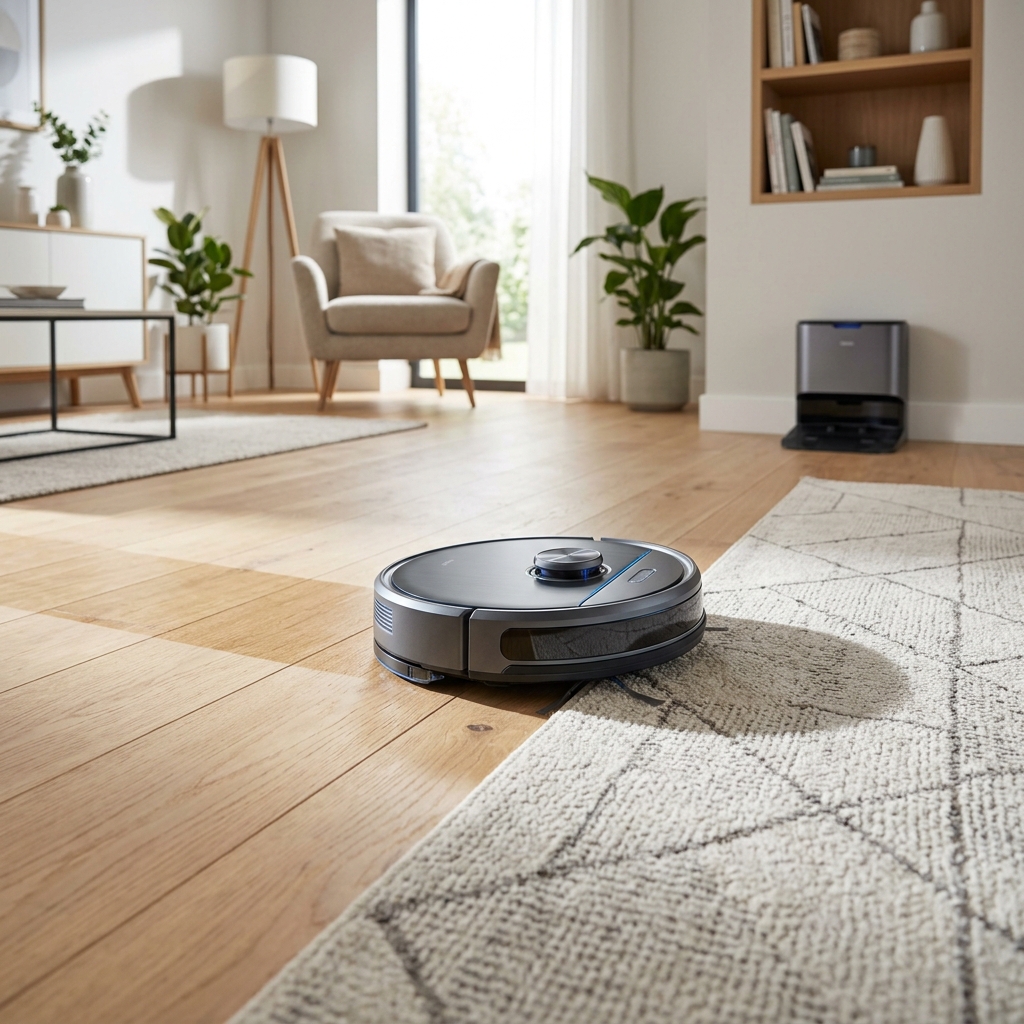
Understanding Your Flooring Needs
Cleaning wood floors and carpets requires different approaches. Wood floors are susceptible to scratches, so gentle cleaning is essential. High suction is needed to lift dust and debris from between floorboards. Carpets, on the other hand, require stronger suction and often benefit from a brush roll designed to agitate and lift embedded dirt. A stiff brush roll is great for carpets, but can damage wood floors.
Before you buy, assess your home’s flooring mix. Roughly estimate the percentage of hard floors versus carpets. Is it 80% carpet and 20% wood? Or the other way around? This will heavily influence the features you prioritise. Consider also the type of carpet – shag pile, short pile, etc. – as this impacts the suction power required.
Key Features to Look for in a Robot Vacuum (2026 Tech)
The robot vacuum market has matured significantly. Here’s a breakdown of the key features to consider in 2026:
- Suction Power (Pa): Measured in Pascals, higher suction generally means better cleaning, particularly on carpets. Look for at least 2000Pa, with 3000Pa+ being ideal for pet owners or thick carpets.
- Battery Life: Consider the size of your home. A larger home will require a longer battery life, or a robot that can automatically return to its dock to recharge and resume cleaning. Expect 90-120 minutes as a good average.
- Navigation Technology:
- LiDAR: Uses lasers to create a detailed map of your home, providing accurate and efficient navigation.
- vSLAM: Visual Simultaneous Localisation and Mapping – uses cameras to map and navigate. Generally less precise than LiDAR but often more affordable.
- Camera-Based: Increasingly common, these robots use cameras for both mapping and object recognition.
- Smart Home Integration: Compatibility with Alexa and Google Assistant allows for voice control and integration into your smart home ecosystem.
- App Control: Allows you to schedule cleaning, monitor progress, and control the robot remotely.
- Auto-Empty Docks: A huge convenience – these docks automatically empty the robot’s dustbin, reducing maintenance.
- Multi-Surface Brush Rolls: Essential for homes with both wood floors and carpets. These brush rolls combine soft bristles for hard floors with stiffer bristles for carpets.
- Zone Cleaning & No-Go Zones: Allows you to designate specific areas to clean or avoid, such as around pet bowls or delicate furniture.
- Carpet Boost: Automatically increases suction power when the robot detects carpet.
By 2026, we anticipate significant advancements in object recognition. Robots will be better at identifying and avoiding obstacles like cables, shoes, and even pet accidents, reducing the need for constant intervention.
Top 5 Robot Vacuums for Wood Floors & Carpets (2026)
1. iRobot Roomba j7+
Price: £799
Pros: Excellent cleaning performance on all surfaces, advanced object recognition, auto-empty dock, smart mapping, proactive cleaning suggestions.
Cons: Expensive, can be noisy on maximum suction.
Wood Floor Performance: Gentle on wood floors, excellent dust pickup.
Carpet Performance: Powerful suction, effectively cleans carpets and rugs.
Special Features: iRobot OS provides a sophisticated app experience and proactive suggestions.
2. Shark AI Ultra Robot Vacuum
Price: £599
Pros: Self-cleaning brushroll, excellent suction, multi-surface performance, auto-empty base.
Cons: App could be more user-friendly.
Wood Floor Performance: Good suction and doesn’t scratch.
Carpet Performance: Powerful enough for most carpets.
Special Features: Shark’s self-cleaning brushroll is a standout feature.
3. Ecovacs Deebot X2 Omni
Price: £999
Pros: All-in-one Omni Station (auto-empty, mop washing, water refilling), advanced obstacle avoidance, strong suction.
Cons: Very expensive, complex setup.
Wood Floor Performance: Excellent mopping function alongside vacuuming.
Carpet Performance: Powerful carpet cleaning with automatic carpet boost.
Special Features: The Omni Station is a game-changer for convenience.
4. Roborock S8 Pro Ultra
Price: £899
Pros: VibraRise 2.0 mopping system, reactive obstacle avoidance, auto-empty, auto-mop washing.
Cons: Costly, limited availability of replacement parts.
Wood Floor Performance: Excellent mopping performance without damaging wood.
Carpet Performance: Strong suction and effective carpet cleaning.
Special Features: VibraRise intelligently lifts the mop pads when carpet is detected.
5. DreameBot L10s Ultra
Price: £649
Pros: Auto-empty, auto-mop washing, strong suction, good value for money.
Cons: Mapping can be slightly less accurate than premium models.
Wood Floor Performance: Gentle cleaning and effective dust removal.
Carpet Performance: Handles most carpets effectively.
Special Features: The L10s Ultra offers a lot of features for its price point.
Budget-Friendly Options: Robot Vacuums Under £300
If you’re on a tighter budget, these options offer good value:
Proscenic V9 Max (£249): Offers good suction and a decent battery life. Lacks advanced navigation features like LiDAR, but provides reliable cleaning.
Yeedi Vac 2 Pro (£349): Vibration mopping and good suction for the price. The mapping isn’t as precise as more expensive models, but it’s a solid all-rounder.
Mid-Range Marvels: Robot Vacuums £300 – £600
This price range strikes a balance between features and performance:
Shark IQ Robot Self-Empty XL (£399): A slightly older model but still a solid choice with self-emptying functionality and decent cleaning power.
Ecovacs Deebot N8 Pro+ (£449): Offers LiDAR navigation and an auto-empty dock, providing a more sophisticated cleaning experience.
Premium Picks: Robot Vacuums Over £600
For those who want the best, these high-end models offer cutting-edge features:
As outlined in the Top 5 section, the iRobot Roomba j7+, Ecovacs Deebot X2 Omni, and Roborock S8 Pro Ultra represent the pinnacle of robot vacuum technology in 2026. They justify their price tags with superior cleaning performance, advanced features, and exceptional convenience.
Robot Vacuum Maintenance & Troubleshooting
To keep your robot vacuum running smoothly:
- Empty the dustbin after each cleaning cycle (or more often if you have pets).
- Clean the brush rolls regularly to remove hair and debris.
- Replace filters every 2-3 months (or as recommended by the manufacturer).
- Troubleshooting: If the robot gets stuck, check for obstacles and ensure the sensors are clean. Navigation errors can often be resolved by restarting the robot and remapping your home.
Conclusion: Finding the Right Robot Vacuum for Your Home
Choosing the right robot vacuum depends on your individual needs and budget. If you have a large home with a mix of wood floors and carpets, and you’re willing to invest, the iRobot Roomba j7+ or the Ecovacs Deebot X2 Omni are excellent choices. For a more affordable option that still delivers good performance, the DreameBot L10s Ultra offers great value. By carefully considering your flooring needs and the features discussed in this guide, you can find the perfect robot vacuum to simplify your cleaning routine and enjoy a cleaner, more comfortable home.
FAQ
Q: How often should I run my robot vacuum?
A: This depends on your lifestyle and how much traffic your home receives. Running it 2-3 times a week is a good starting point, but you may need to increase the frequency if you have pets or children.
Q: Can robot vacuums damage wood floors?
A: Not if you choose a model with a soft brush roll and avoid using excessive suction on delicate wood surfaces. Look for models specifically designed for hard floors.
Q: What is the difference between LiDAR and vSLAM navigation?
A: LiDAR uses lasers for precise mapping, while vSLAM uses cameras. LiDAR is generally more accurate, especially in low-light conditions, but vSLAM is often more affordable.
Q: Do I still need a traditional vacuum cleaner?
A: While robot vacuums can handle the majority of everyday cleaning, a traditional vacuum cleaner is still useful for deep cleaning, upholstery, and areas that the robot can’t reach.
Q: How long do robot vacuum batteries last?
A: Most robot vacuum batteries last between 90 and 120 minutes on a single charge. Battery life can vary depending on the cleaning mode and the amount of suction used.