
Affiliate disclosure: this article contains paid links. As an Amazon Associate I earn from qualifying purchases.
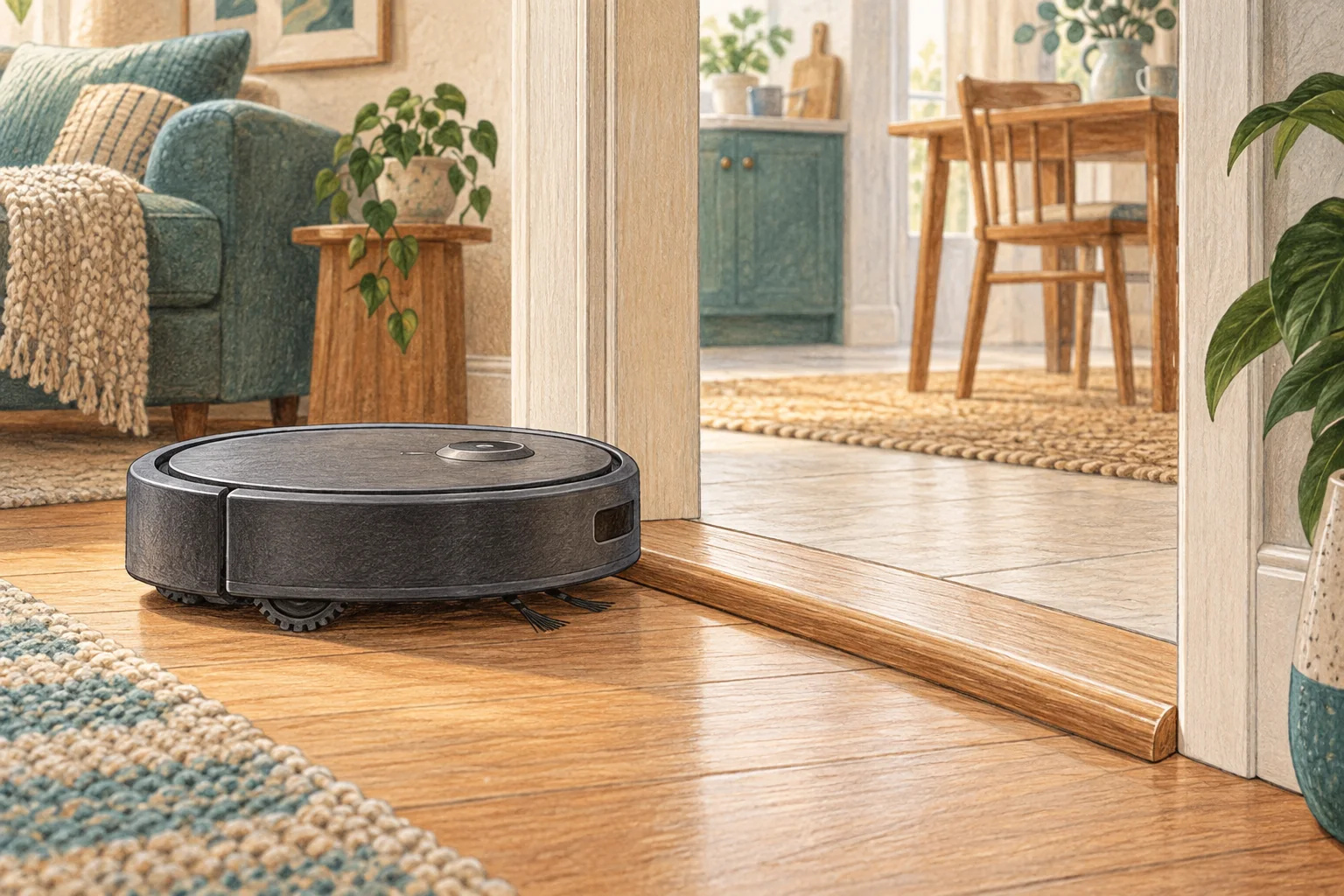
A ramp can help with a modest doorway lip when its shape, grip and installation suit both the robot and the household. It is not a universal fix for steps.
Table of Contents
A practical checklist
- Measure the rise, available run and door swing.
- Choose a stable transition that does not slide or create an unacceptable trip hazard.
- Test approach and return with the robot supervised and the floor dry.
What this looks like at home
A short steep wedge may fail where a longer shallower transition works, even at the same doorway height.
Measure the profile in both directions
| Check | What matters |
|---|---|
| Rise | Measure from each side of the doorway. |
| Shape | Note sharp edges, slopes and narrow crests. |
| Return | Confirm the robot can get back to its charger. |
A mistake to avoid
Do not use a threshold ramp to bypass a dangerous drop or staircase boundary.
Relevant models to compare
Dreame L40s Pro Ultra
A mixed-floor system with detachable mops and dual-brush hair management.
Check Dreame L40s Pro Ultra on Amazon UK. Confirm the selected UK variant, seller, contents and current price.
Eufy L60
A simple mapped vacuum for households that already mop by hand.
Check Eufy L60 on Amazon UK. Confirm the selected UK variant, seller, contents and current price.
Related guidance
- Robot Vacuum Stuck? A Comprehensive Troubleshooting Guide
- Robot Vacuum Maintenance Tips UK: Keep Your Cleaner Running Smoothly
Sources and scope
Checked on 9 September 2026. Manufacturer instructions apply to the models they name; use your own exact manual for button sequences, removable parts and cleaning permissions. Product specifications are advertised claims. Examples illustrate decisions and are not hands-on test results.